
Commercial · Scarborough Village
Master Key System Design in Scarborough Village
On the warehouse floor, a shift supervisor's key opens the loading dock, the tool crib and the manager's office, though only the dock is really part of the job.
In plain words
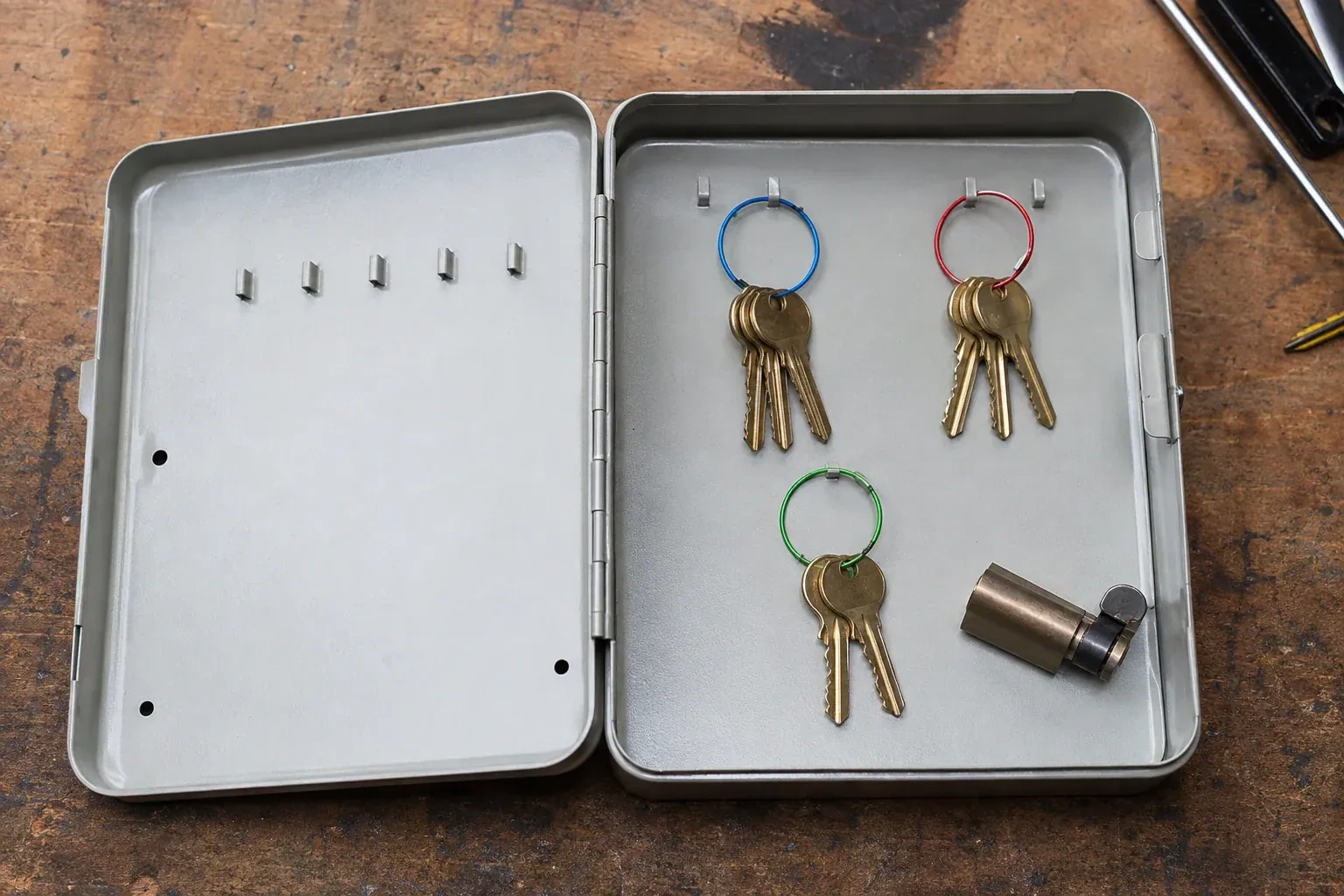
A master key hierarchy usually has three layers. At the bottom, an individual change key opens one door or a small keyed-alike group for the person who needs it. In the middle, a sub-master opens a defined group, such as every door on a floor or in a department. At the top, a single master opens the whole set and is kept to a short list of people. Master key system design is the process of deciding where those layers sit for a particular business, choosing hardware that can support them, and cutting and testing the keys so each layer works exactly as planned, no more and no less.
How the visit goesThe new wing was built with its own brand of cylinder, so the two-year-old keys from the original building do not open a single door in the addition. Staff are now carrying two separate key rings just to move around one workplace.
Master Key System Design
How the visit goes


Duplication and how tightly it needs to be controlled
Some businesses are comfortable with standard key blanks that any hardware counter can cut; others, especially where records, cash or controlled supplies sit behind a door, want a restricted or patented keyway that limits duplication to a record the owner controls. This is decided door by door rather than for the whole property at once, since a stockroom and a records room rarely carry the same risk. The answer shapes both the hardware chosen and how future copies of any given key will be requested and tracked going forward.
Fitting or replacing hardware to match the plan
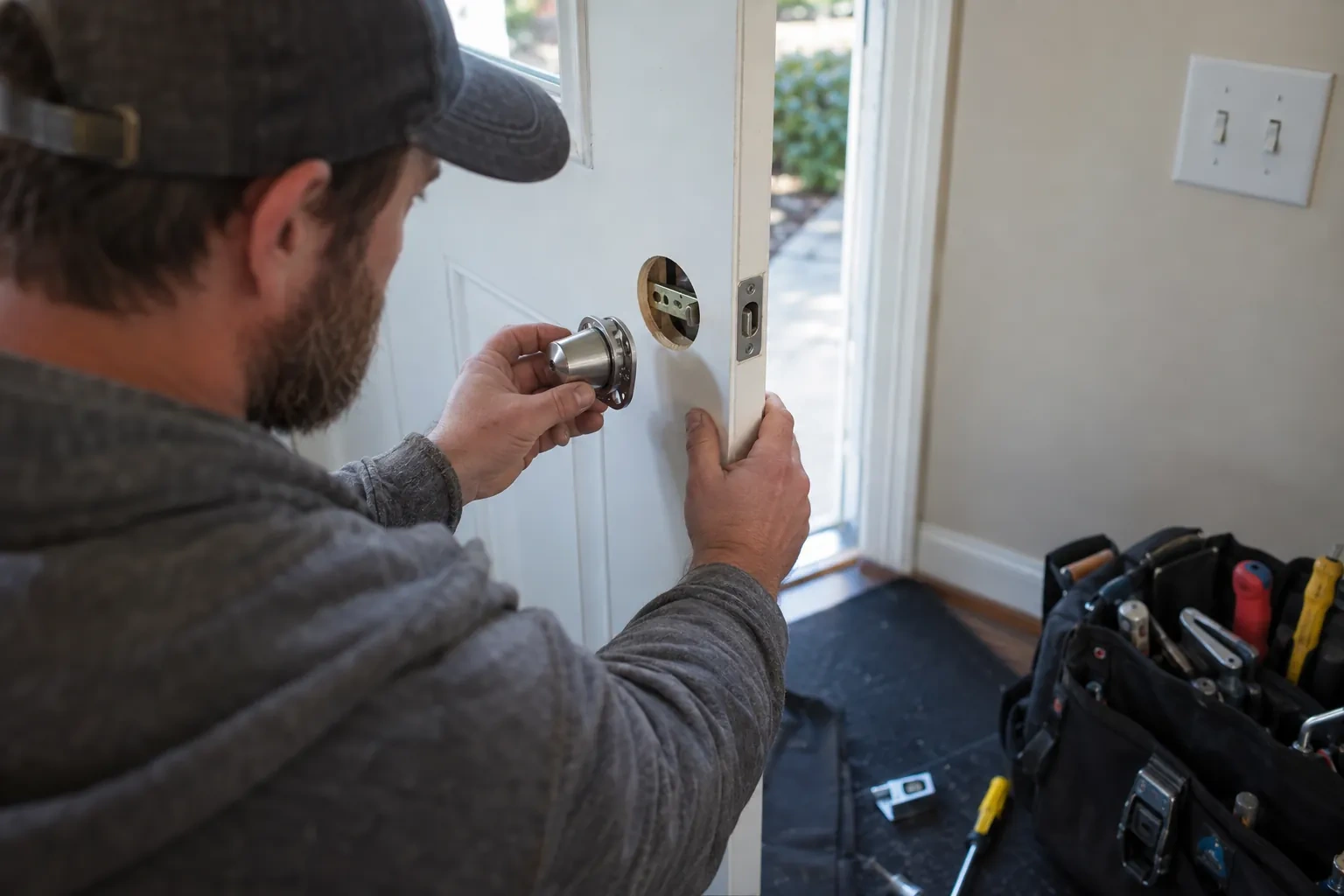
Cylinders that can join the new hierarchy without modification are pinned in place; those that cannot, whether because of age, a mismatched keyway or simple wear, are replaced with compatible hardware chosen to match the finish and function already on the door. Locksets on a barrier-free path of travel are fitted with lever or paddle-style hardware that can be operated with a closed fist, keeping those doors usable for everyone while still carrying their assigned level in the same hierarchy as the rest of the building.
Handing the record to whoever administers it next
The chart, the issuance log and any spare keys are handed to a named administrator, not left as loose paperwork or scattered across whoever happened to be present. If that role changes hands, custody of the record moves with it deliberately, along with a signed acknowledgement of what is being transferred, so the system's history does not quietly disappear along with the person who used to manage it.
Master Key System Design
In the van
Restricted or standard key blanks
Keying chart
Cylinder pinning kit
Key cutting machine
Compatible replacement cylinders
Master Key System Design
What affects the quote
How many locations are involved
A single building is simpler to assess and pin than several sites intended to share related levels of access. Travel between locations, and keeping the hierarchy consistent across more than one property, both add to the overall scope of the project.
Any optional upgrade chosen along the way
Some businesses use the project as an opportunity to also upgrade a door closer, add a keypad to one entry, or reinforce a strike plate. None of this is required for the master key system itself, and each optional item is quoted as its own line.
Number of keys cut and marked
Each key cut and marked for a holder is counted individually in the quote, whether it is a change key for one door or a top-level master for an owner. More staff at the same level naturally means more keys cut than a business with only a handful of holders.
What to have ready
- Roughly how many doors need to be part of the system?
- Are any doors on a barrier-free path of travel?
- Do any existing keys already open more than one door?
Master Key System Design: questions
QuestionsHow long does designing and installing a master key system take?
It depends on the number of doors and levels involved. A small business with a handful of doors and one or two levels moves through assessment, pinning and testing in less time on site than a multi-floor property with several departments and a top-level master, where more doors, more testing and more keys to cut all add to the work involved.
What happens if a master-level key goes missing?
The current chart shows exactly which doors that level was designed to reach, which for a lost top-level master can mean the whole property rather than one group. Depending on how the key was lost and who else already holds that level, the usual options are repinning the affected cylinders and reissuing keys to the remaining holders; a restricted keyway lowers the odds of an unauthorized copy being cut but is not proof that one has not been made. Without a current chart, the first task is reconstructing that scope.
What is a master key system, in plain terms?
It is a set of keys arranged in levels rather than issued one at a time. An individual change key opens one door, or a small group of doors keyed alike. A sub-master opens a defined group of doors, such as everything on one floor. A single top-level master opens the whole set. The levels are designed around who actually needs each one, then cylinders are pinned to match, so the physical keys follow an organization's real structure instead of years of informal copying.
Related services
- Access Control InstallationYou just leased the empty unit next door and want the new tenant to open their own suite without a key to yours, to the loading dock, or to the electrical room down the hall.
- Panic & Exit HardwareThe daycare wants the yard gate and the classroom door alarmed so a staff member hears the moment it opens, without turning either into something a child could be shut behind.
- Commercial-Grade Lock ReplacementOvernight someone forced the back door, and the cylinder face is scarred, the metal around the strike has pulled loose from the frame, and the latch no longer sits flush.