Lockouts · Toronto
Home Lockout Service
The keypad on the smart lock blinks once and goes dark.
In plain words
Winter creates its own kind of lockout. Meltwater runs into a keyway during the day and freezes overnight, a weather-exposed cylinder stiffens in the cold, and a door that shrank in January may drop its bolt out of line with the strike. A home lockout visit in these conditions is as much about the door as the lock: the locksmith thaws and frees the cylinder without forcing it, checks whether the bolt or the frame is the real obstacle, and opens the door in a way that leaves the hardware sound. A little dry lubricant and a tube of de-icer usually finish the job.
How the visit goesThe key slides in and turns all the way round, but the bolt stays put. There is no click, no resistance, just a key spinning in a lock that has stopped listening to it after years of daily use.
Home Lockout Service
How the visit goes
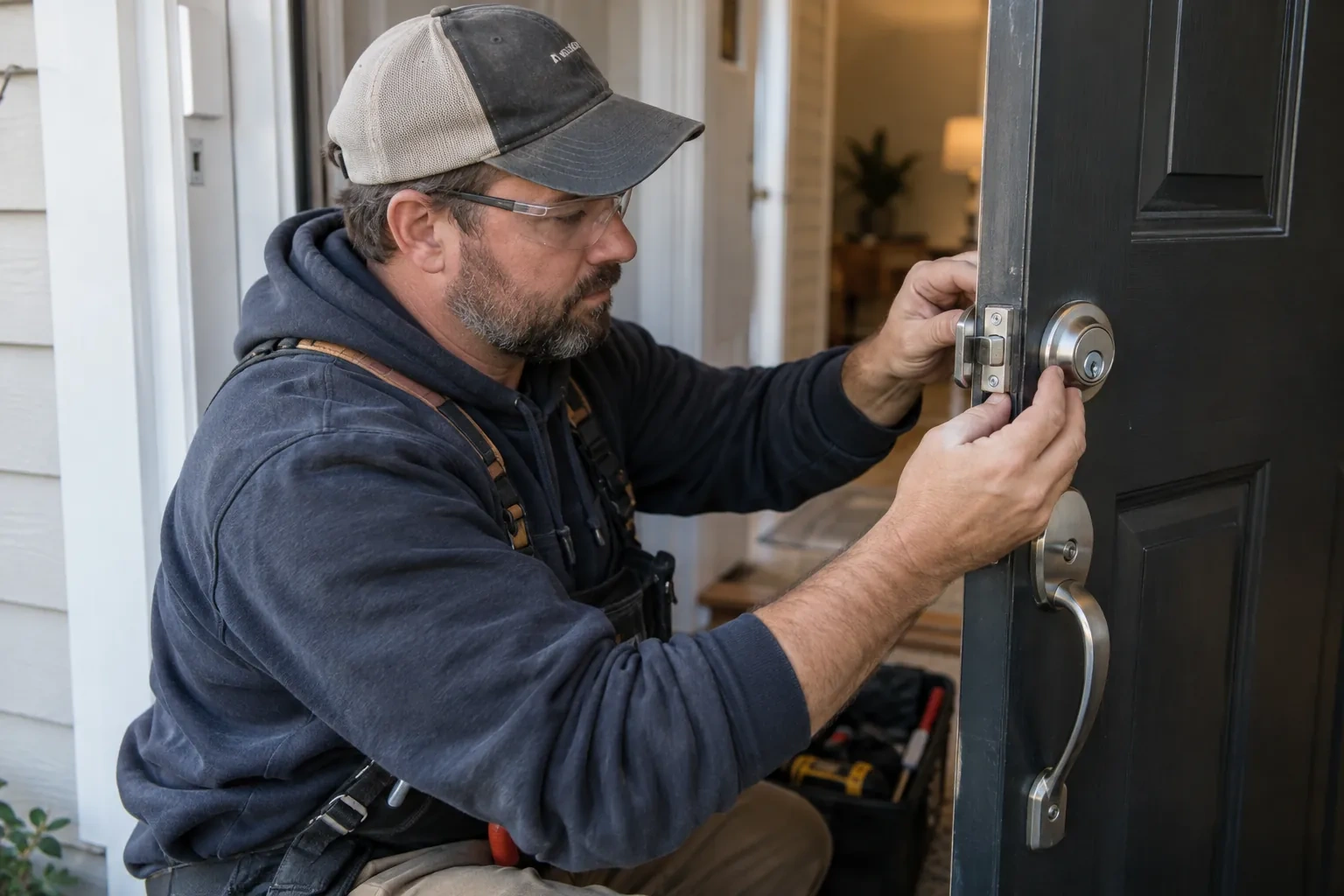
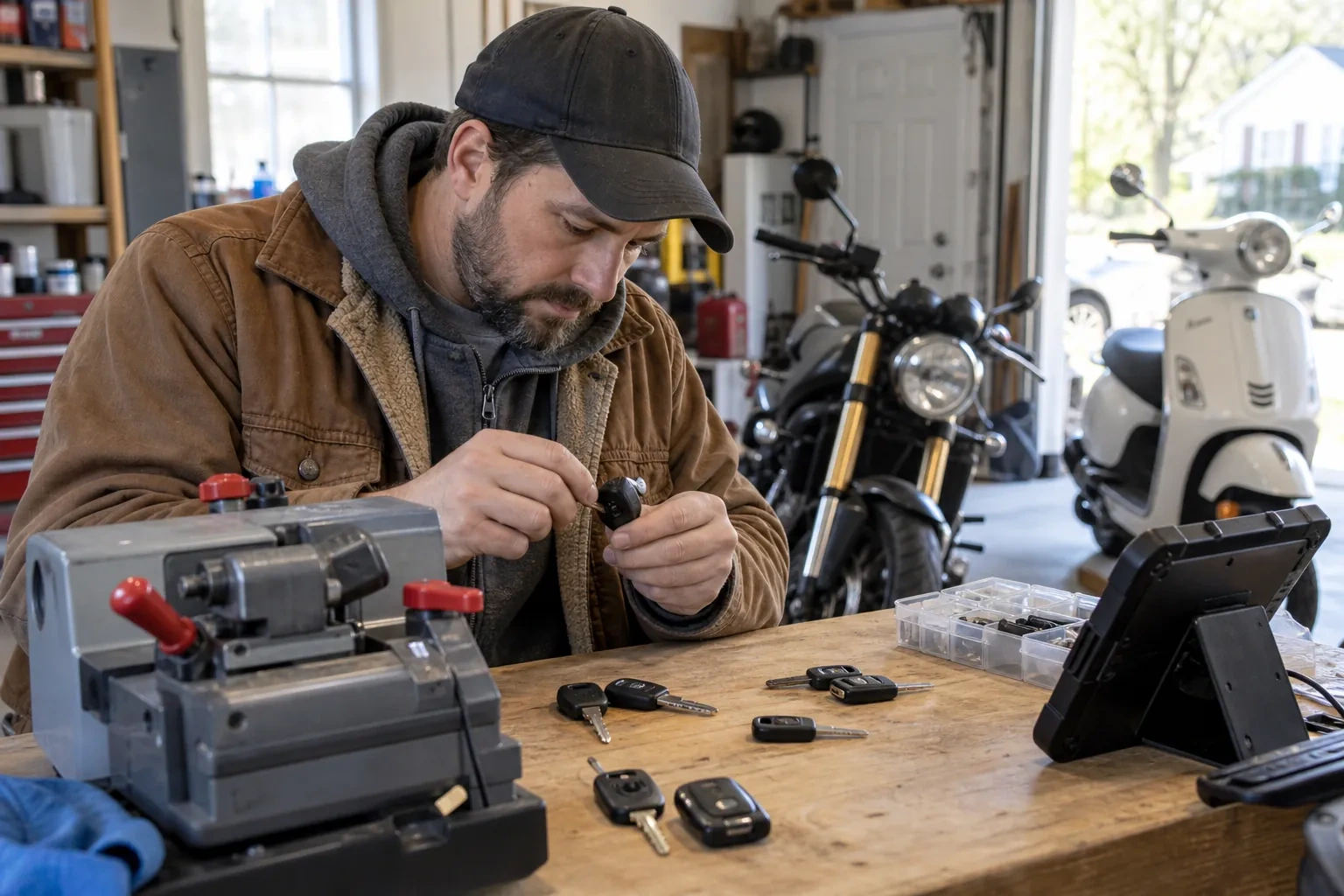
Checking a smart or keypad lock before opening it
Electronic locks get their own set of questions. Is the keypad completely dead or just refusing the code? Are there battery contacts on the outside that accept a nine-volt battery for a temporary boost? Is there a mechanical override cylinder behind a cover, and does anyone hold the key for it? Is the lock paired to an app that could unlock it from a phone, and has the phone been factory reset lately? These checks decide whether the door can be opened by simply restoring power, by using the override cylinder, or by treating it like any other lock. It also tells the locksmith what to reset once you are inside.
Relieving a bound door
When the bolt is jammed against the strike because the door has swollen or sagged, picking achieves nothing until the pressure comes off. The locksmith lifts or leans on the door to bring the bolt back into line with its pocket while the key or pick turns the cylinder, and the bolt slides home. With the door open, the cause is addressed so it does not lock you out again: tightening or shimming a hinge that let the door drop, dressing the strike pocket so the bolt has room, or trimming a weatherstrip that pushes the door out of square. The lock was never the problem; the door simply moved around it.
Smart lock back online, with a backup this time
Once a keypad or app lock has been opened it is put back on its feet properly: fresh batteries of the type the maker specifies, the auto-lock and code settings confirmed, and a walk-through of the low-battery warning so you recognize the beep or blink before it turns into a dead lock. The small mechanical override key is the piece most people never think about, and the sensible place for it is outside the home, on a keyring, in a lockbox or with a neighbour, rather than in the kitchen drawer. A second user code for a family member, set up before the locksmith leaves, means a flat phone stops being a lockout.
Home Lockout Service
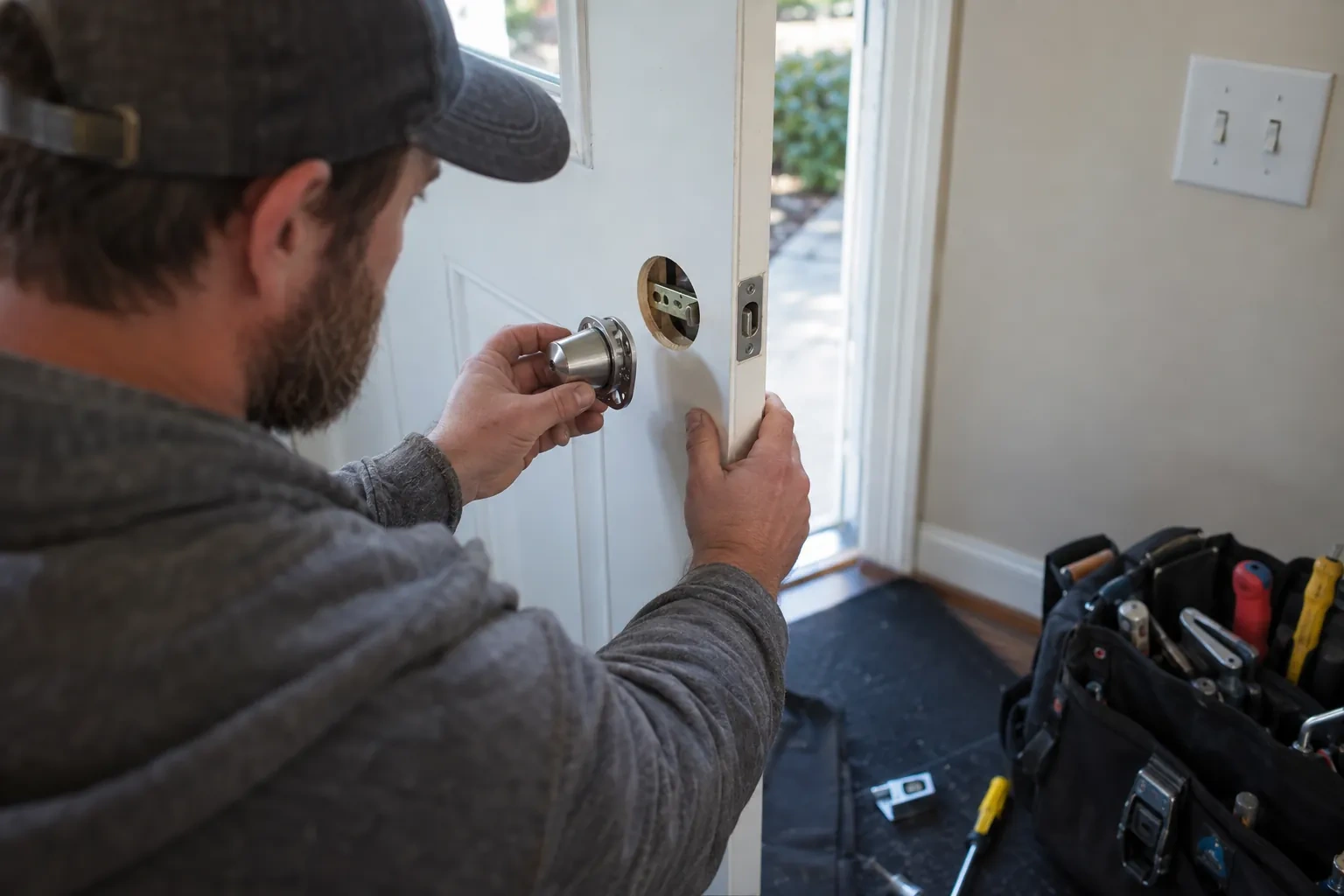
In the van
Plug follower and repinning kit
Key blanks and key cutter
Pick and tension tools
Nine-volt battery for smart locks
Dry graphite or PTFE lubricant
Home Lockout Service
What affects the quote
Door and frame adjustment
When the lockout was really a swollen or sagging door, fixing the cause means work on hinges, strike plate or weatherstrip. That adjustment is quoted as its own item alongside the opening.
Time of the call
A home lockout costs the same amount whatever the hour, weekend or holiday included, since locksmiths are reachable day and night. The exact figure is confirmed at the door once the lock, the door and how many locks need opening have been looked at in person.
Whether the key is inside or lost
If the key is inside, the visit ends when the door opens. If it was lost out in the world, rekeying and fresh keys usually follow, and that is separate work priced on its own.
What to have ready
- Do you own the home, rent it, or manage it for someone else?
- If the key is lost, would you like the locks rekeyed during the same visit?
- Which door are you locked out of, and what kind of lock is on it?
Home Lockout Service: questions
QuestionsIf my key is lost, will I leave with a working key?
Yes, one way or another. If you choose to rekey, the cylinder is set to a new combination and fresh keys are cut for it on the spot, usually two or three, and tested in each door they should open. If you prefer to keep the existing pinning, a new key can be cut to the lock's code or by decoding the cylinder. Either way you are not left relying on a key that is somewhere else.
When does a locksmith decide to drill instead of pick?
Drilling is the last rung, reached only when the cylinder has genuinely stopped cooperating. Typical reasons are a plug seized by corrosion or a failed spring, a key snapped deep inside that blocks the pins, a high-security cylinder whose anti-pick features make picking impractical, or a lock already damaged by someone's earlier attempt. The decision is explained before the drill comes out, the hole is confined to the cylinder, and replacement hardware goes in straight afterwards.
My lock is a high-security model. Can it still be opened?
Yes. High-security cylinders with security pins, sidebars or restricted keyways are designed to slow an intruder, and they do slow a locksmith too, but they open with the right technique, a decoder made for that keyway, or as a last resort a precise drill through the cylinder followed by a like-for-like replacement. Bring any key card or code card that came with the lock, since restricted keys are cut from those records rather than copied.