Change or rekey · Toronto
Lock Rekeying
One key for the front door, another for the back, a third for the side door into the garage, and a fourth for the shed.
In plain words
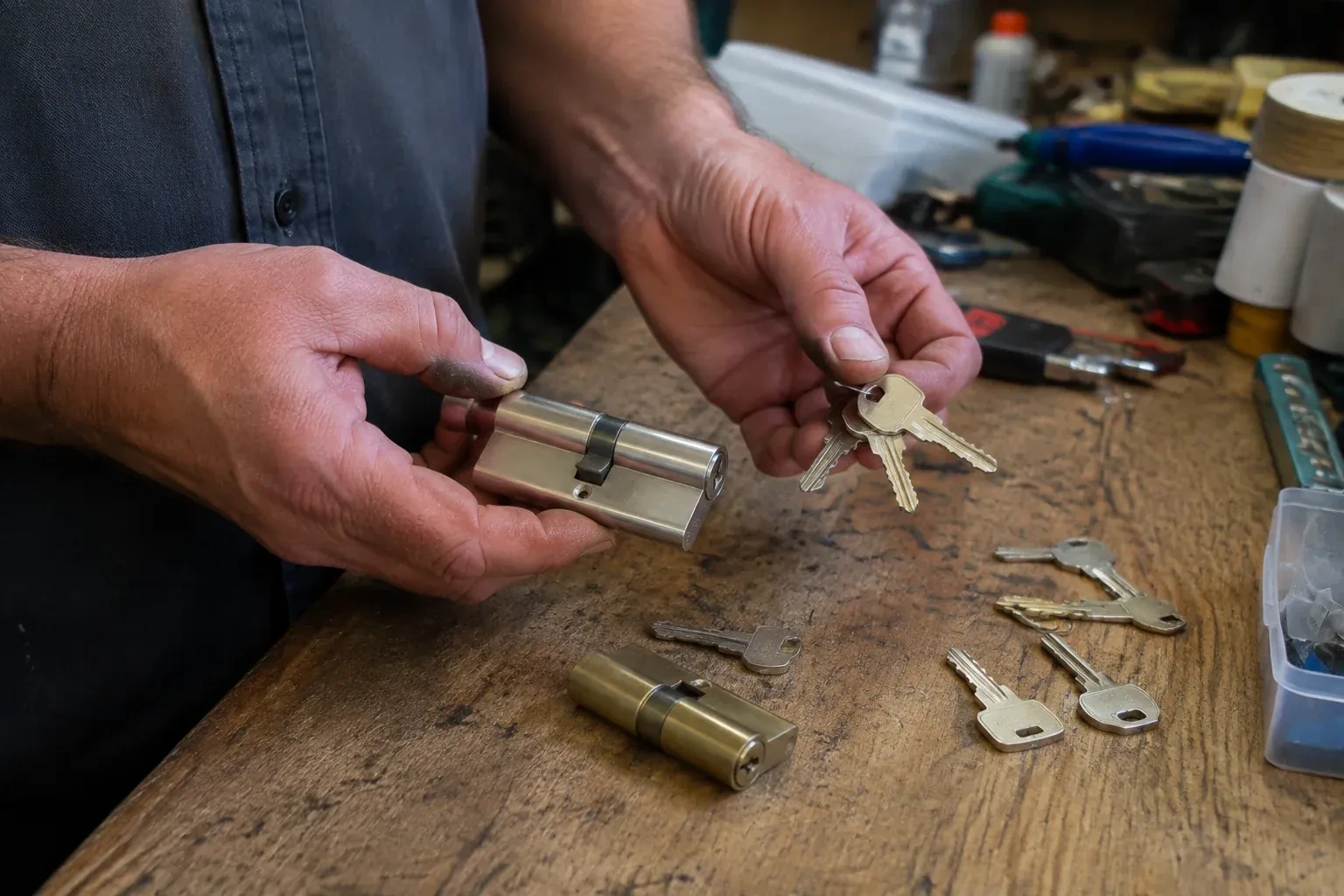
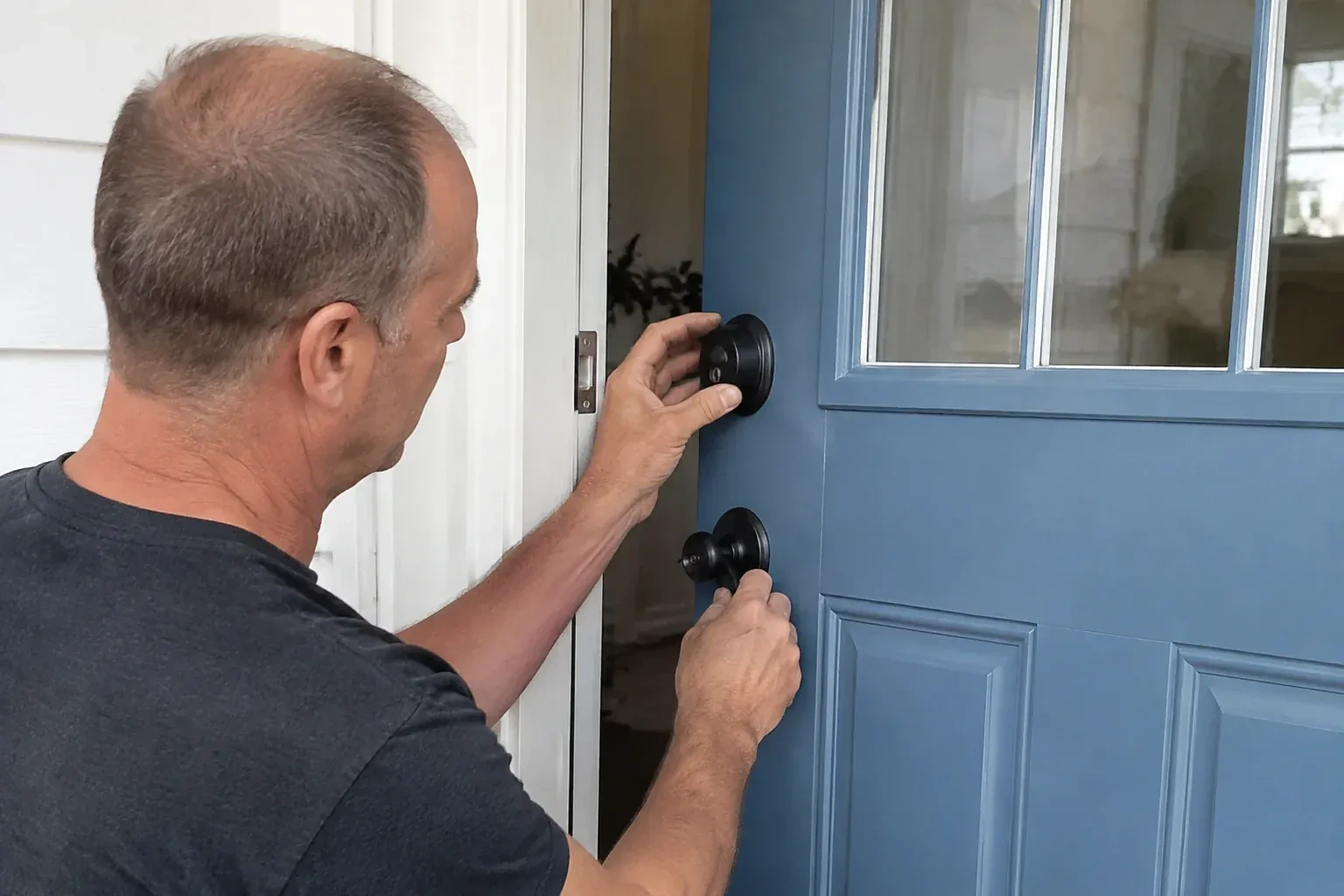
What you keep after rekeying is almost everything. The deadbolt, the handle set, the finish that matches your door hardware, the strike plate and the holes in the door all stay exactly where they are, which matters on an older door where new hardware rarely lines up with old mortises. What changes is a handful of brass pins a few millimetres long inside each cylinder, and the key in your pocket. The work is done on site, one cylinder at a time, so the house is never left with an unsecured door, and worn springs or a sticky plug can be dealt with while the cylinder is already apart.
How the visit goesThe builder handed over your new home with a stack of identical keys, and you know the framing crew, the painters and the flooring installers all used a construction key during the build. The doors are brand new, but the key that opens them should be yours alone.
Inside the lock
What a rekey changes
01
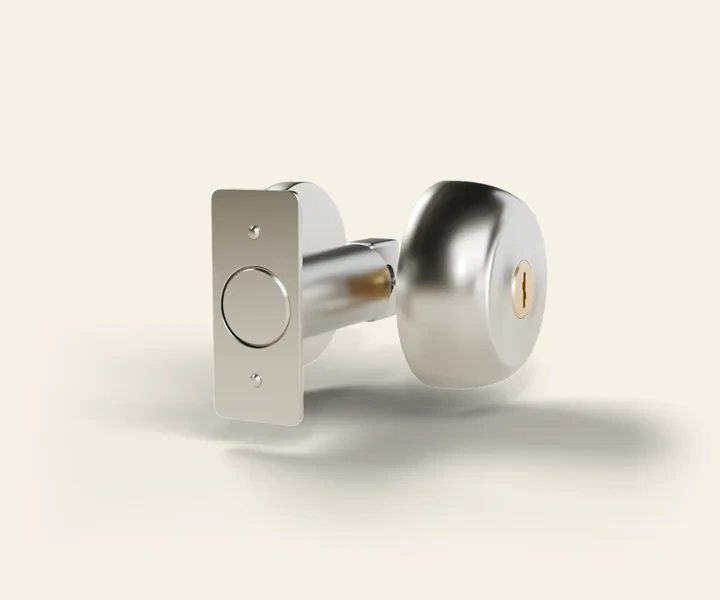
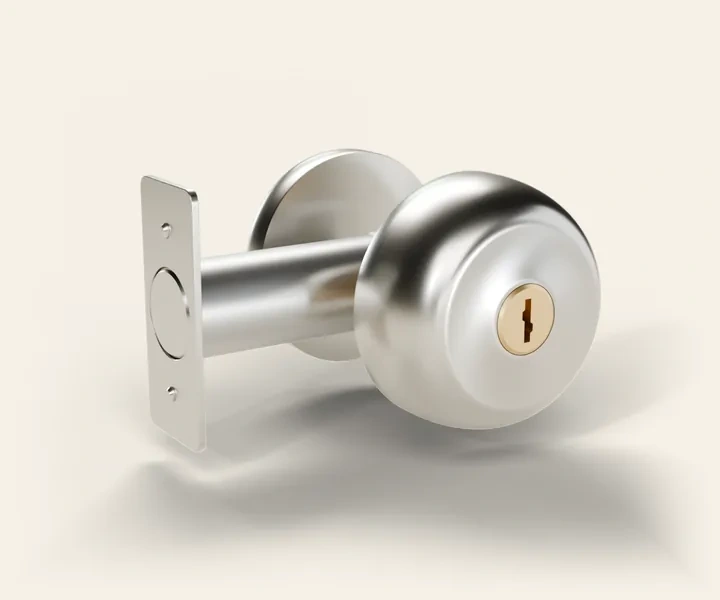
The lock you already have
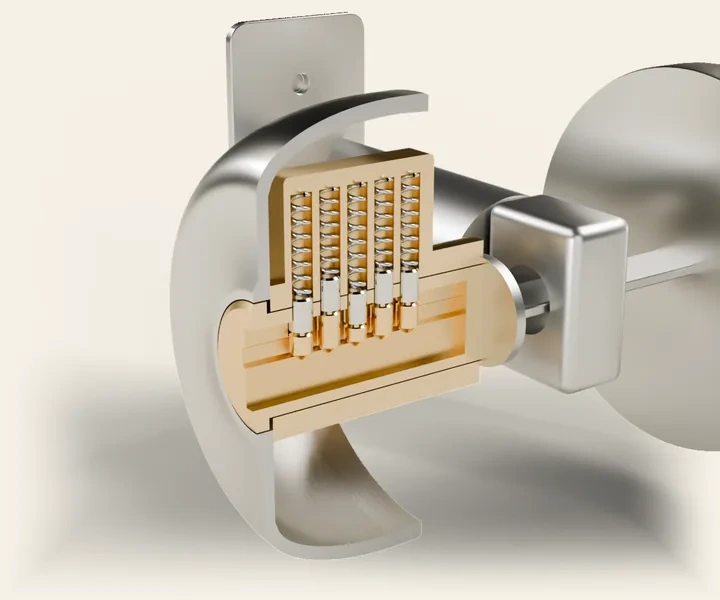
02
Inside the cylinder
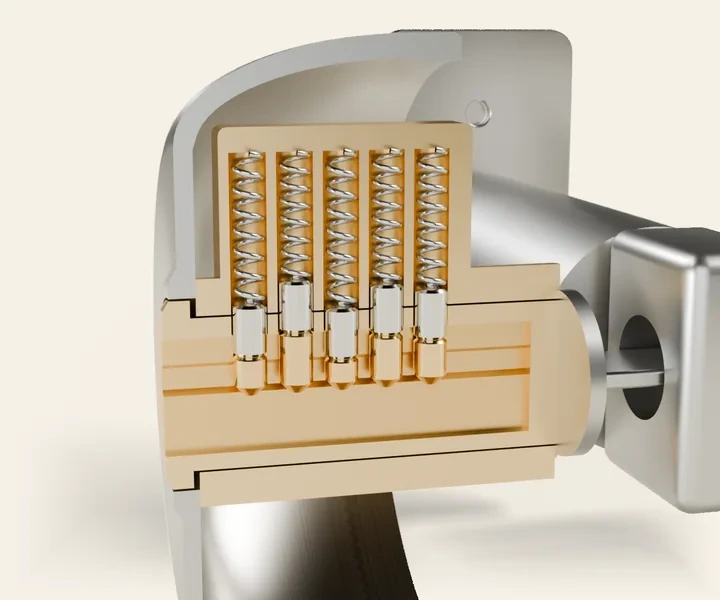
03
Pins, springs and the shear line
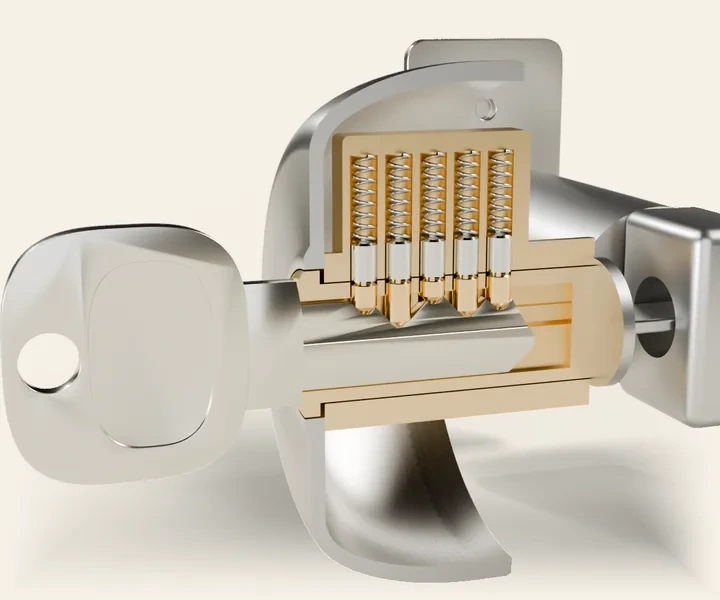
04
A new key, new pins
Lock Rekeying
How the visit goes
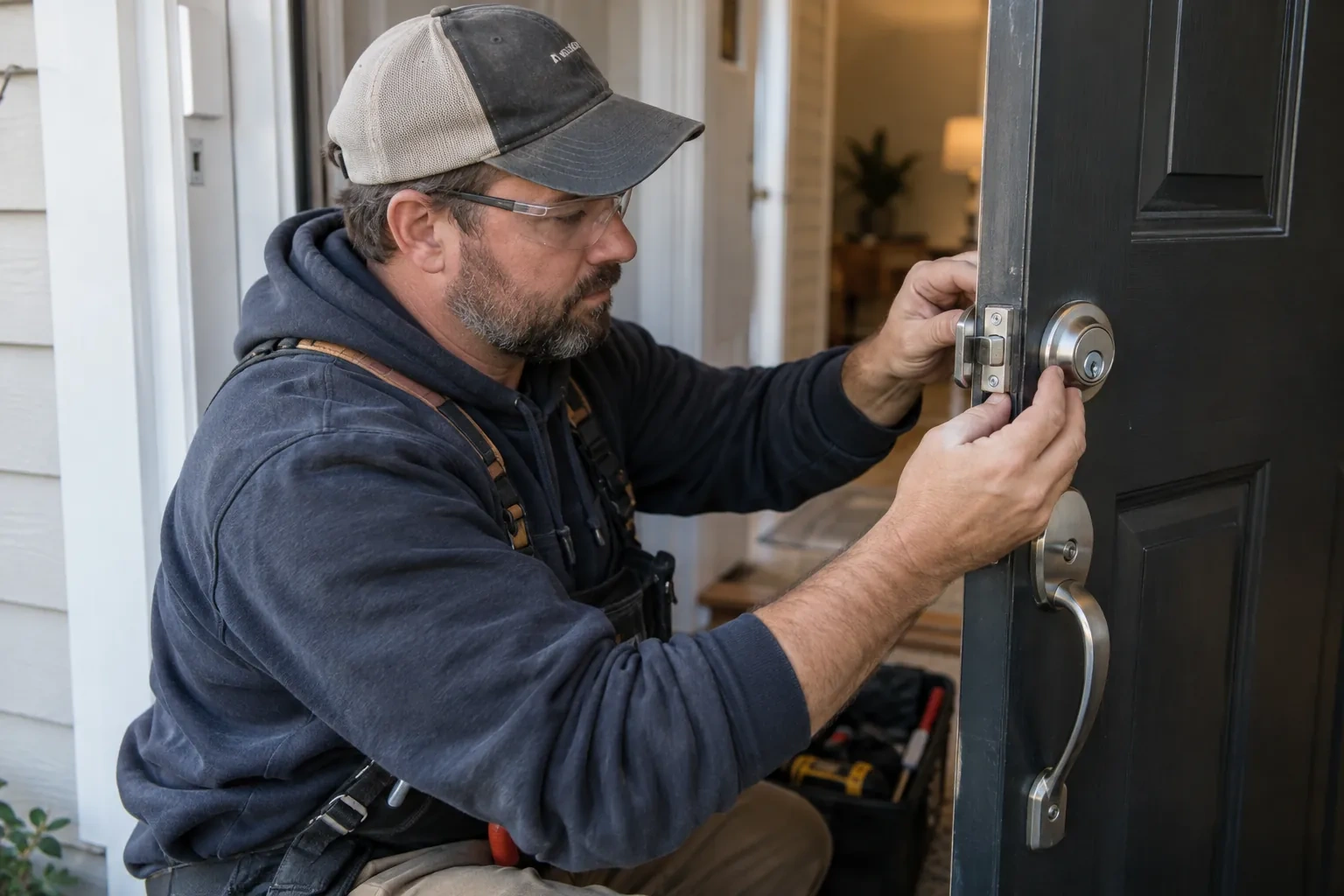
Reading the keyway on each lock
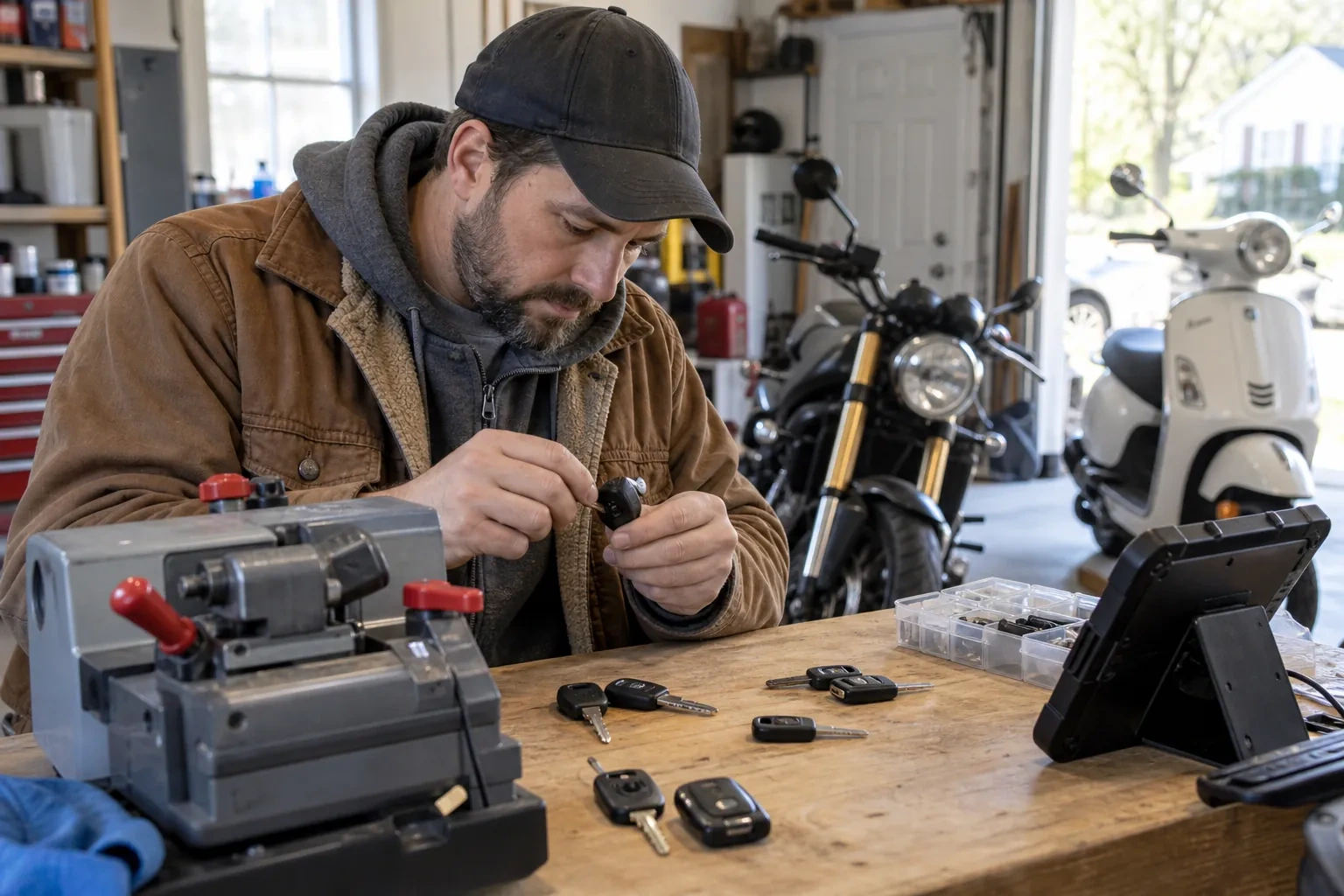
Whether several doors can share one key depends on the cylinders, not the number of doors. Each lock has a keyway, the profile a key must match to enter the plug, and only cylinders with the same keyway can be pinned to the same key. The locksmith looks at the face of each cylinder and the profile of each existing key to sort the house into families. Most homes carry one or two of the common residential keyways, sometimes with an odd one on a side door or a padlock. Anything from a different family is noted so you can decide whether to swap that cylinder for a matching one and bring the door onto the house key.
When a cylinder is swapped instead of repinned
Sometimes the right move for a particular door is a new cylinder rather than new pins, and the locksmith says so before doing it. A cylinder with a keyway that cannot join the household key is replaced with one that can. A plug that has worn oval, springs that have collapsed, or a cylinder someone has already drilled is replaced because fresh pins would not fix its feel. In each case the replacement is pinned to the same new key as the rest of the house, so the swap is invisible in daily use. The old cylinder is handed to you or taken away as you prefer.
New keys, counted and tried in every door
You finish the visit holding the only keys that work, and you know exactly how many there are. The locksmith cuts the agreed number from the fresh pinning rather than copying one from another, so each is as true as the first, and tries every one in every door it should open before handing them over. Count them, decide who in the household gets one, and put the spare somewhere you will remember. If a door was left on a separate key on purpose, that key is tagged so it does not get mixed into the house set. The whole set fits comfortably on one ring.
Lock Rekeying
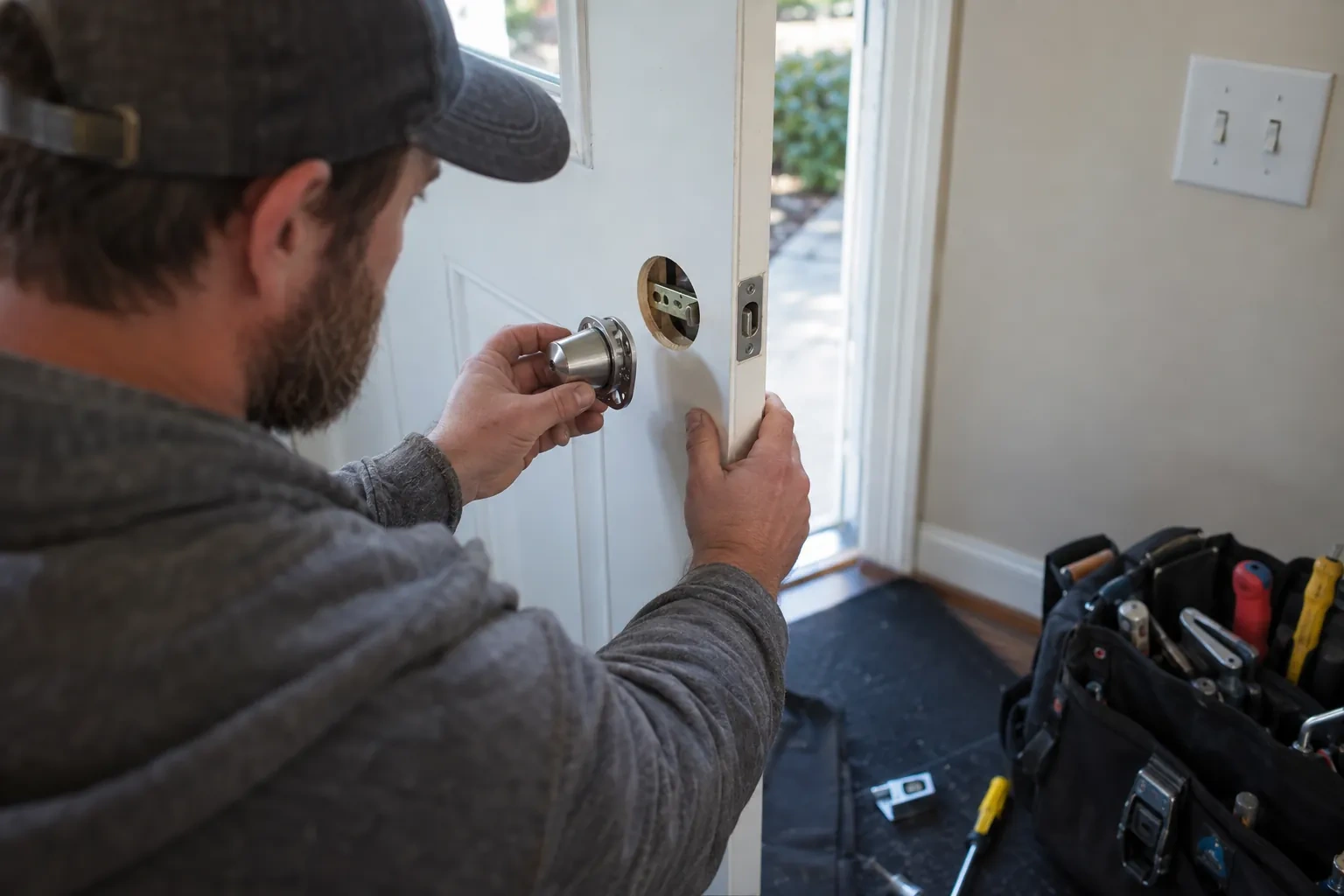
In the van
Cylinder shim
Key gauge
Plug follower
Key blanks
Graded bottom pin kit
Lock Rekeying
What affects the quote
Type of lock on each door
A standard deadbolt, a knob or lever set, a mortise lock in an older door, a padlock and a smart lock's override cylinder each come apart differently and take different time on the bench.
Several units in one building
A landlord rekeying a duplex, a triplex or a small apartment building, with each suite on its own key and a common entry shared, has more cylinders and a keying chart to build, and the quote grows accordingly.
Mismatched keyways needing a cylinder swap
Where one door's cylinder cannot take the key the other doors share, a compatible replacement cylinder is fitted and pinned to match, and that hardware appears as its own line in the quote.
What to have ready
- Is there a basement suite or office that should keep its own key?
- Do any locks feel stiff, loose or need a wiggle to turn?
- Is the home a condo or in a building with shared entrance doors?
Lock Rekeying: questions
QuestionsCan a smart lock or keypad deadbolt be rekeyed?
The mechanical part of it can. Many keypad or app-controlled deadbolts hide a small keyed cylinder under a cap for the day the batteries fail, and that cylinder can be pinned to your house key so the backup key on your ring is the same one that opens the other doors; some models are key-free and rely on an external battery backup instead. Codes are a separate matter: the locksmith will suggest deleting any code belonging to someone who no longer needs access at the same time.
Can all my doors be made to work with one key?
Usually, yes. Where the cylinders accept the same style of key blank, each can be pinned to one new combination, so a single key runs the front, back, side and garage doors. A lock from a different keyway family is brought into the group by exchanging its cylinder for a compatible one in the same finish. During the first walk around the property the locksmith reads every keyway and tells you up front which doors can be keyed alike.
Will my door hardware look any different afterwards?
No. The work happens inside the cylinder, so the bolt, handle, finish and strike plate stay exactly as they are, and nothing new is cut into the door. The only visible change is the key in your hand. If a cylinder does have to be replaced, because its keyway is incompatible with the others or it has worn out, the locksmith picks one in a matching finish so the door keeps a consistent look.
Related services
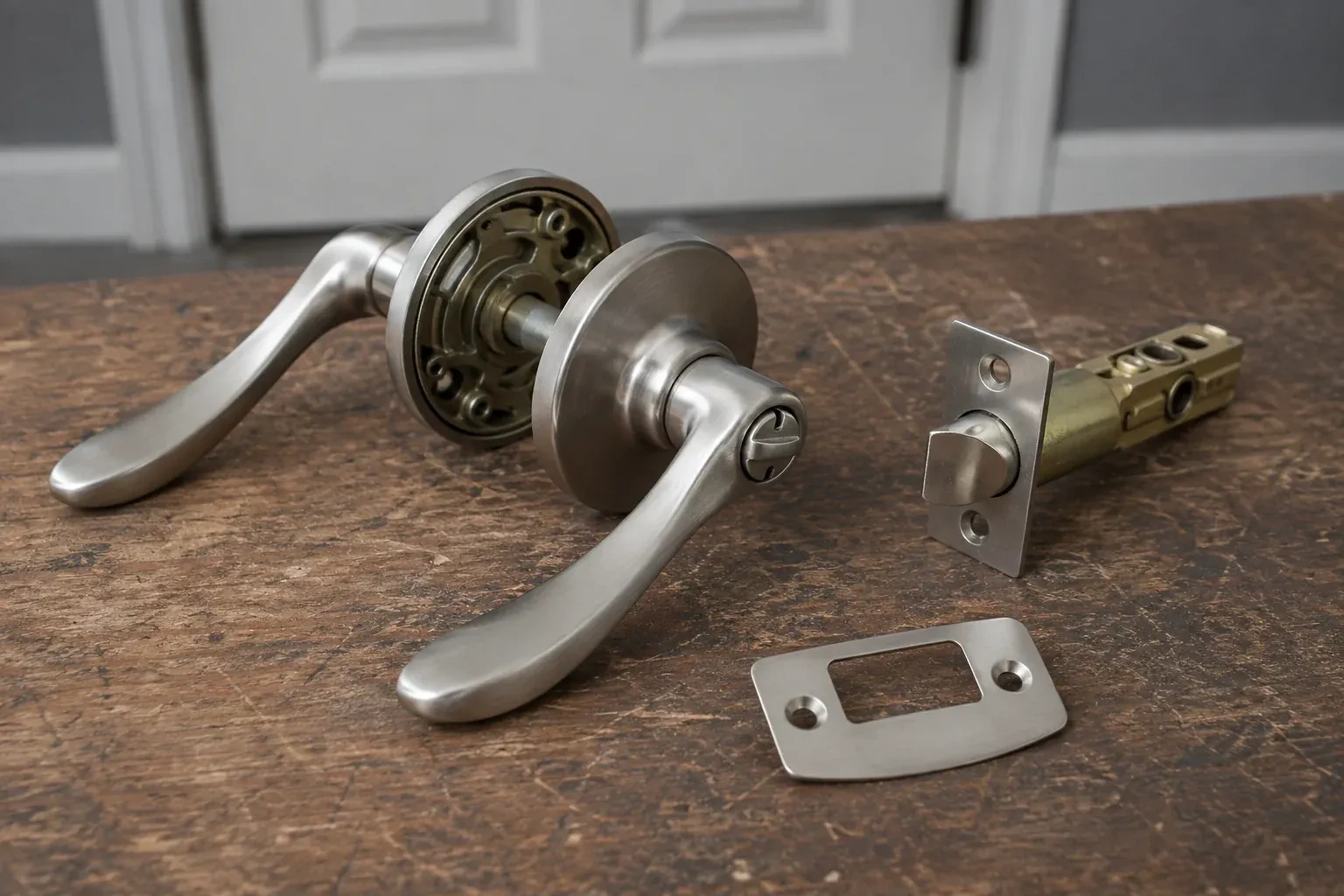
- Lock Replacement & UpgradeThe brass handleset has gone blotchy and green where the winter salt reaches it, and the coating on the deadbolt is lifting in flakes.
- Vintage Mortise Lock ServiceThe brass knob on the front door of your century home turns, but nothing happens on the other side.
- Smart Lock InstallationThere are four copies of the front-door key floating around: one with the cleaner, one with a neighbour, one on a hook at your parents' place, and one you honestly cannot account for.