Change or rekey · Toronto
Lock Replacement & Upgrade
The brass handleset has gone blotchy and green where the winter salt reaches it, and the coating on the deadbolt is lifting in flakes.
In plain words
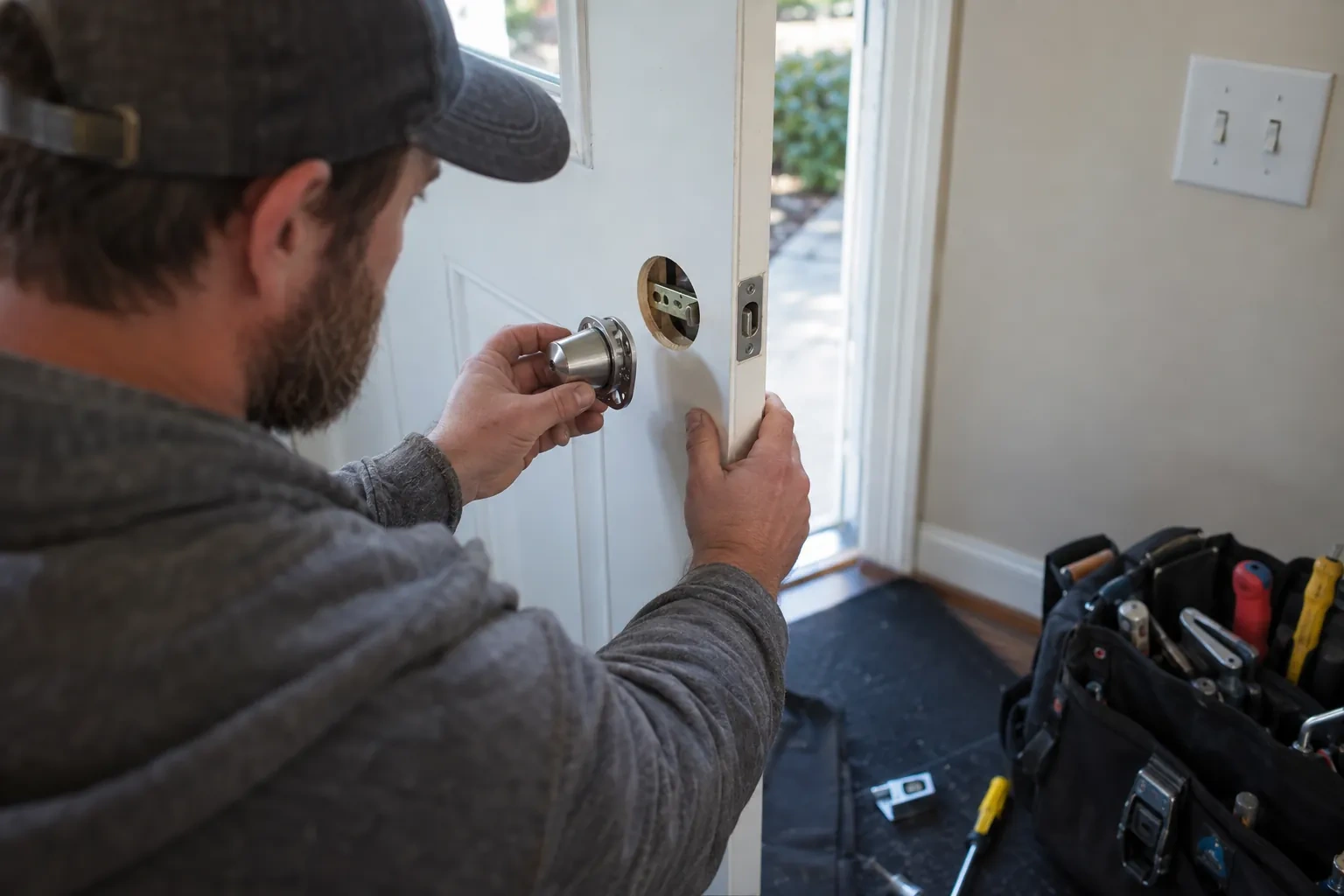
A keypad or smart lock is a lock replacement with a few extra steps, and it suits households where keys circulate widely. The locksmith fits the new deadbolt to the existing bore, checks that the bolt throws freely so the motor is never straining against a misaligned strike, sets up user codes and any phone pairing, and shows you the mechanical override and the battery warning. Because these locks still rely on a bolt and a strike, the same attention goes into the frame as for any deadbolt. You gain convenience without giving up the mechanical basics that make a door hard to force.
How the visit goesThe century home's original mortise lock takes a key the size of a spoon, sticks in humid weather and has worn its strike to a groove. You want a lock that works every day without giving up the old door.
Lock Replacement & Upgrade
How the visit goes
Who is asking for the change
The first check is about the person, not the door. An owner can change any lock on their home. A tenant who wants new hardware on the unit door needs the landlord's agreement, and a landlord who changes a lock while a tenant lives there hands over new keys. The locksmith asks which situation applies and, where paperwork helps, looks at identification, a deed, a lease or a property-management note. It takes a minute and it means the new lock goes on with everyone who has a stake in the door knowing about it, which is exactly how a lock should start its working life.
Stepping up the grade of a deadbolt
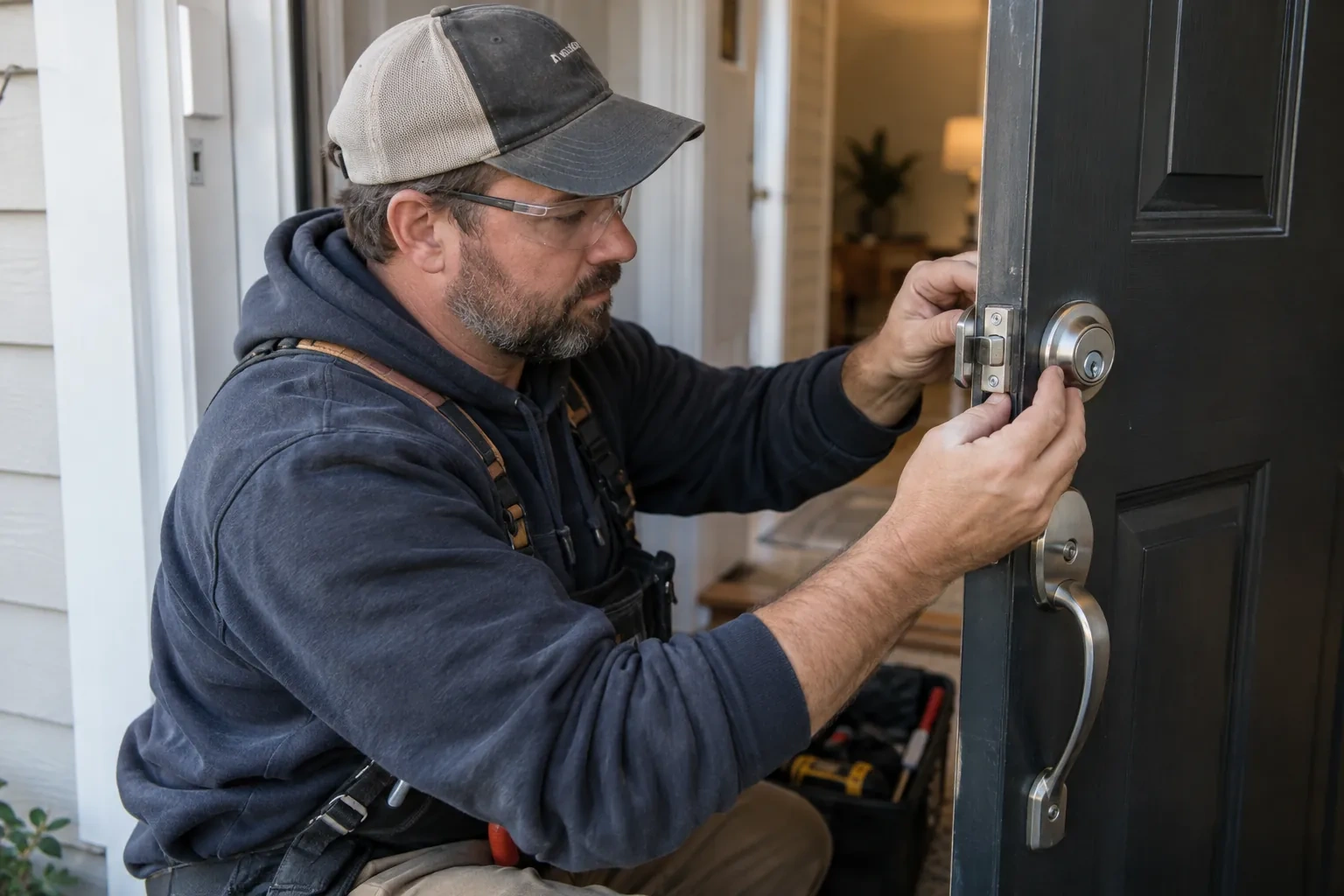
When the brief is a stronger door, the new deadbolt is chosen for what is inside it: a bolt with a full 25 millimetre throw and a hardened steel insert that spins against a saw, a housing that stands low so a wrench has nothing to grip, and a cylinder with pins that resist picking and bumping. Fitting follows the normal steps, but the locksmith confirms the bolt reaches full extension with the door closed, because a high-grade bolt seated halfway into a shallow pocket behaves like a low-grade one. The strike is upgraded alongside it so both halves of the lock share the same standard.
Simple habits that keep new hardware new
New locks ask very little. Once or twice a year, or at whatever interval the lock maker specifies, a puff of the lubricant that maker calls for in the keyway and a few turns of the key keep the pins moving freely, since the wrong product for that cylinder gathers grit instead of helping it. In winter, wipe salt spray off the exterior hardware when it appears, since salt is the finish's main enemy here. Each spring and fall, check that the hinge and strike screws are snug, because wood doors move with humidity and a dropped door makes a good lock feel worn. A key that starts to need coaxing is an early word from the cylinder.
Lock Replacement & Upgrade
In the van
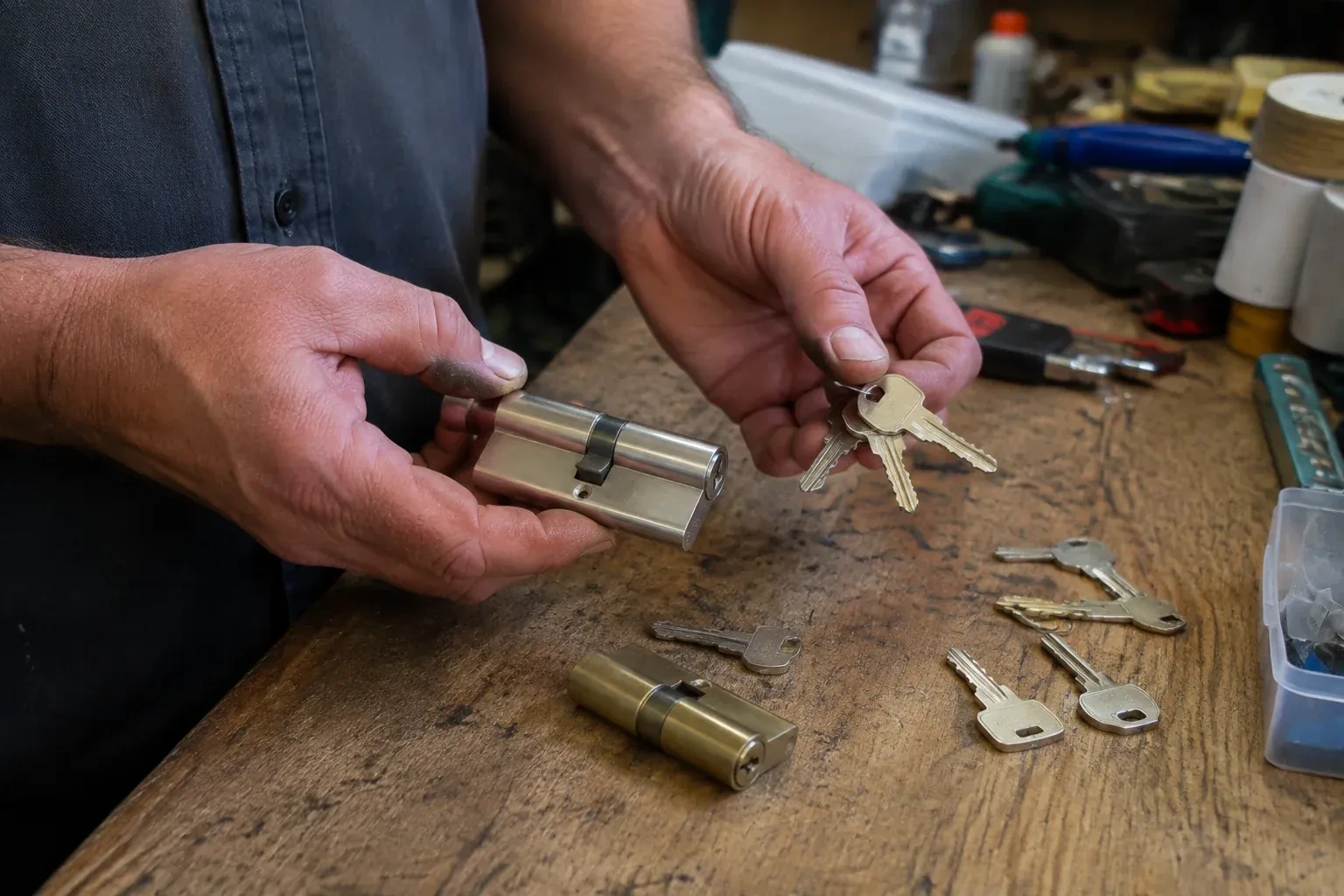
Cylinders, plug follower and pinning kit
Chisels, mallet and hand screwdrivers
Boring jig and hole saws
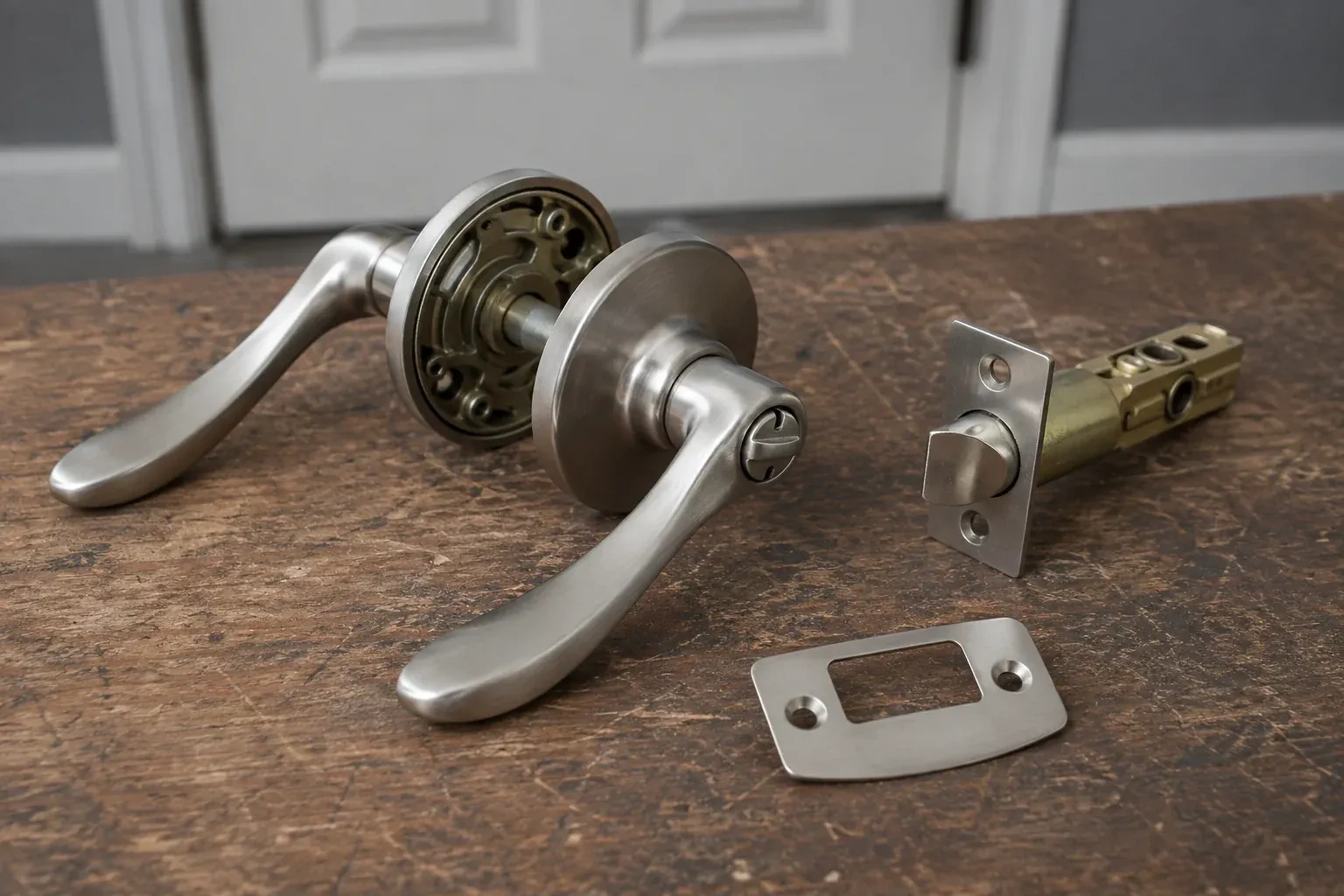
Knob or lever entry set
Manufacturer-approved cylinder lubricant
Lock Replacement & Upgrade
What affects the quote
Finish and style
Standard satin nickel or brass is one line; specialty finishes, matched suites across several doors and designer handlesets are others. The finish you choose for exposure and looks is priced as the maker prices it.
Restricted keyway system
Patented cylinders and controlled key blanks cost more than standard hardware and involve setting up your key records, which is quoted separately from an ordinary replacement.
Door material and thickness
Wood, steel and fibreglass doors are drilled and fitted differently, and a door thicker than the standard 45 millimetres needs extension parts, so the door itself shapes part of the quote.
What to have ready
- How many keys does the household need, and should copying be restricted?
- Are you interested in a keypad or smart lock on any door?
- Is there a sliding patio door or French door to include?
Lock Replacement & Upgrade: questions
QuestionsShould I rekey my locks or replace them?
Rekey when the hardware is sound and the problem is the key: a lost copy, a move, or too many keys for one house. Replace when the mechanism itself is worn, the housing or bolt is damaged, the grade was never suitable for the entrance, or you want a different function, finish or a keypad. Many visits do both, keeping good locks and rekeying them while replacing the tired ones, all to one key.
How do I look after a new lock so it stays smooth?
Very little is needed. Whatever lubricant and interval the cylinder maker specifies, worked into the keyway with a few turns of the key, keeps the pins free; using the wrong product collects grit instead of helping. Wipe salt off exterior hardware during winter melts. Snug the hinge and strike screws each spring and fall as the door moves with humidity. Cut spare keys from a crisp original rather than a worn copy.
My old house has a mortise lock. Can it take modern hardware?
Often the original case can be kept and given a new cylinder and strike, which keeps the period look and the old door intact. Where the case is beyond service, a filler or conversion plate covers the mortise pocket and lets a cylindrical deadbolt or knob set be fitted without cutting into the door's stile. The locksmith looks at the door before recommending either path, since old doors vary a great deal.
Related services
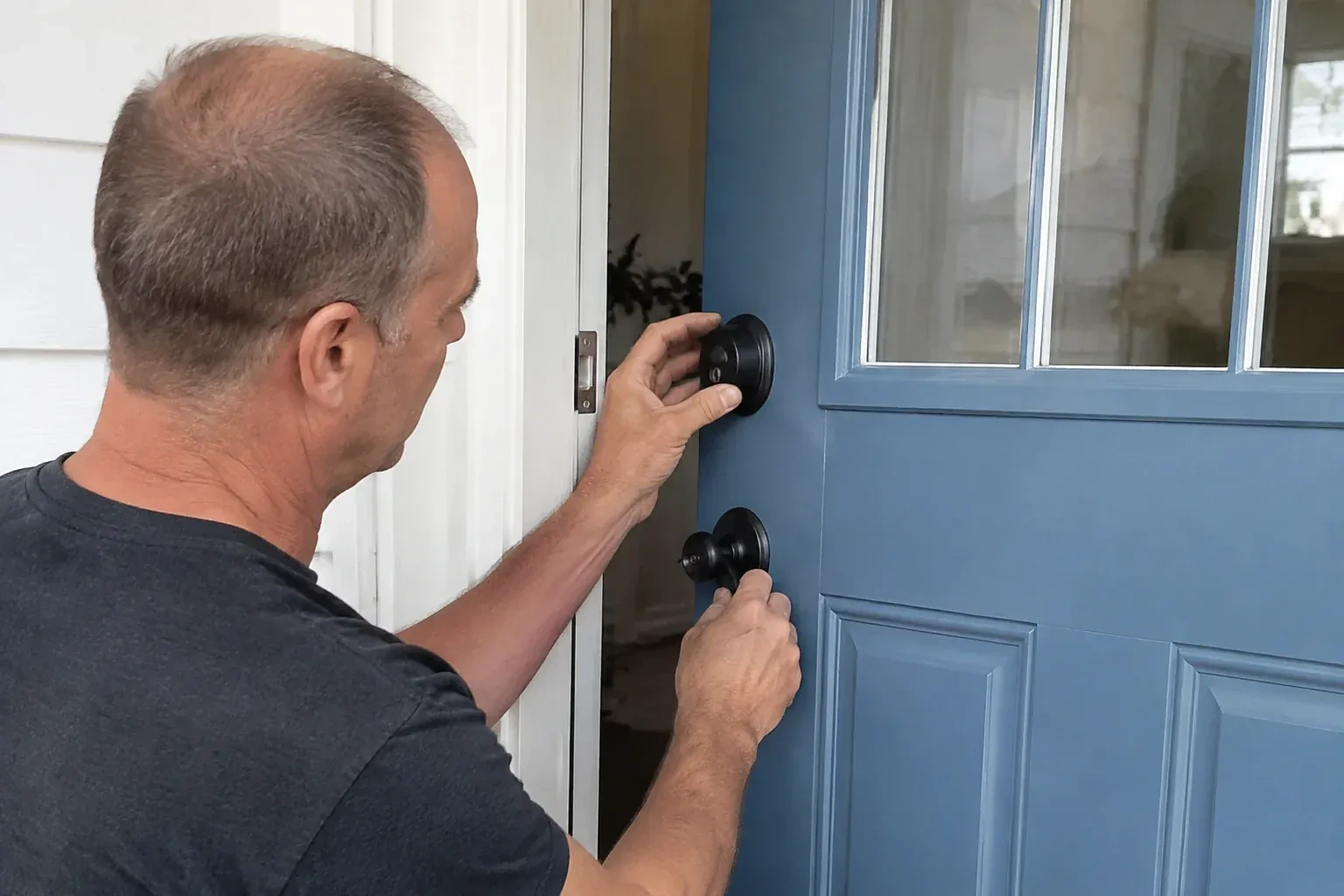
- Deadbolt InstallationYou bought a keypad deadbolt online and pulled the old one off, only to find the hole in the door is a different size and the bolt latch sits at a backset the new kit does not list.
- Vintage Mortise Lock ServiceThe brass knob on the front door of your century home turns, but nothing happens on the other side.
- Smart Lock InstallationThere are four copies of the front-door key floating around: one with the cleaner, one with a neighbour, one on a hook at your parents' place, and one you honestly cannot account for.