Commercial · Toronto
Panic & Exit Hardware
The daycare wants the yard gate and the classroom door alarmed so a staff member hears the moment it opens, without turning either into something a child could be shut behind.
In plain words
Panic and exit hardware installation fits a commercial door with a device that releases the latch the moment someone pushes on it from the inside, so the room's occupants are never asked to find a key to leave. The locksmith works from the room's occupancy and the door's fire rating first, then chooses a rim, mortise or vertical-rod device to suit the opening, pairs it with outside trim that still controls entry, and tests the release force and the latch before handing the door back. Any electrified addition, such as an alarm or a link to access control, is fitted once that basic function is confirmed.
How the visit goesTwo doors used to swing as a pair at the community hall entrance, but one leaf has started closing before the other, catching the astragal and leaving a gap wide enough to worry the caretaker.
Panic & Exit Hardware
How the visit goes
Confirming why the door needs this hardware
The visit starts with the reason exit hardware is being discussed at all: an occupant load that has crossed a threshold, a fire inspector's note, a new use for the room, or an existing device that has stopped working the way it should. Confirming this first decides everything downstream, because a door required to have a releasing device is treated differently from one where an owner simply wants easier egress. Whoever is responsible for the building is asked directly what triggered the visit, and the answer is recorded alongside the door it concerns before any hardware is chosen.
Mounting the device and fitting the strike
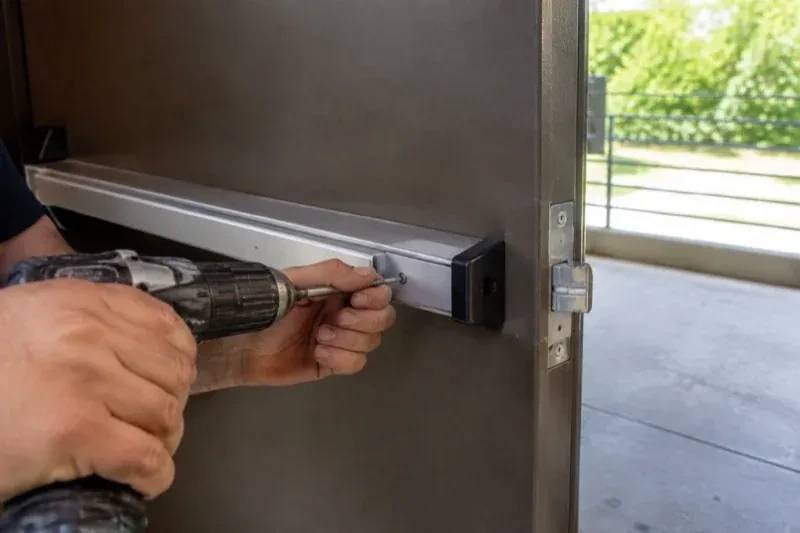
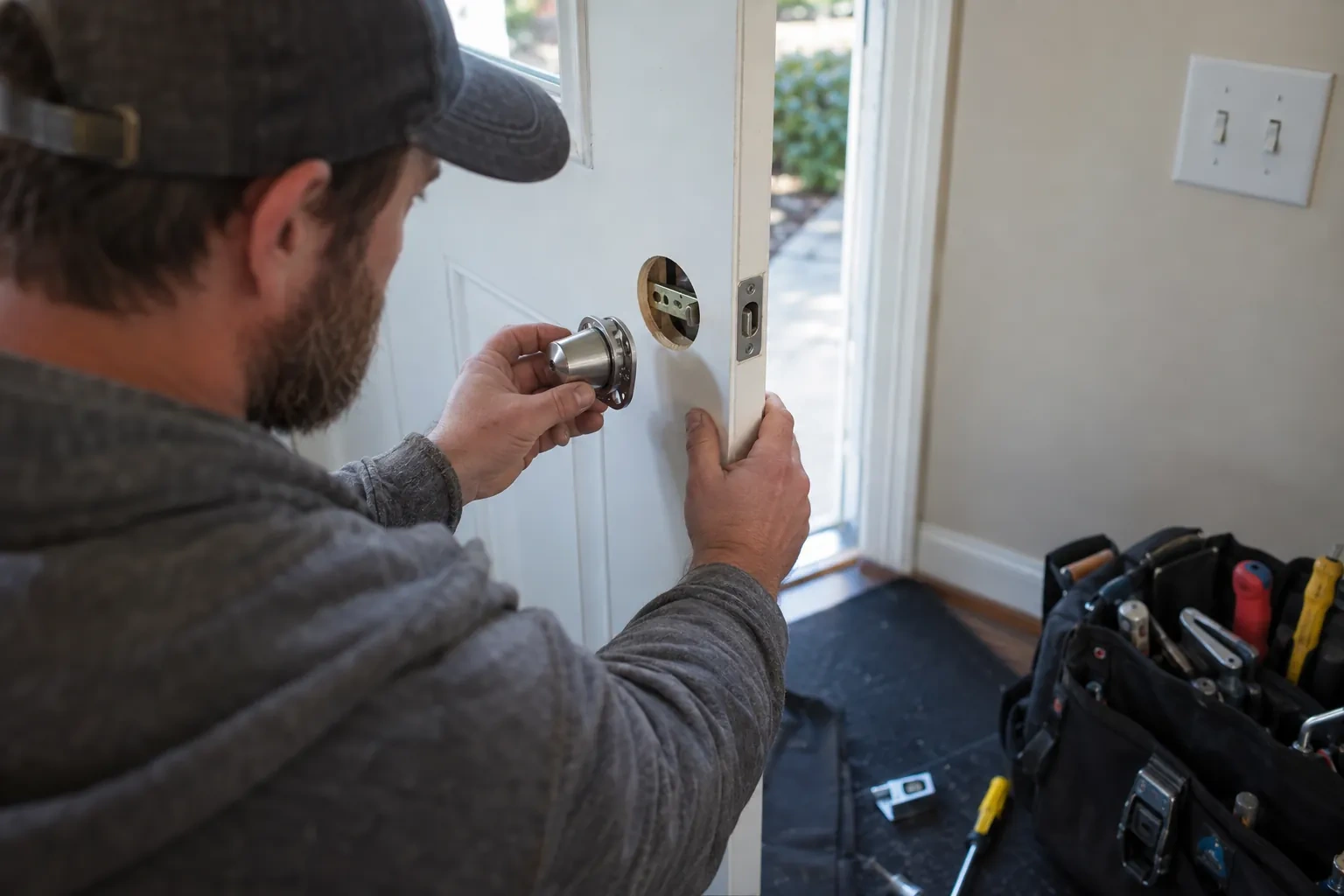
Installation follows the device's own template so every hole lands where the manufacturer intended, rather than adapting the door to a device that does not quite fit. Fasteners are chosen to match what the template and the door's own construction call for, and where the device specifies through-fixings, they run all the way through the door rather than biting into the surface alone. The strike is set and reinforced so it holds the latch securely under normal use. The crossbar or touchpad is aligned so it sits at a comfortable height and releases evenly across its width, not only at one end.
A written record for the next review
The building now has a document naming every device fitted, its rating, the trim and any electrified function, and the tests each assembly passed on installation day. That record is what a fire inspector, an insurance reviewer or a new facilities manager will ask for, and having it ready saves reconstructing the history of a door from memory or from whatever sticker happens to still be on the case. It is worth keeping with the building's other life-safety paperwork.
Panic & Exit Hardware
In the van
Request-to-exit switch
Strike and reinforcement
Installation template and jig
Door closer
Signage and labels
Panic & Exit Hardware
What affects the quote
Removing hardware that should not remain
A padlock, hasp or extra deadbolt found on the door is removed and the resulting holes are filled or covered as part of the same visit, which is its own small task in the quote.
Condition of the existing hardware
A device that only needs adjustment, cleaning and new fasteners costs less in labour than removing a seized or badly worn device and fitting a replacement in its place.
Occupancy and code documentation needed
A project with a fire inspector's note or a building official's requirement attached usually needs a more detailed written record than a straightforward upgrade an owner requests on their own initiative.
What to have ready
- Is access control or an alarm system planned for any of these doors?
- Does any door already have a hasp, padlock or extra deadbolt fitted?
- Which doors are involved, and are any of them fire-rated?
Panic & Exit Hardware: questions
QuestionsWhat outside trim options exist for an exit device?
A plain pull suits a door nobody needs to lock from outside. A lever with a key cylinder lets authorized people turn the handle and enter while the inside stays a simple push. A keyed cylinder alone, without a lever, suits occasional entry where a full handle is not needed. All three leave the inside crossbar untouched, since the trim only ever affects the outside.
What counts as panic hardware?
Panic hardware is a door-latching device, usually a crossbar or touchpad running most of the door's width, that releases the latch the moment someone pushes on it from the inside. It is built and tested so a light, even push anywhere along the bar opens the door, which is why it is chosen for doors serving rooms with enough people that fumbling for a key during an exit is not acceptable.
Is delayed-egress hardware allowed here?
Delayed-egress locking has a defined place in the codes that cover it, generally paired with sprinkler protection and a fire alarm system, and it is not a way to lock a door indefinitely; a short delay still releases on its own once the push is held, and always releases as soon as a fire alarm signal arrives. Whether it suits a given opening depends on the occupancy and the authority having jurisdiction, so it is confirmed with them before it is specified.
Related services
- Master Key System DesignOn the warehouse floor, a shift supervisor's key opens the loading dock, the tool crib and the manager's office, though only the dock is really part of the job.
- Access Control InstallationYou just leased the empty unit next door and want the new tenant to open their own suite without a key to yours, to the loading dock, or to the electrical room down the hall.
- Commercial-Grade Lock ReplacementOvernight someone forced the back door, and the cylinder face is scarred, the metal around the strike has pulled loose from the frame, and the latch no longer sits flush.