Car keys · Toronto
Transponder Key Programming
The new key slides into the ignition and turns exactly the way the old one did, but the engine only cranks.
In plain words
There are really two separate keys hiding inside one piece of metal and plastic: the cut, which is entirely mechanical and opens doors and turns cylinders, and the code, which is electronic and tells the immobilizer to allow the engine to run. A key can be perfectly cut and still leave a car cranking without starting if the code was never written. Programming is the part of the job that handles the code, using equipment built to read and write the exact system fitted to that vehicle.
How the visit goesThe new key slides into the ignition and turns exactly the way the old one did, but the engine only cranks. A dashboard light blinks near the fuel gauge, and no amount of turning the key gets the car past that cranking sound.
Transponder Key Programming
How the visit goes
Reading the vehicle's own system
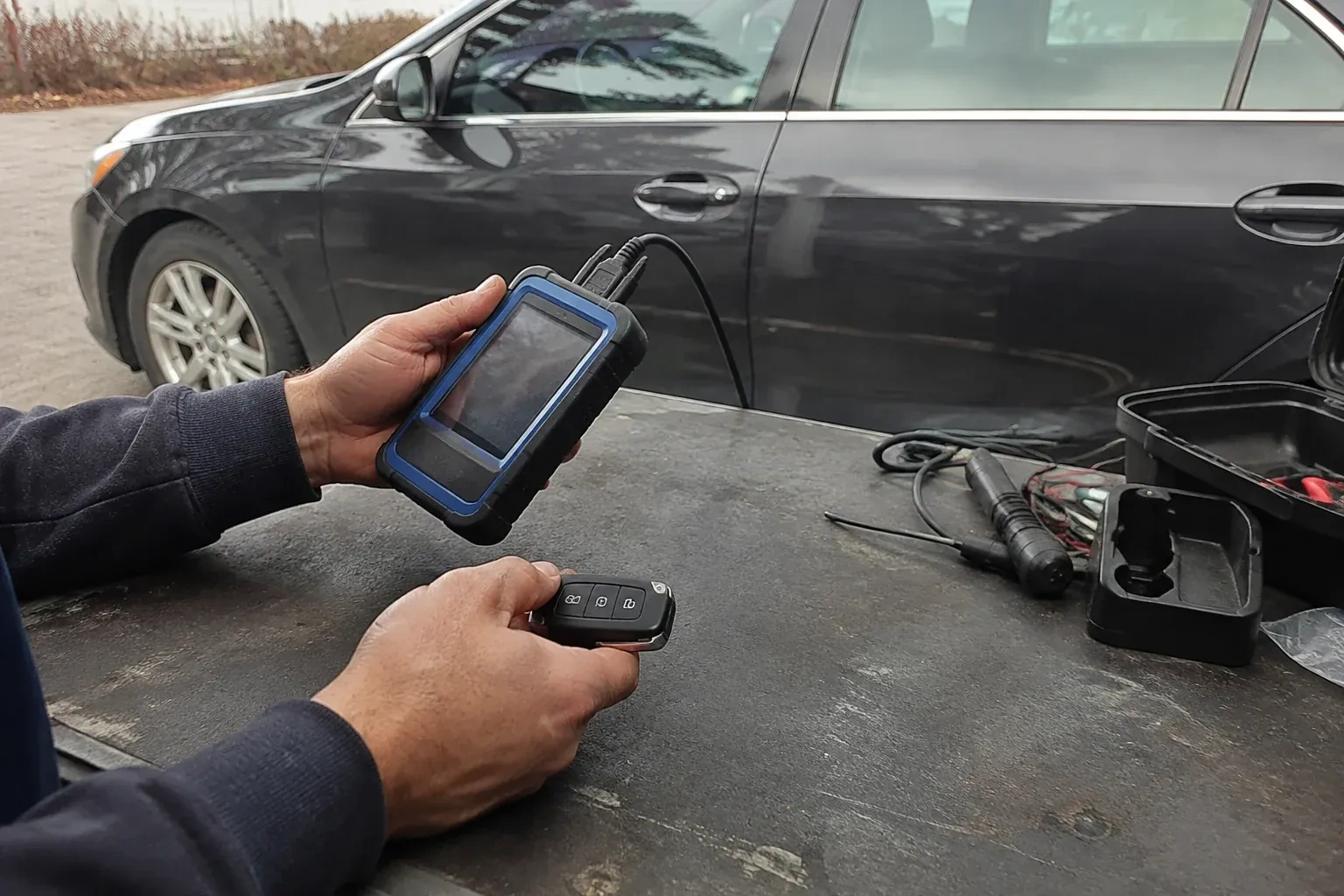
Every vehicle answers a question the locksmith asks before touching a key: what generation of chip does this immobilizer expect, and where can its key list be reached? A simple fixed-code chip behaves differently from a rolling-code or encrypted one, and some models allow a key to be added through the onboard diagnostic port while others gate that list behind a manufacturer-level security session. Reading this correctly first avoids wasted effort later and tells the locksmith exactly which chip family the new blank needs to carry.
Reading the vehicle before writing anything to it
A diagnostic tool connects to the vehicle before any new information goes into it, and the current key list is read first so nothing already stored is disturbed by accident. This step also confirms the exact immobilizer and chip generation in front of the locksmith, since guessing wrong at this stage wastes an attempt on a system that will simply reject it. Only once the vehicle's own data is understood does the visit move toward adding, clearing, or replacing an entry in that list.
A spare that already exists, not one for later
A spare key made before it is needed sits in a drawer doing nothing until the day the only other key is lost, and on that day it is worth more than any amount of good intention would have been. Households that arrange this while it is convenient rarely regret it, and the visit that adds a driver's key or a genuine spare is no more involved than the one that replaces something already missing. The difference is only in when it happens.
Transponder Key Programming
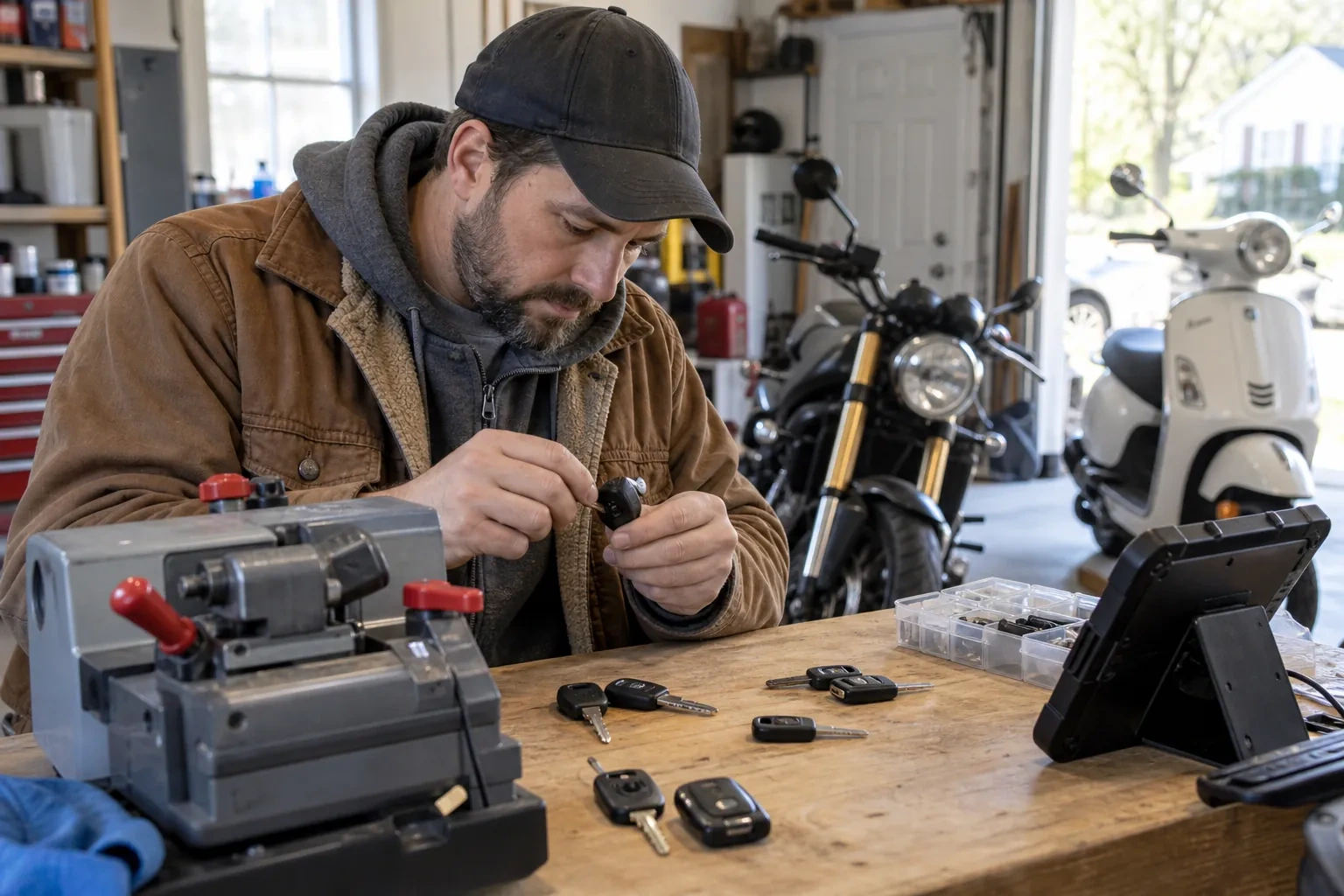
In the van
OBD-II key programmer
Key cutting machine
Fob battery
Frequency test reader
Replacement remote-head fob
Transponder Key Programming
What affects the quote
Cutting method: by code or by duplication
Cutting from a manufacturer code tends to be more direct than duplicating from a worn or damaged working key, where extra care is needed to read the original cuts accurately before a blank is shaped to match.
Any extra function added to the new key
Pairing remote entry, trunk release, or proximity walk-up functions onto a new key is additional work beyond the immobilizer chip alone, and each function is confirmed working before the visit is considered finished.
Aftermarket alarms or remote starters already installed
A vehicle with an aftermarket alarm or remote starter wired into its ignition circuits may need extra time to confirm how that system interacts with the factory immobilizer before a new key is programmed.
What to have ready
- Is this a lost, stolen, damaged or spare-key situation?
- What is the year, make and model of the vehicle?
- Was a spare ever cut without being programmed?
Transponder Key Programming: questions
QuestionsDo I need to bring the car in, or is this done where it's parked?
Programming is done at the vehicle itself, since the equipment connects directly to it. Whether that is a driveway, a parking lot, or wherever the car happens to be, the visit travels to the vehicle rather than the other way around. The one requirement is that the vehicle is present and accessible for the whole visit, since the process reads and writes to its own onboard systems.
Can a vehicle from before transponder keys were common have one added now?
It depends on the vehicle and what its factory ignition system supports; some older models can accept an aftermarket immobilizer and matching transponder key, while others were never built with a compatible module at all. This is worth discussing model by model rather than assuming either answer, since the mechanical side of an older ignition is often the easier half of that conversation.
Could an aftermarket remote starter interfere with programming a key?
It can, mainly because a remote starter is often wired into the same ignition and immobilizer circuits a new key needs to talk to. The locksmith asks about any aftermarket installation before starting, and if it is involved, checks how it was wired in rather than assuming the factory system is untouched underneath it.
Related services
- Car Key ReplacementMinus twenty outside, the fob button does nothing, and the door keyhole has a crust of road salt over it because you have not used a metal key in that car since the day you bought it.
- Spare Car Key DuplicationThe blade on the everyday key has gone shiny and thin along one edge, and lately it needs a wiggle before the ignition catches.
- Key Fob ProgrammingButtons on the fob still light up and the remote still clicks, but the vehicle refuses to start even with the fob sitting in the cupholder.