Car keys · Toronto
Car Key Replacement
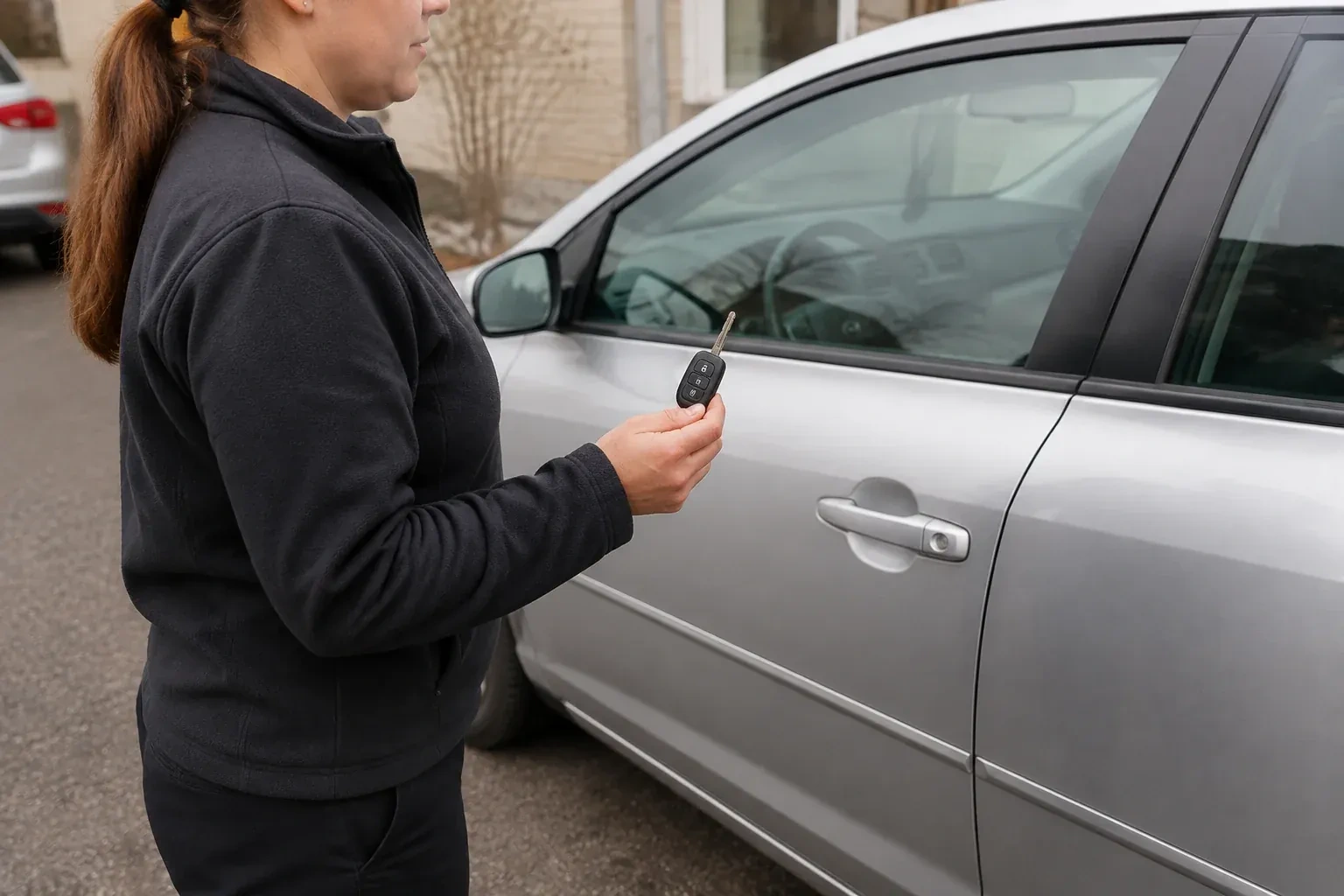
Minus twenty outside, the fob button does nothing, and the door keyhole has a crust of road salt over it because you have not used a metal key in that car since the day you bought it.
In plain words
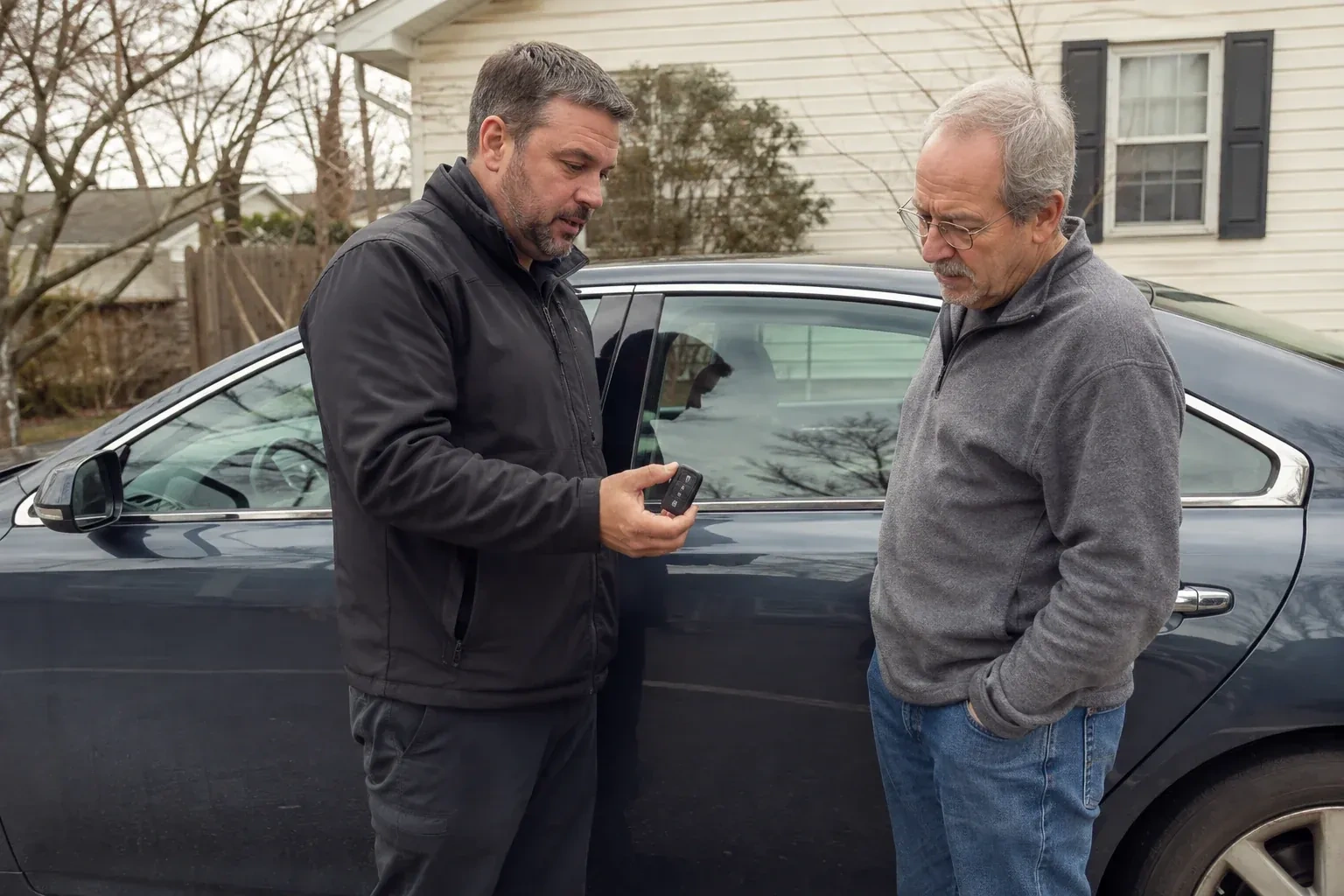
Losing a key is also a security event, and replacement is the moment to close it. The locksmith can erase the missing key from the immobilizer's memory during programming, so a stranger who finds it holds a blade that opens a door and a chip the car no longer answers to; the remote is unpaired the same way. If you would like to go further, every cylinder the old blade operated, doors, ignition and any trunk or fuel-door lock, can be changed so it fits nothing. You leave with new keys that work, old keys that are silent, and a note of how many keys the car now recognizes.
How the visit goesThe engine cranks, catches for a second and dies, and a small key-shaped light keeps blinking on the dash. The blade turns the ignition and the doors perfectly well, but the car has stopped recognizing the chip inside the key.
Car Key Replacement
How the visit goes
The locks and ignition, not only the key
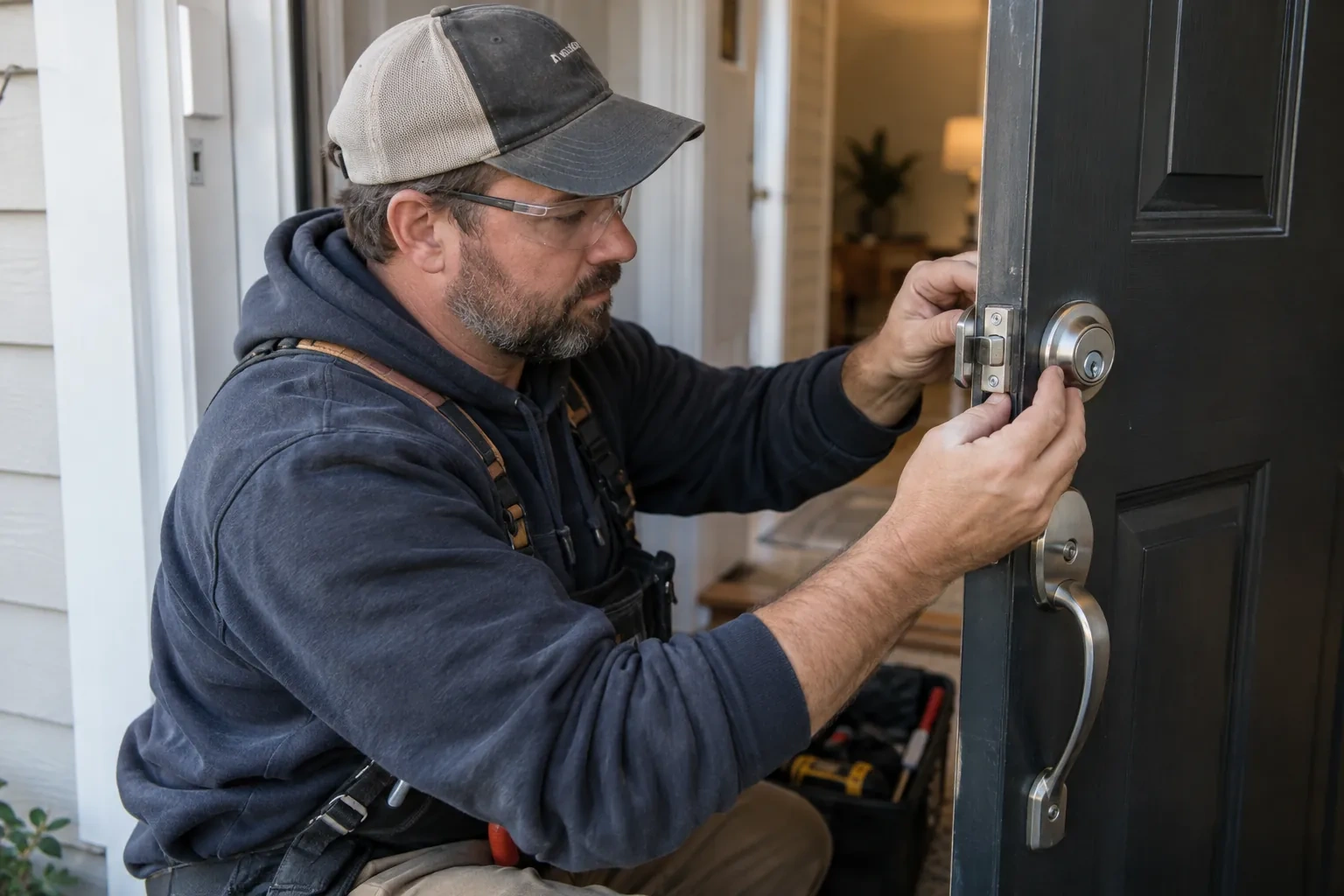
A new key is only as good as the cylinders it turns, so the check looks at the car too. A door lock that has gone unused for years on a keyless vehicle can be stiff with salt and grit; an ignition that needed a jiggle with the old key has worn wafers that will feel tight with a fresh blade; a previous replacement may have left the doors and ignition on different cuts. Aftermarket alarms and remote starters can also sit between the key and the immobilizer. Spotting these early lets the locksmith bring the right parts and explain what else the car may need so the new key feels right.
Rebuilding a damaged key around its electronics
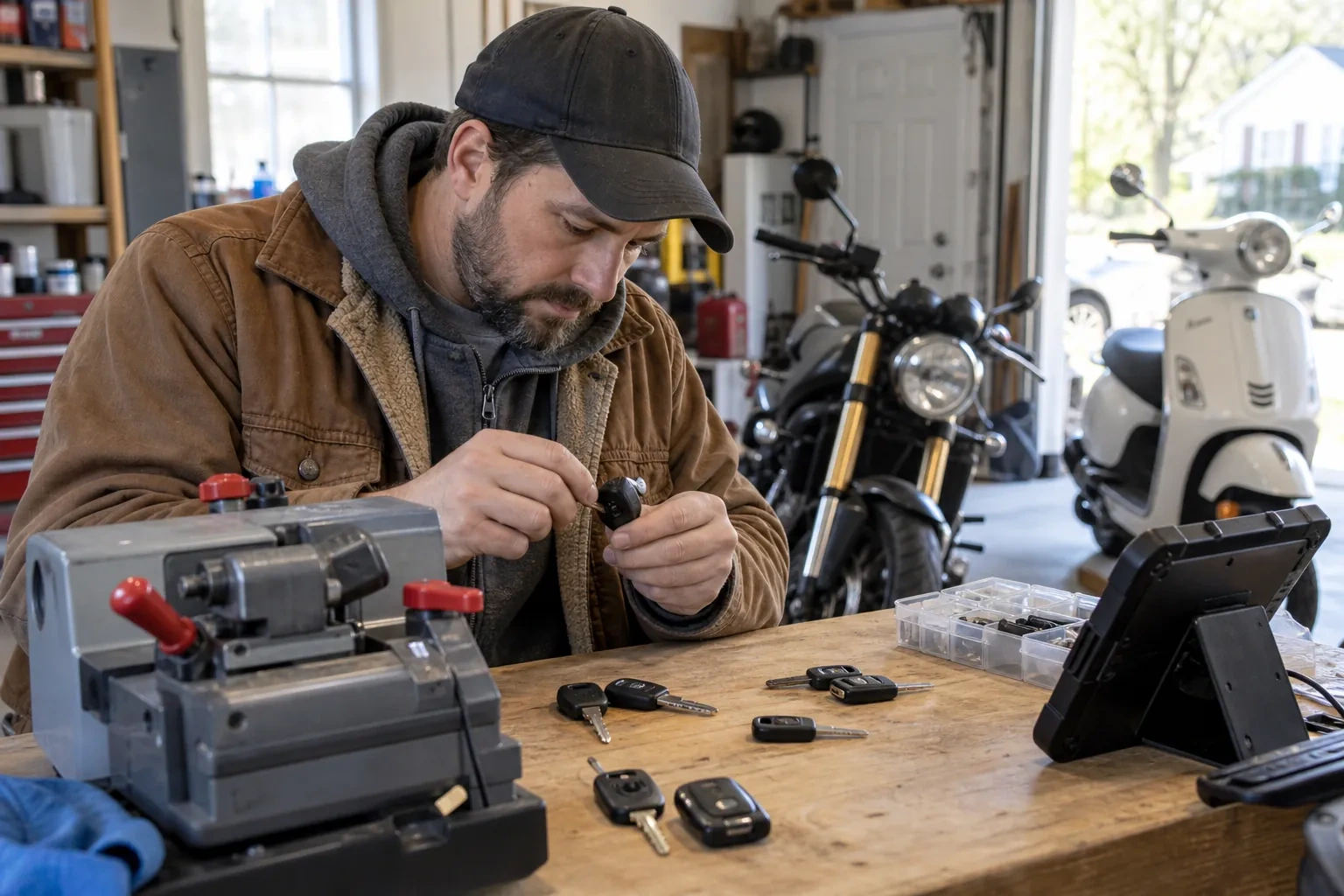
A key with a cracked case, a broken ring loop or a snapped blade often keeps a perfectly good circuit board and transponder inside. The locksmith opens the old shell, lifts out the board and the chip, and seats them in a new case of the correct pattern. A fresh blade is cut to code and fitted to the new head, and a new coin cell goes in while the case is open. Because the chip and the remote circuit have not changed, no programming is required, and the rebuilt key behaves exactly as the original did on the day it left the factory.
A crisp new blade in a well-used ignition
A blade cut to code is made to the lock's original dimensions, so it should turn smoothly from the first use. What it should never do is need the wiggle the old key needed; if it does, or it feels stiff or forced, that points to worn ignition wafers or a cutting issue, and the cylinder is checked and serviced or rebuilt rather than waited out. Keep the new key on a light ring, since a heavy bunch hanging from the ignition is what wears the wafers in the first place.
Car Key Replacement
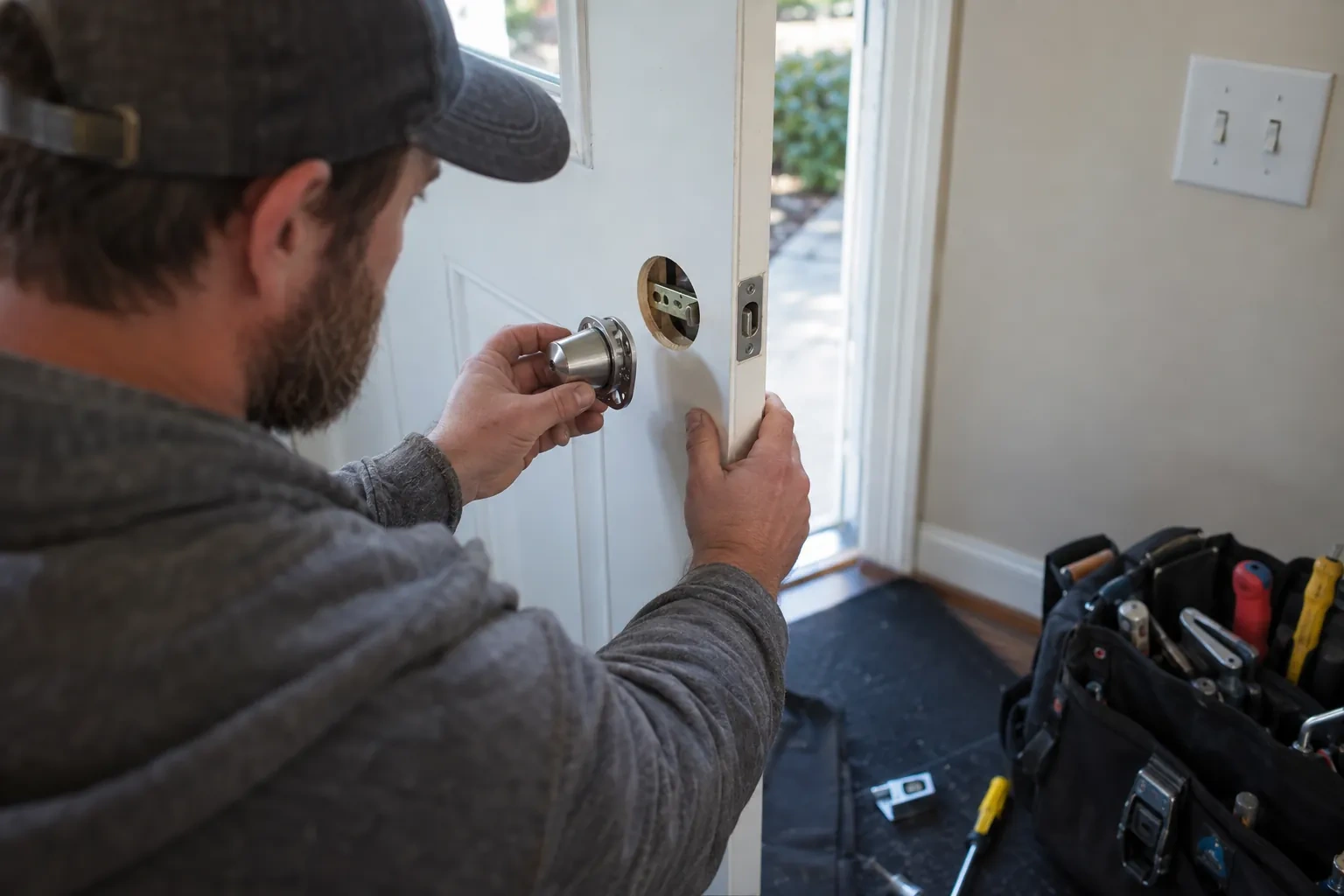
In the van
OBD programming tool
Transponder chip
Security PIN or secure-data access
Decoding pick and lock reader
Code-cutting machine
Car Key Replacement
What affects the quote
How many keys you leave with
Each key is a blank, a cut and a programming slot, so the total follows the count. Making the spare during the same visit is usually the sensible time to do it.
Edge-cut or high-security blade
A plain edge-cut blade is cut on a code machine in moments. An internal high-security blade is milled to fine tolerances on a different machine, and the blanks themselves are dearer, so the blade type shows up in the quote.
One working key or none
A spare added beside a working key is a shorter routine. Starting from nothing means working through whatever that vehicle's own all-keys-lost procedure calls for, commonly opening the car, decoding the lock and resetting the immobilizer, and the quote reflects those extra stages.
What to have ready
- How many keys would you like to leave with?
- Is the car registered in your name, leased, or owned by a company?
- Is there an aftermarket alarm or remote starter fitted to the car?
Car Key Replacement: questions
QuestionsCan a key be made for an older car with no chip?
Yes, for a vehicle that genuinely has no immobilizer, checked by VIN and equipment rather than assumed from age, since several early-2000s vehicles already shipped with a factory immobilizer and coded key. Where that is the case, it is the simplest key work there is: a blade cut to the factory code from the VIN or to a reading of the door lock, rather than copied from a worn original. If the ignition has become sloppy, the locksmith can rebuild it in the same visit.
The car is leased or belongs to my employer. Can you still make me a key?
Yes, with the right paperwork. For a leased car, the lease agreement in your name together with your identification and the permit covers it. For a company vehicle, the locksmith needs authorization from the business: a work order, purchase order or letter naming the VIN and the person collecting the key. Mention the arrangement when you call so the correct document is ready and the record can be completed properly.
How many keys should a car have?
Two working keys is the sensible minimum, and it is what most vehicles left the factory with. One lives on your ring; the other lives somewhere safe away from the car. With two, any future key work is an add-a-key job rather than a reset from nothing. Households that share a vehicle, or owners with a remote starter on one fob and a plain key for the valet, sometimes prefer three.
Related services
- Spare Car Key DuplicationThe blade on the everyday key has gone shiny and thin along one edge, and lately it needs a wiggle before the ignition catches.
- Key Fob ProgrammingButtons on the fob still light up and the remote still clicks, but the vehicle refuses to start even with the fob sitting in the cupholder.
- Transponder Key ProgrammingThe new key slides into the ignition and turns exactly the way the old one did, but the engine only cranks.