Car keys · Toronto
Car Lockout Service
The rental van came with one key.
In plain words
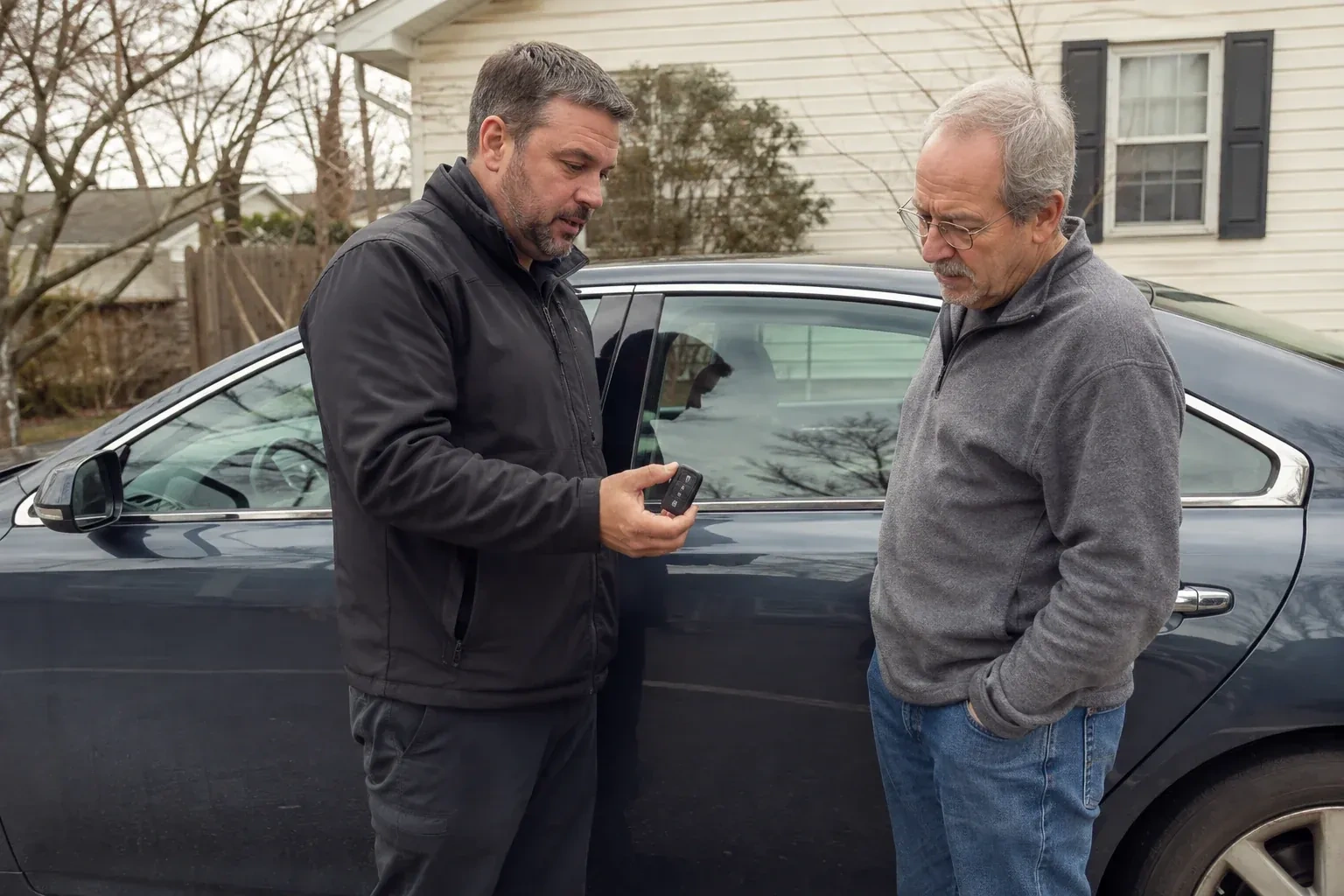
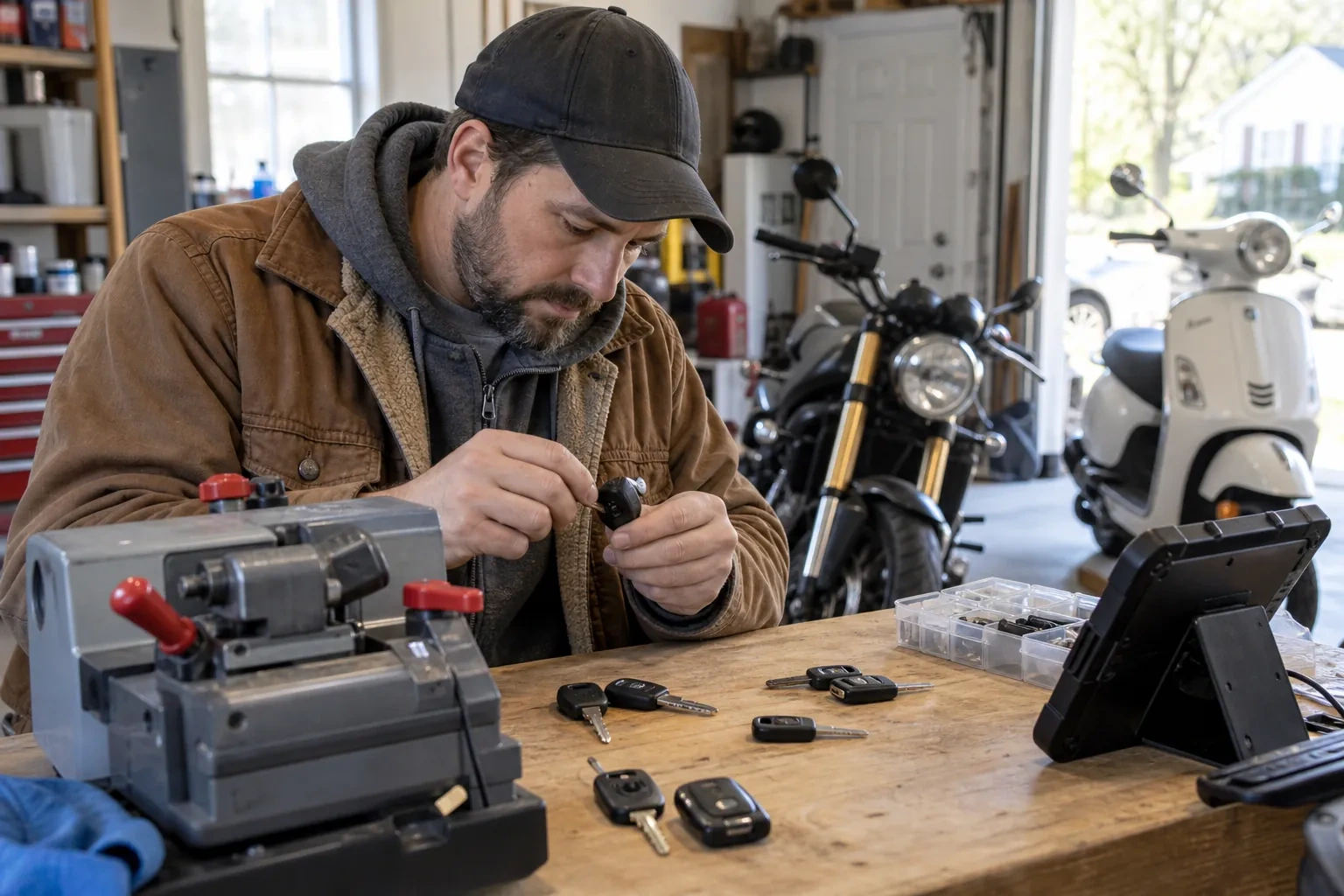
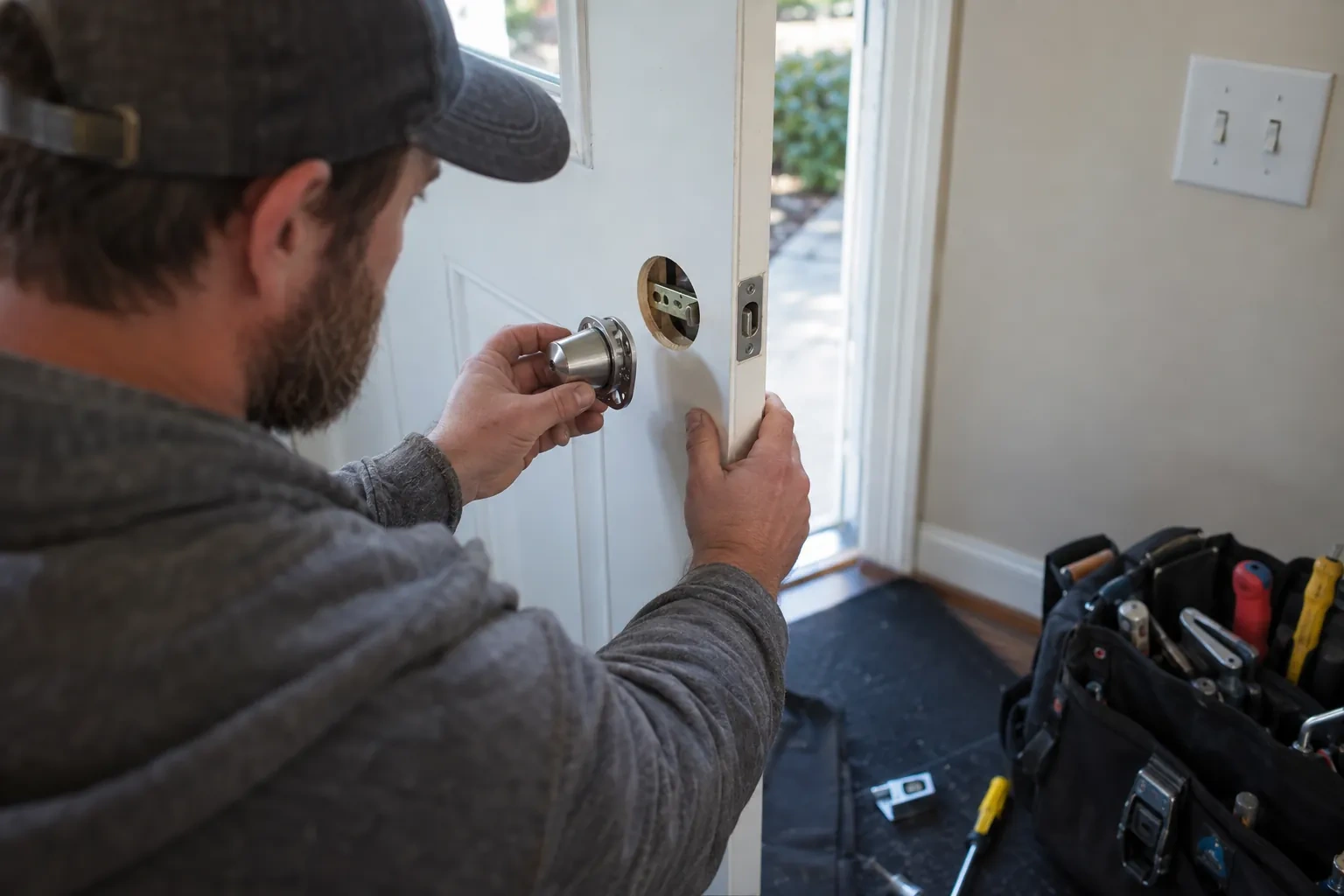
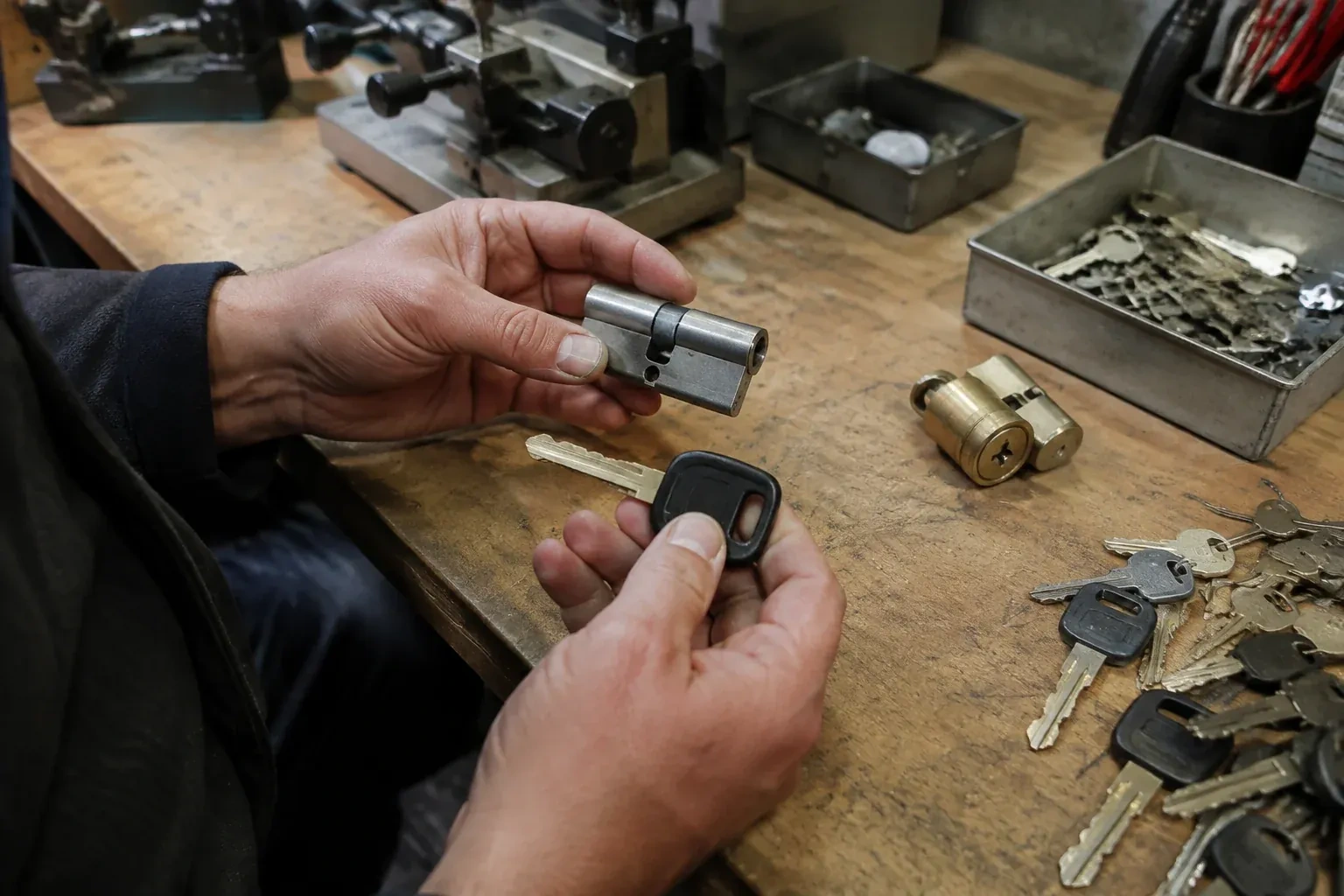
When the keys are truly gone, a car lockout call becomes two jobs in one visit. The first is entry, done without marking the car. The second is a key that works. The locksmith decodes the door cylinder or reads the key code from the vehicle's records with your proof of ownership, cuts a mechanical blade, then programs the transponder chip or fob where the vehicle's own security system supports it. On many vehicles the lost keys can also be erased from the car's memory. Many drivers leave on a key made at the roadside, though some vehicles need dealer credentials or parts and a tow instead.
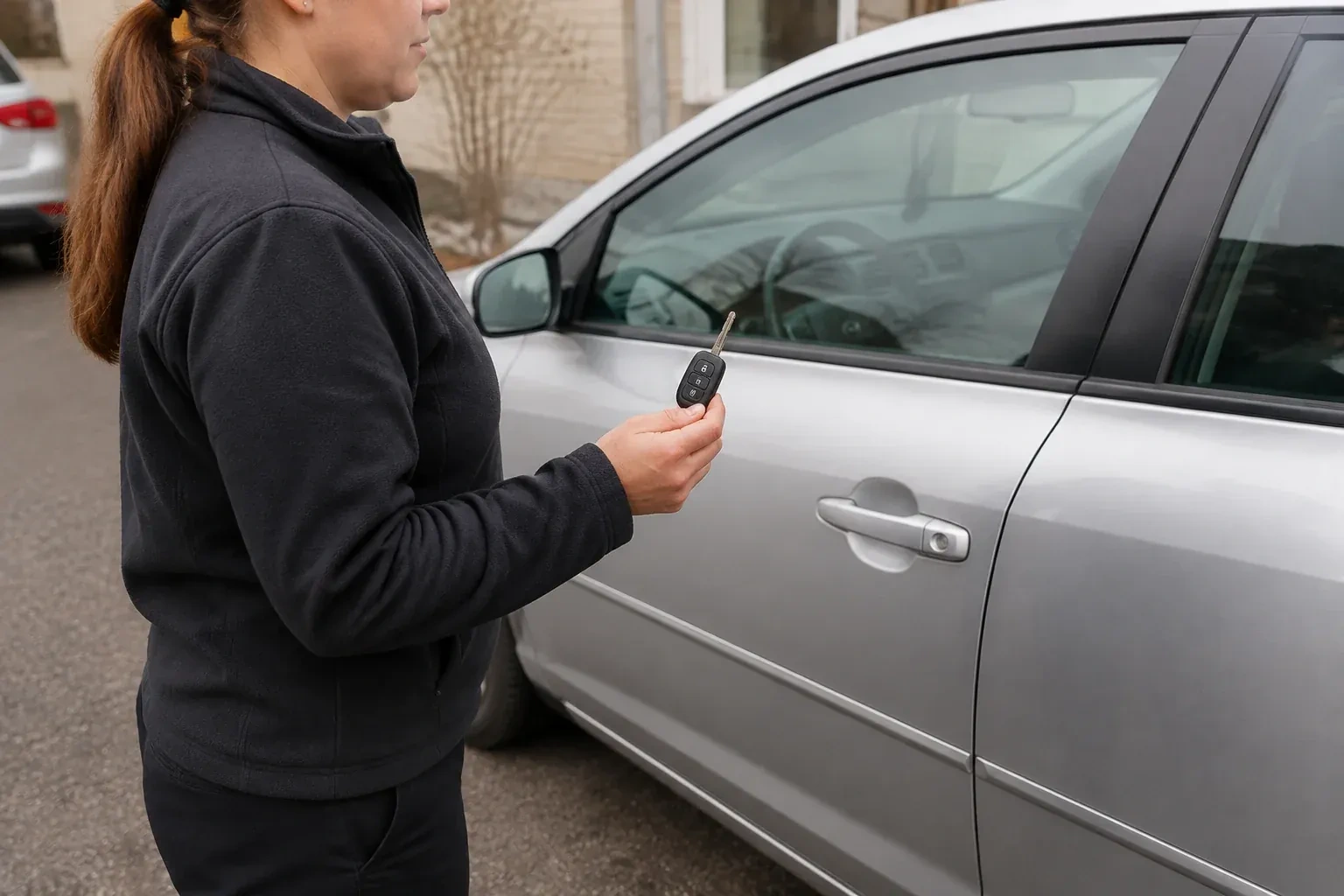
How the visit goesYou pressed the fob at the office door and nothing happened. Pressed again, held it, walked closer. The car sits dark and silent, the fob lights up but the doors stay locked, and the mechanical key you have never used is somewhere at home.
Car Lockout Service
How the visit goes
Reading the make, model and year
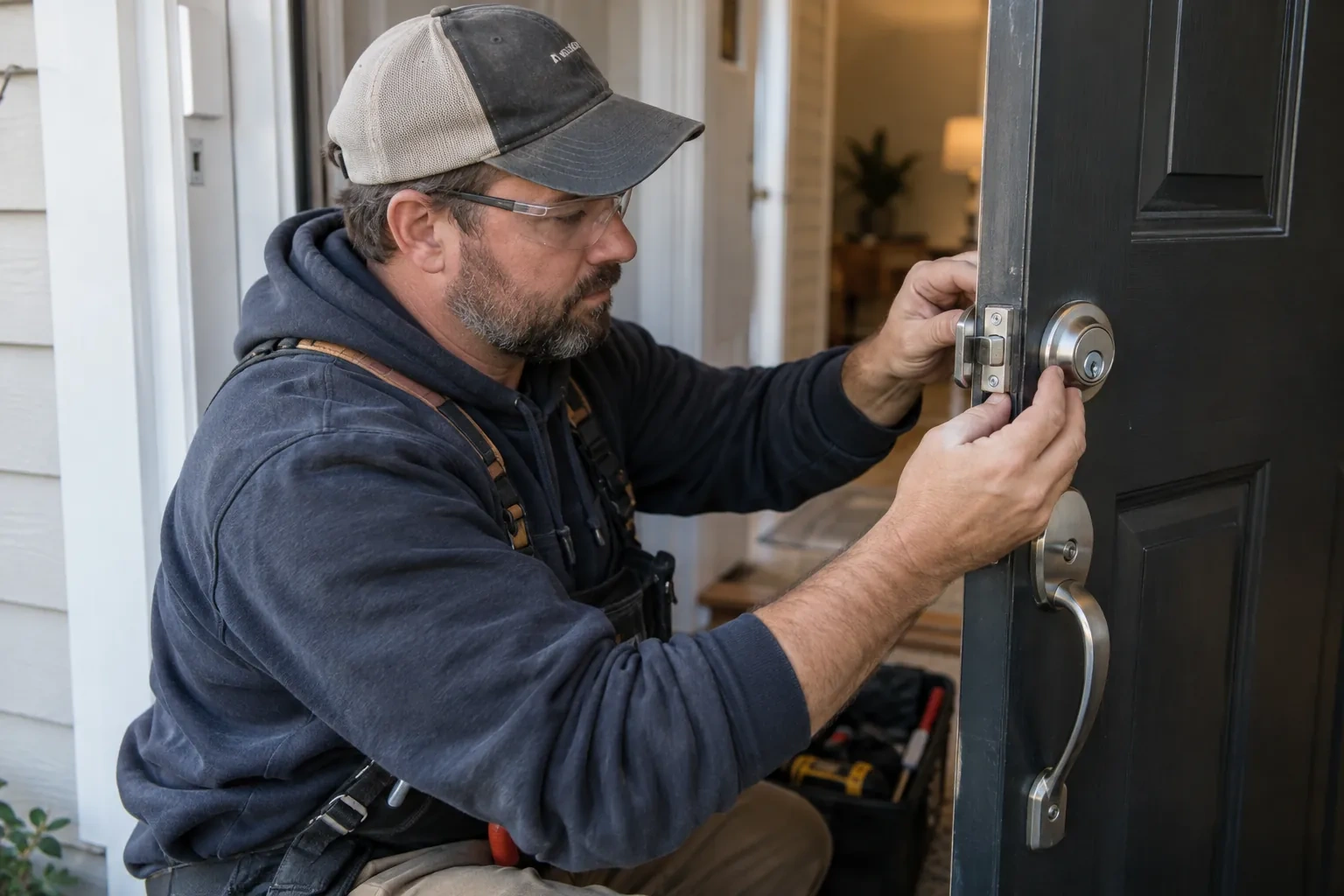
Cars from different decades open in different ways, so the vehicle's age and type are the next thing weighed. An older sedan with an exposed cylinder in every door is picked or decoded like a house lock. A newer car may have a single cylinder hidden under a small cap on the driver's handle, doors dense with wiring and airbag sensors, and an immobiliser that expects a recognised fob. Some vans and trucks use a separate cargo lock system. A locksmith who knows the model chooses between wedge-and-reach, a decoder pick matched to that keyway, or the mechanical cylinder before touching the car.
Keys in a closed trunk
A trunk with the keys inside is almost never opened at the trunk lock. Where the cabin has a usable path, it is opened first and the trunk released from there: a release button by the driver's seat, or a fold-down rear seat that gives a hand through to the trunk; the glowing emergency handle inside the trunk itself is for a trapped occupant, not a cabin control, and some vehicles disable the cabin release entirely. Where a car has a valet lock that isolates the trunk from the cabin, the trunk cylinder is decoded and turned in the same way as a door. The keys come out, the trunk latch is checked, and nothing on the lid is marked.
Habits that keep the keys on the right side of the glass
Most drivers leave a lockout with a simple resolution, and a few habits make it stick. Keys go into a pocket before the door closes, not onto the seat. The trunk is loaded with the keys in hand, not tossed in first. For a keyless car, the setting that stops the doors locking with the fob inside is switched on if the model offers it. A spare lives somewhere other than the car. Roadside club membership, if you have it, is worth confirming; contractors are asked to see the registered owner and identification, so keep a photo of the vehicle permit on your phone.
Car Lockout Service
In the van
Key programmer
Twelve-volt jump pack
Transponder key blanks
Automotive pick and decoder
Padded long-reach tool
Car Lockout Service
What affects the quote
Type of key or fob
A plain metal key, a transponder key with a chip, a remote-head key and a proximity fob each cost different amounts as parts, and each takes its own programming step when one has to be replaced.
Damage from earlier attempts
A seal stretched by a coat hanger or a cylinder scarred by a screwdriver may need attention beyond the opening. The locksmith points out what was already there before quoting any repair.
Broken key extraction
Drawing a snapped blade out of a door or ignition cylinder before the opening, then cutting a fresh key from the pieces or the code, is quoted as work in addition to the entry.
What to have ready
- Is anyone, including a child or a pet, inside the car?
- Does the car use a keyless fob or push-button start?
- Is the vehicle yours, a rental, or a company vehicle?
Car Lockout Service: questions
QuestionsWhat should I have ready when I call?
The make, model and year of the vehicle, the colour and plate if you can see it, exactly where the car is parked and how to reach it, and where the keys are: on the seat, in the trunk, lost, snapped, or in a fob that has gone quiet. Say whether anyone or any animal is inside, whether the car is a rental or a company vehicle, and whether your identification is on you or in the glovebox.
Will opening the car damage the paint, the door or the seal?
A professional opening leaves nothing behind. Door-edge guards sit between tools and paint, the air wedge is inflated in small steps so the frame flexes evenly and returns to shape, and the reach tool is padded. Where the car has a door cylinder, a matched pick-and-decoder turns it exactly as a key would. Any mark already present is pointed out before work begins, and the door, glass and seal are checked over at the end.
My child is locked in the car. What should I do first?
Call 911 before you call anyone else. A vehicle interior can climb past 50°C in about twenty minutes on a mild day, and a cracked window does little, so responders treat a child in a closed car as an emergency and are equipped to get in at once. Then call the locksmith, who will come as backup and can also make sure the car is secured and working afterwards. In winter cold the same rule applies.
Related services
- Spare Car Key DuplicationThe blade on the everyday key has gone shiny and thin along one edge, and lately it needs a wiggle before the ignition catches.
- Key Fob ProgrammingButtons on the fob still light up and the remote still clicks, but the vehicle refuses to start even with the fob sitting in the cupholder.
- Transponder Key ProgrammingThe new key slides into the ignition and turns exactly the way the old one did, but the engine only cranks.