Lockouts · Toronto
Break-In Damage Lock Repair
They did not get in.
In plain words
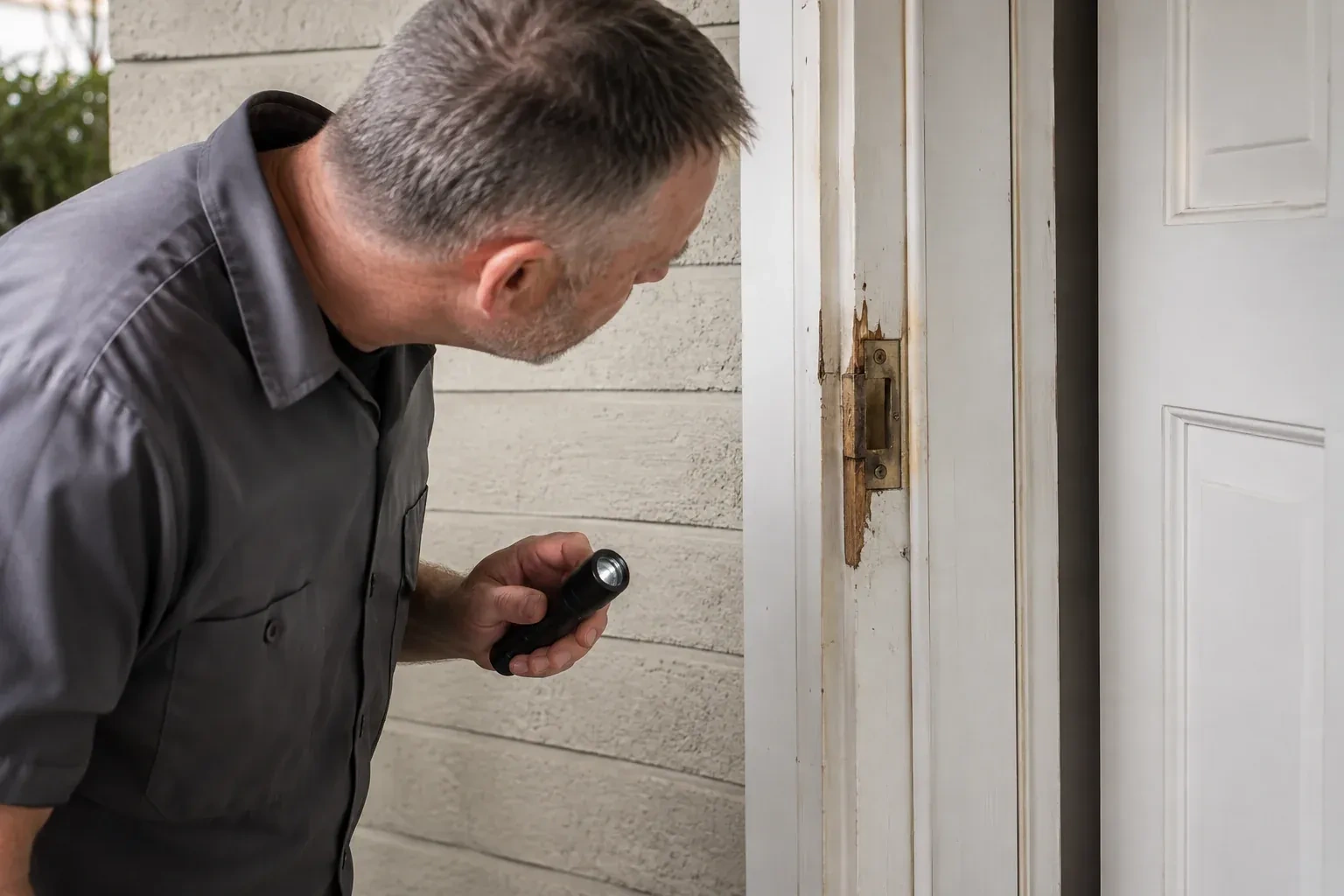
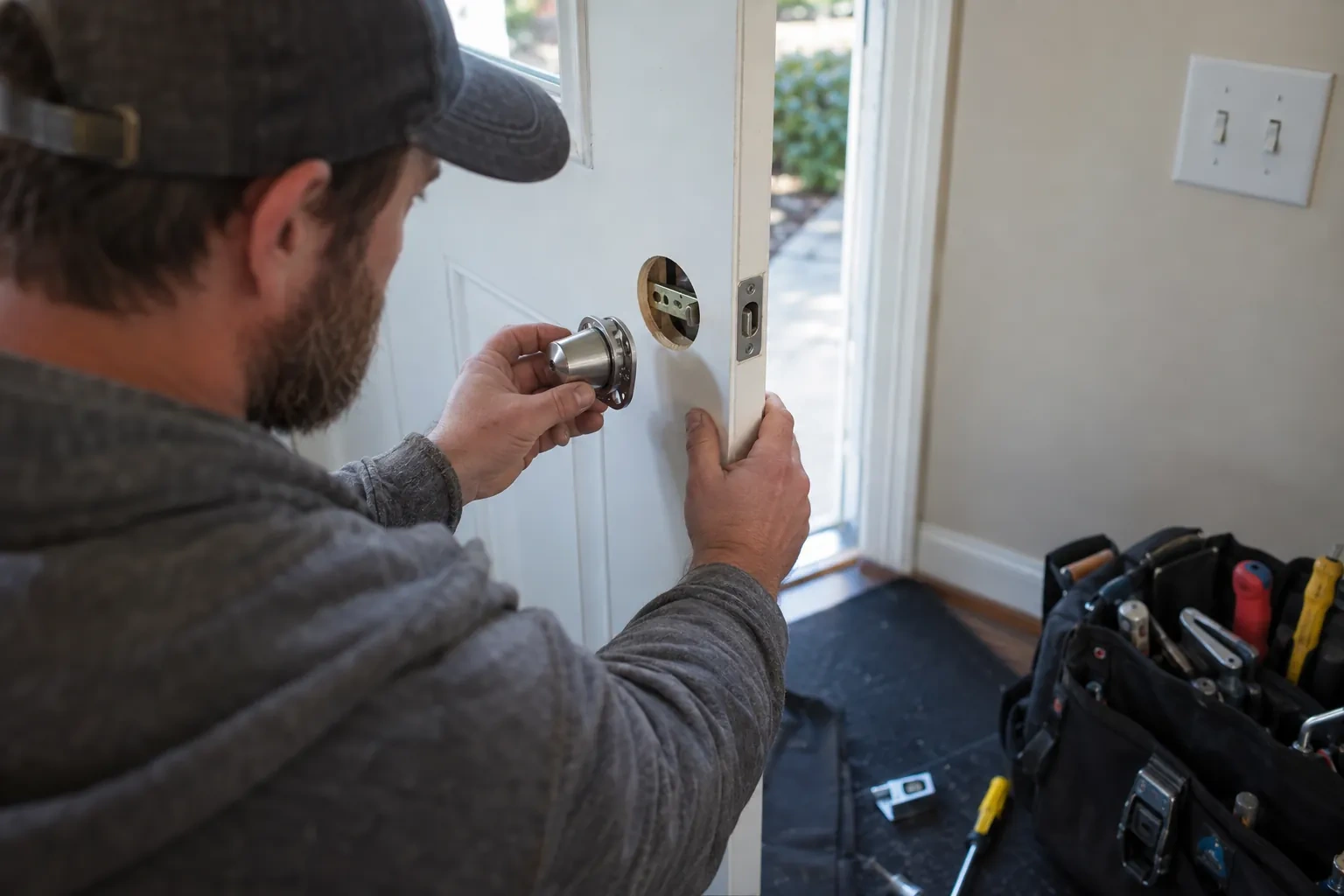
Most forced doors fail at the frame, not the lock. A standard strike plate is held by two short screws in a softwood jamb, and a kick transfers the whole force of a body to those screws. The bolt usually survives; the wood around it does not. Swapping the deadbolt for a heavier one leaves the weak point untouched, so a proper break-in repair rebuilds the strike side with a boxed strike, a pocket cut to full depth and three-inch screws that pass through the jamb and the shim space into the stud behind. The lock is replaced too, but the frame is where security returns.
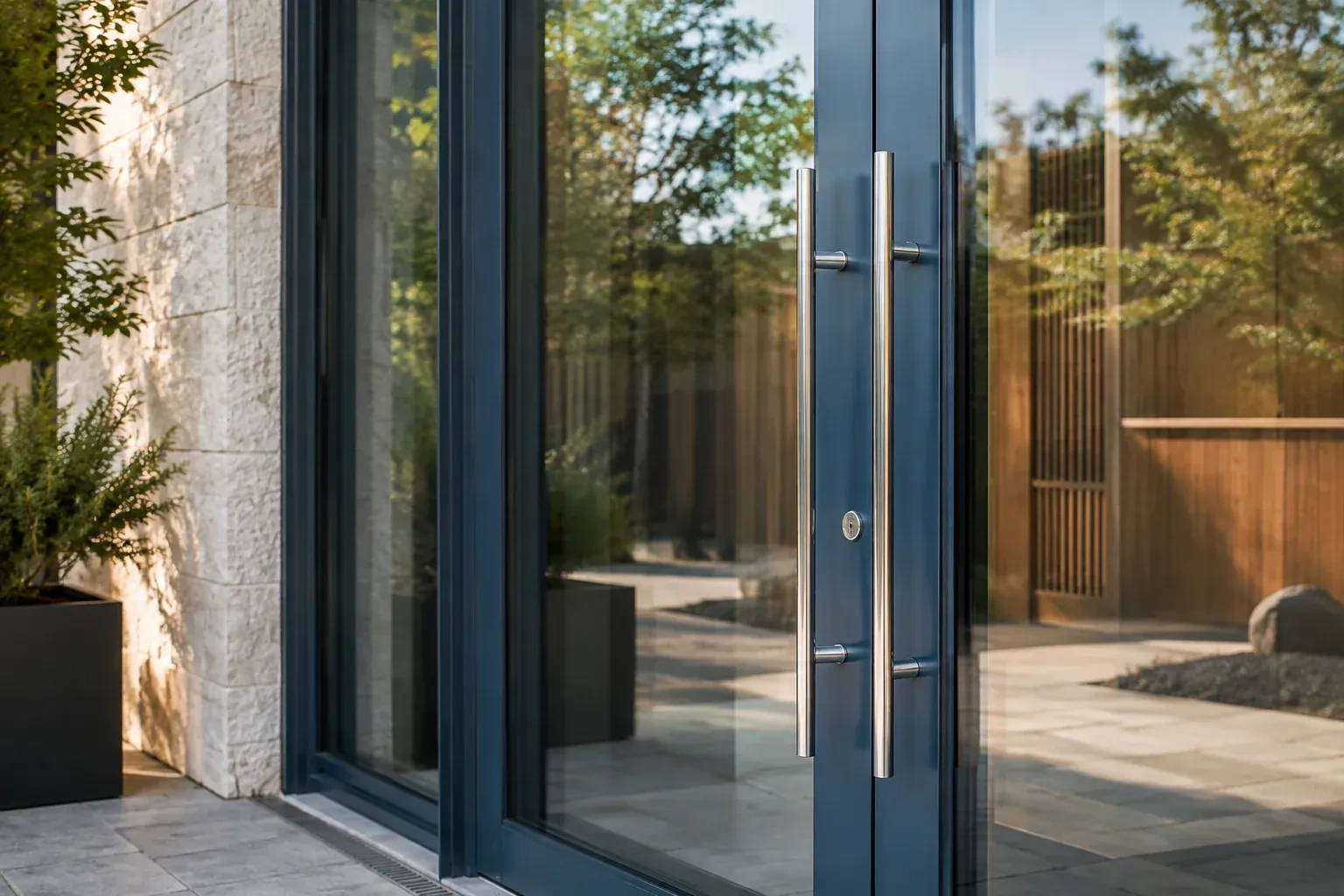
How the visit goesThe shop's aluminum door has a bent meeting stile and the hookbolt is jammed half out. The alarm did its job and the display is untouched, but the entrance will not close properly and opening time is hours away.
Break-In Damage Lock Repair
How the visit goes
Does the door still hang true
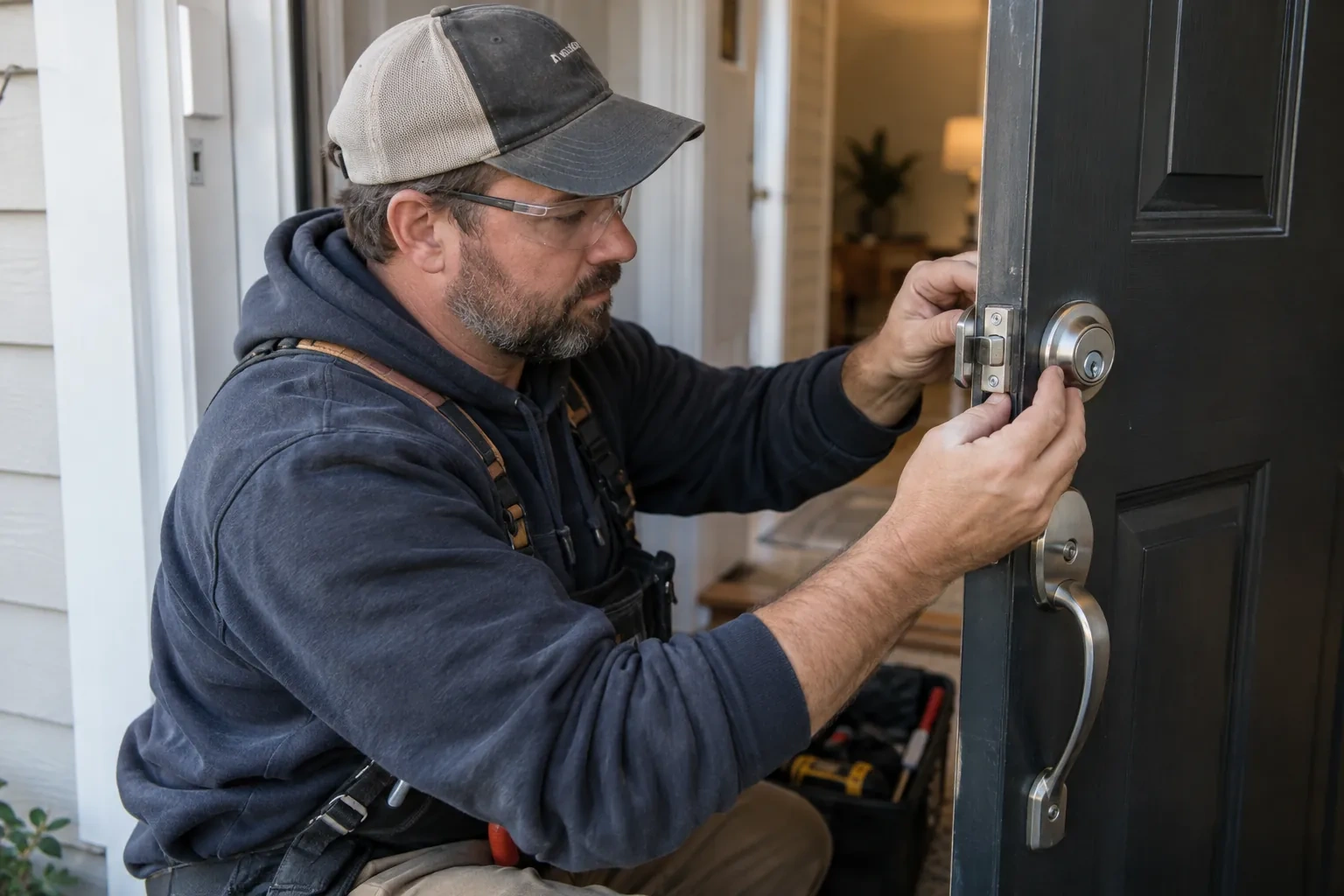
An impact hard enough to break a strike usually moves the door as well. The locksmith checks that the door sits square in its opening, closes on its weatherstrip without force, and that the bolt lines up with its pocket rather than dragging on the strike lip. Hinge screws are tested for grip, since a kick can pull them from the jamb even on the side that was not attacked, and the hinge leaves are checked for bending. Manufacturers treat strike position, pocket depth and door alignment as working parts of the lock, and a repair that ignores them produces a door that locks badly the day after it was fixed.
Sliding doors and garage entries
A forced patio slider is repaired by putting the panel back on its track, replacing the broken latch or fitting an auxiliary bolt into the frame, and adding the pieces that stop the next attempt: anti-lift blocks in the upper channel so the panel cannot be raised off its rollers, and a foot bolt or pin lock at the bottom. A garage man-door that carried only a knob lock gets a proper deadbolt, a boxed strike and long hinge screws to match the front of the house. Where an overhead door was the way in, the emergency release cord is shielded from outside reach and the opener remotes are reprogrammed.
A door that closes and locks again
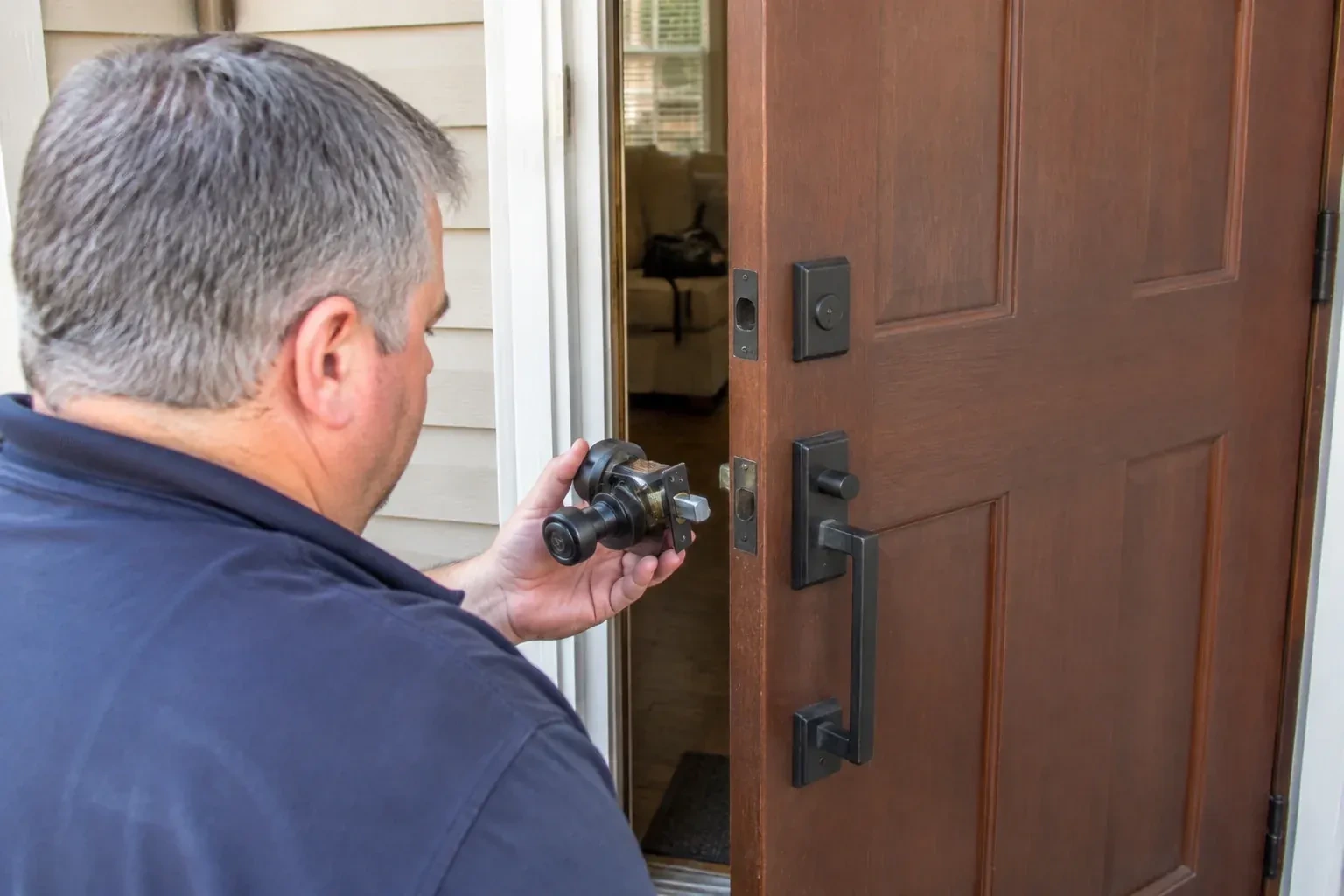
The visit ends with the door tested the way it will be used. The bolt is thrown and withdrawn with the door open, then closed, and it must slide home without dragging on the strike or stopping short of full extension. The latch catches when the door is pushed to, not slammed. The door meets its weatherstrip evenly and the thumb-turn works from inside without a key. You try it yourself before the locksmith packs up, with your own new key, so the first time the household locks up that night is not the first time anyone has tried the door.
Break-In Damage Lock Repair
In the van
Plywood and cleats for boarding
Jamb repair plate
Wrap-around door edge reinforcer
Security strike box
Hinge reinforcement plate
Break-In Damage Lock Repair
What affects the quote
Lock failure or frame failure
Replacing a lock is hardware and fitting time. Rebuilding a strike side with a boxed strike, epoxy and long screws into the stud is carpentry as well, and is quoted as its own line.
Securing now versus repairing fully
Some households want the door locked tonight and the permanent repair booked later; others want both done at once. The quote separates the two so you can choose either order without surprises.
Hour of the call
Break-ins are discovered at all hours, and the amount for securing and repairing the damage is the same whatever hour that turns out to be. The locksmith confirms the exact figure on site once the extent of the damage has been assessed.
What to have ready
- Were any keys, garage remotes or alarm codes taken?
- Is the damage to the lock, the frame, the door edge or the glass, or several?
- Do you own the property, rent it or manage it for someone else?
Break-In Damage Lock Repair: questions
QuestionsDo longer screws really make a difference?
A large one. Factory strike and hinge screws are usually short enough to grip only the jamb, a piece of trim about an inch thick. Three-inch screws pass through the jamb and the gap behind it into the stud, so a blow has to move the wall rather than the trim. Lock manufacturers supply reinforcement plates with three-inch screws for exactly this reason, and note that a door beside a sidelight needs a different arrangement because glass sits where the stud would be.
How do I check that the repair is holding over the following months?
Once a month for the first season, throw the deadbolt with the door closed and feel for drag or a stop short of full extension, and press on the strike and hinge screws with a screwdriver to confirm they are snug. Repeat at each change of season, since wood moves with humidity. A door that starts needing a shoulder, or a bolt that catches on the strike lip, wants a small adjustment early rather than a repeat of the original problem.
Should I keep the broken lock and strike?
Yes, unless the insurer has already said they are not needed. Insurers generally ask policyholders to retain damaged property until the claim is settled, and a bag holding the twisted cylinder, torn strike and split wood answers an adjuster's questions more clearly than any description. The locksmith hands them over at the end of the visit along with a written note of what was replaced. Photographs of the parts in place, before removal, complete the record.
Related services
- Business Lockout ServiceA cook stepped into the alley with the recycling and the rear door swung shut behind him.
- Broken Key ExtractionOvernight the deadbolt froze, and this morning the key would only turn partway.
- Seized & Jammed Lock OpeningYou are inside, the deadbolt is thrown, and the thumb-turn will not budge.