Locksmith
Help yourself first
Winter, humidity, house settling and plain old wear all leave their marks on locks. The advice here helps you tell normal ageing from a real problem, and it explains what you can safely do yourself and where a professional hand is worth having.
What to expect, answered
If my key is lost, will I leave with a working key?
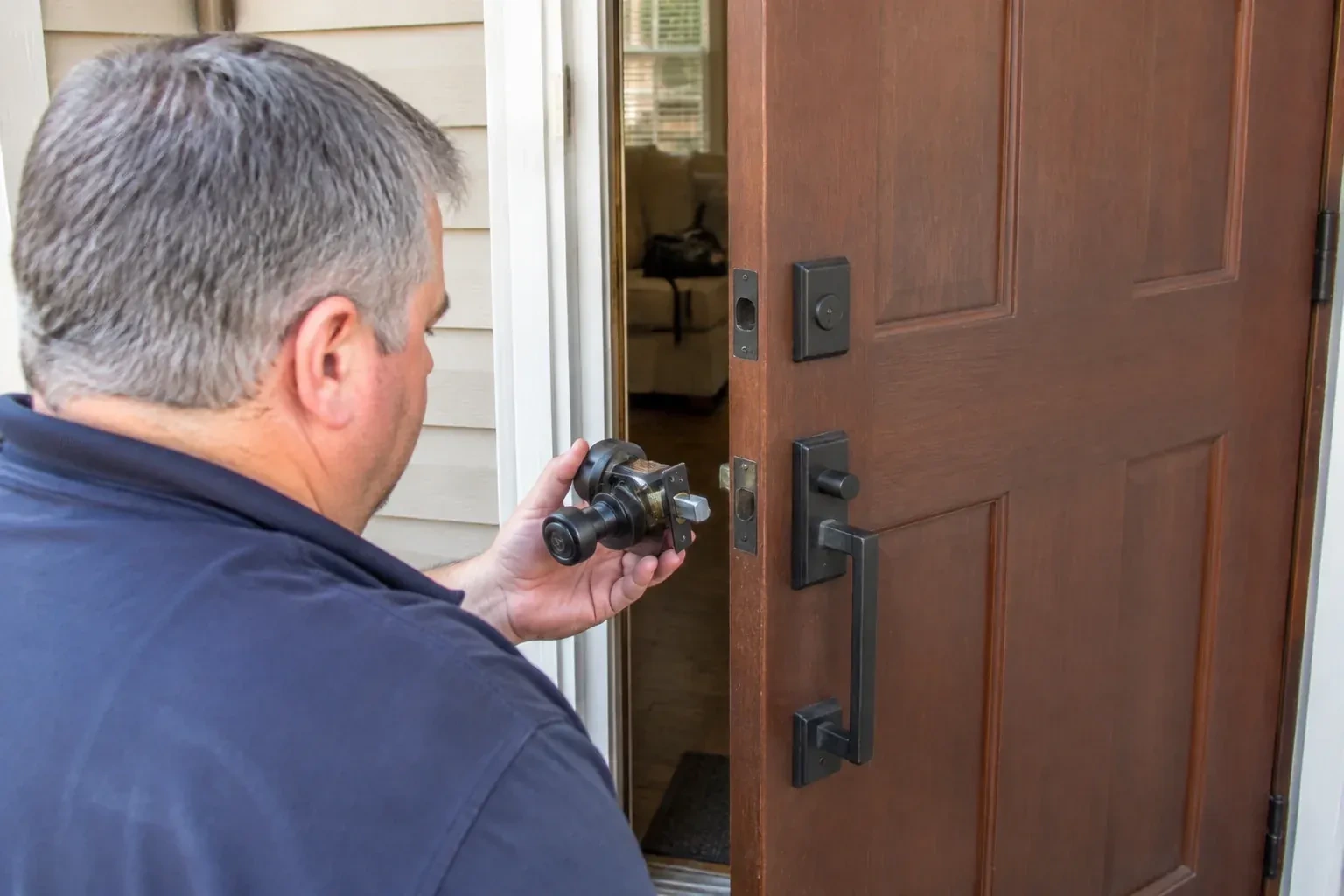
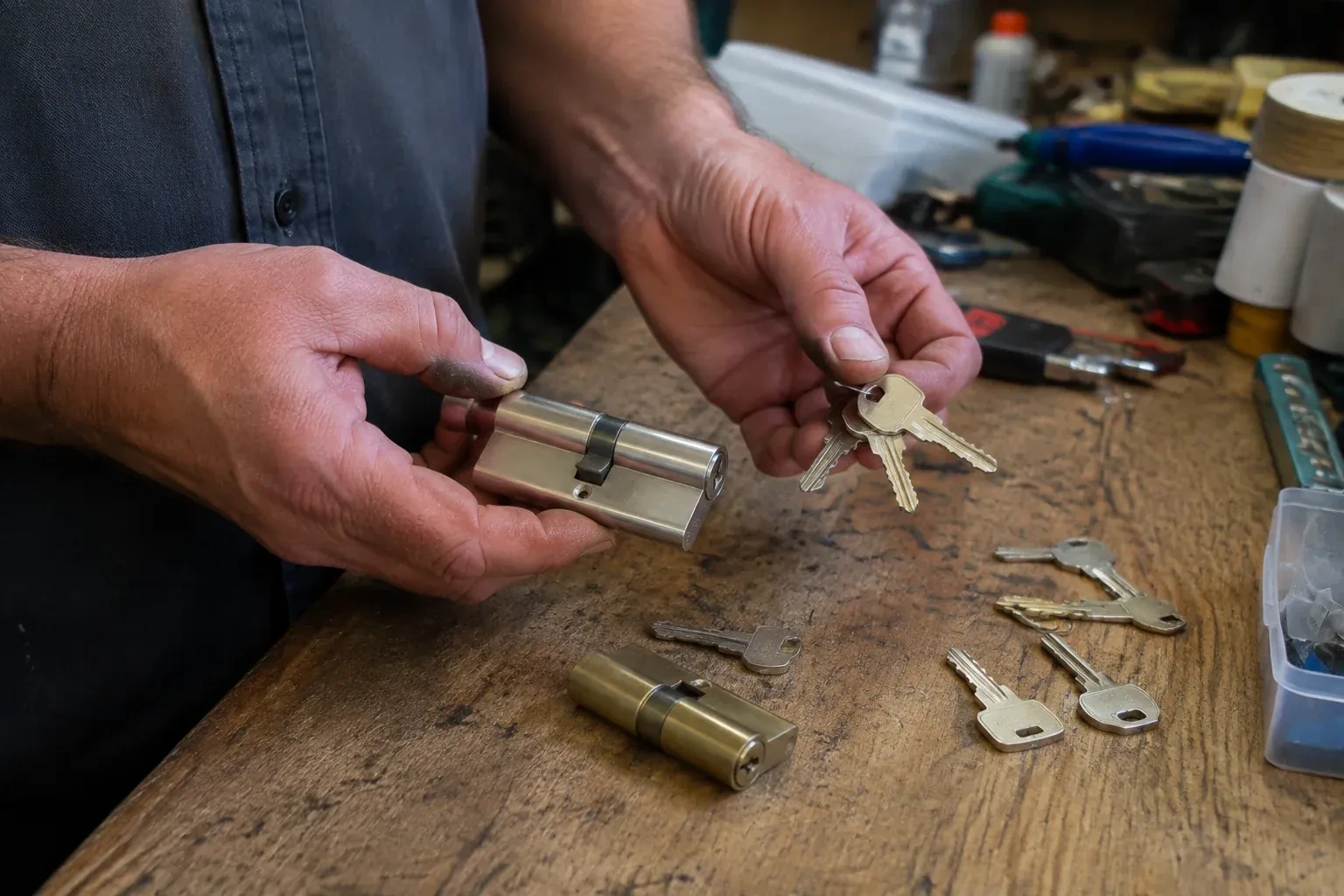
Yes, one way or another. If you choose to rekey, the cylinder is set to a new combination and fresh keys are cut for it on the spot, usually two or three, and tested in each door they should open. If you prefer to keep the existing pinning, a new key can be cut to the lock's code or by decoding the cylinder. Either way you are not left relying on a key that is somewhere else.
How long does a business lockout take?
It depends on the hardware and what else is wired to it. A standard storefront cylinder or office lever on a well-hung door is often a short job once authority is confirmed. A high-security cylinder, a frozen lock, a dropped door or a dead access controller adds time, and so does rekeying several doors afterwards. The locksmith gives you a realistic idea on the phone once you describe the door and the situation.
My car key snapped in the door. Is that a locksmith job?
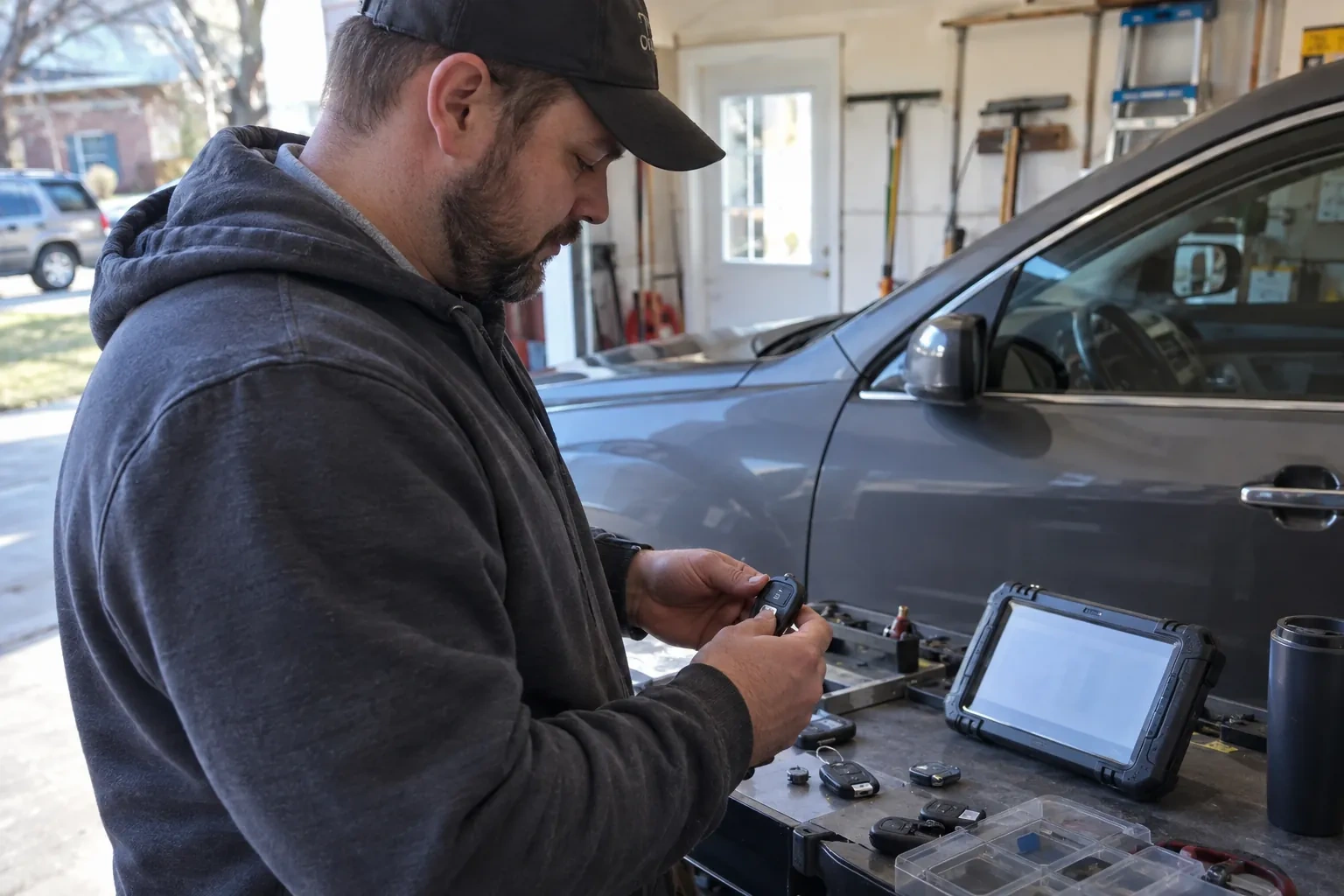
Yes. Vehicle door locks and ignitions use wafer cylinders that respond to the same extractor tools. Once the blade is out, the plastic head you are holding, which carries the transponder chip and any remote buttons, can usually take a freshly cut blade so the car keeps recognizing it. The ignition is checked as well, since a broken key sometimes disturbs the wafers.
Do longer screws really make a difference?
A large one. Factory strike and hinge screws are usually short enough to grip only the jamb, a piece of trim about an inch thick. Three-inch screws pass through the jamb and the gap behind it into the stud, so a blow has to move the wall rather than the trim. Lock manufacturers supply reinforcement plates with three-inch screws for exactly this reason, and note that a door beside a sidelight needs a different arrangement because glass sits where the stud would be.
Can a seized lock be opened without damaging it?
In most cases, yes. A bolt held by the door is freed by relieving the pressure on the door. A cylinder clogged with grit or ice is cleaned and thawed until it turns. A failed tailpiece is bypassed and replaced. The lock stays on the door with its finish and your existing keys. A plug or shell that is worn, damaged, or eaten through by corrosion or earlier forcing is what has to be replaced, and that is explained before any work starts.
Does stamping keys 'do not duplicate' stop copies?
It asks; it does not compel. The stamp is a request that a key-cutting counter may or may not honour, and manufacturers say as much. Real control comes from a restricted keyway, whose blanks are issued only through authorised channels against a key card, or simply from knowing how many keys exist and who holds them. A rekey resets that count to a number you chose.
Can a smart lock or keypad deadbolt be rekeyed?
The mechanical part of it can. Many keypad or app-controlled deadbolts hide a small keyed cylinder under a cap for the day the batteries fail, and that cylinder can be pinned to your house key so the backup key on your ring is the same one that opens the other doors; some models are key-free and rely on an external battery backup instead. Codes are a separate matter: the locksmith will suggest deleting any code belonging to someone who no longer needs access at the same time.
The door has to be pulled before the old bolt will lock. Will a new one fix that?
The new bolt will only lock as smoothly as the door and frame let it, so the locksmith deals with the cause as part of the installation. A door that has sagged on loose hinges gets longer hinge screws or a shim, thick weatherstrip is trimmed, and the strike is set from the bolt's actual position with the door closed. The pocket is bored deep enough for a full throw. Afterwards the bolt should slide with fingertip effort.
Should I rekey my locks or replace them?
Rekey when the hardware is sound and the problem is the key: a lost copy, a move, or too many keys for one house. Replace when the mechanism itself is worn, the housing or bolt is damaged, the grade was never suitable for the entrance, or you want a different function, finish or a keypad. Many visits do both, keeping good locks and rekeying them while replacing the tired ones, all to one key.
Which parts usually need replacing?
Springs, first and foremost: the latch spring, the hub spring that returns the knob, and the small springs on the deadbolt levers. After that, the spindle and knob set screws, a hub whose square has worn round, a worn deadbolt lever or follower, and on later locks the cylinder set screw or the cylinder itself. Bolts, cases and trim are almost always kept, cleaned and refitted rather than replaced.
How does a smart lock cope with our winters?
Well, with a little planning. Cold reduces battery capacity, so the locksmith fits fresh cells of the type the maker specifies and points you to the low-battery alert, and a new set before the first hard frost is a good habit. The bolt is aligned with clearance so a door that swells or shifts with freeze and thaw does not strain the motor. Keep ice off the keypad, and use lock de-icer only in the key cylinder, never on the touch surface.
What information over the phone helps identify the hardware before the visit?
A photo of the lock, the gate or the entry door, taken from a few steps back and up close on the cylinder, tells the locksmith more than a verbal description usually can. Mentioning whether the gate is wood, metal or vinyl, roughly how the property is laid out, and whether the entry has any buzzer, keypad or electric component narrows down what hardware and parts to bring. None of this is required, but it does shape what shows up in the van.
Can several compartments in the same panel be done in one visit?
Yes, this is common when a property manager notices several compartments failing around the same time. Each one is still confirmed against the resident or unit it belongs to, and the work moves compartment by compartment. Unless a resident asks otherwise, each lock is keyed separately from the others, and the visit closes with a simple list of which compartment received which lock and keys.
Should I change my safe's combination even if it still opens fine?
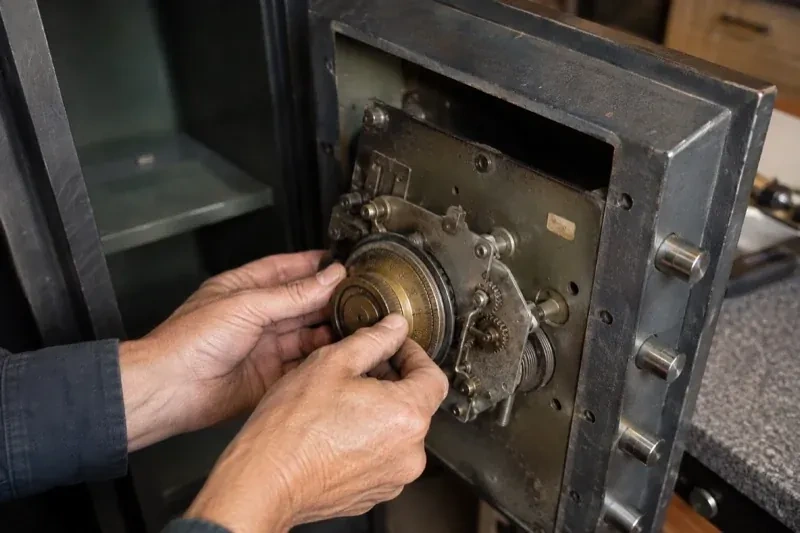
It depends on who still knows the old one. If a bookkeeper, manager or previous owner who had the combination is no longer with the business, resetting it closes that gap even though nothing about the lock itself has failed. A safe that only the current staff have ever known the code to generally does not need changing on that basis alone.
Can more than one person have their own code?
Yes, on an electronic keypad that supports multiple users, each person can be given a separate code rather than everyone sharing one, which also makes it simple to remove a single code later without resetting the whole lock. A mechanical dial lock, by contrast, has one combination for everyone who needs it, so a change in who has access there means changing that one combination.
Will my door look different afterwards?
Barely. A high security cylinder sits in the same place as the old one and is usually distinguished only by a different keyway shape and sometimes a hardened collar. A graded deadbolt is a standard-looking deadbolt in your chosen finish. The reinforced strike is longer than the plate it replaces and the wrap-around reinforcer, if used, shows as a neat metal band on the door edge. The difference is felt when you lock up, not seen from the street.
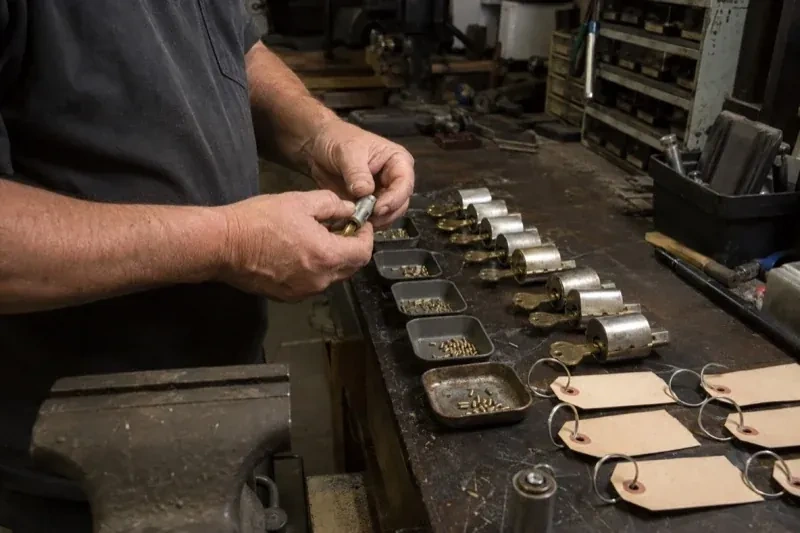
What is the difference between rekeying a business and replacing its locks?
Rekeying keeps every lock on the door and changes only the pins inside the cylinder, so a new key works and the old ones stop. Replacing swaps the hardware itself. Commercial cylinders are made to be repinned many times, so rekeying suits any lock in sound condition and leaves the levers, trim and door untouched. Replacement is chosen door by door for cylinders that are worn, corroded or too light for what they protect.
How long does designing and installing a master key system take?
It depends on the number of doors and levels involved. A small business with a handful of doors and one or two levels moves through assessment, pinning and testing in less time on site than a multi-floor property with several departments and a top-level master, where more doors, more testing and more keys to cut all add to the work involved.
Can a person's access change automatically by time of day or day of the week?
Yes. Access levels can be set to change automatically by time of day or day of the week, so a credential that opens a door during a shift can be denied outside it without anyone having to remember to switch it off manually. This is set up once in the schedule and then runs on its own from that point forward.
What outside trim options exist for an exit device?
A plain pull suits a door nobody needs to lock from outside. A lever with a key cylinder lets authorized people turn the handle and enter while the inside stays a simple push. A keyed cylinder alone, without a lever, suits occasional entry where a full handle is not needed. All three leave the inside crossbar untouched, since the trim only ever affects the outside.
What is the difference between a mortise lock and a cylindrical lockset?
A mortise lock has its whole mechanism, latch, deadbolt and sometimes a separate handle function, built into one case that sits inside a pocket cut into the door's edge. A cylindrical lockset is a bored-in unit, simpler to service, common on standard commercial and residential doors alike. Which one your door takes depends on how it was originally prepped, not on preference alone.
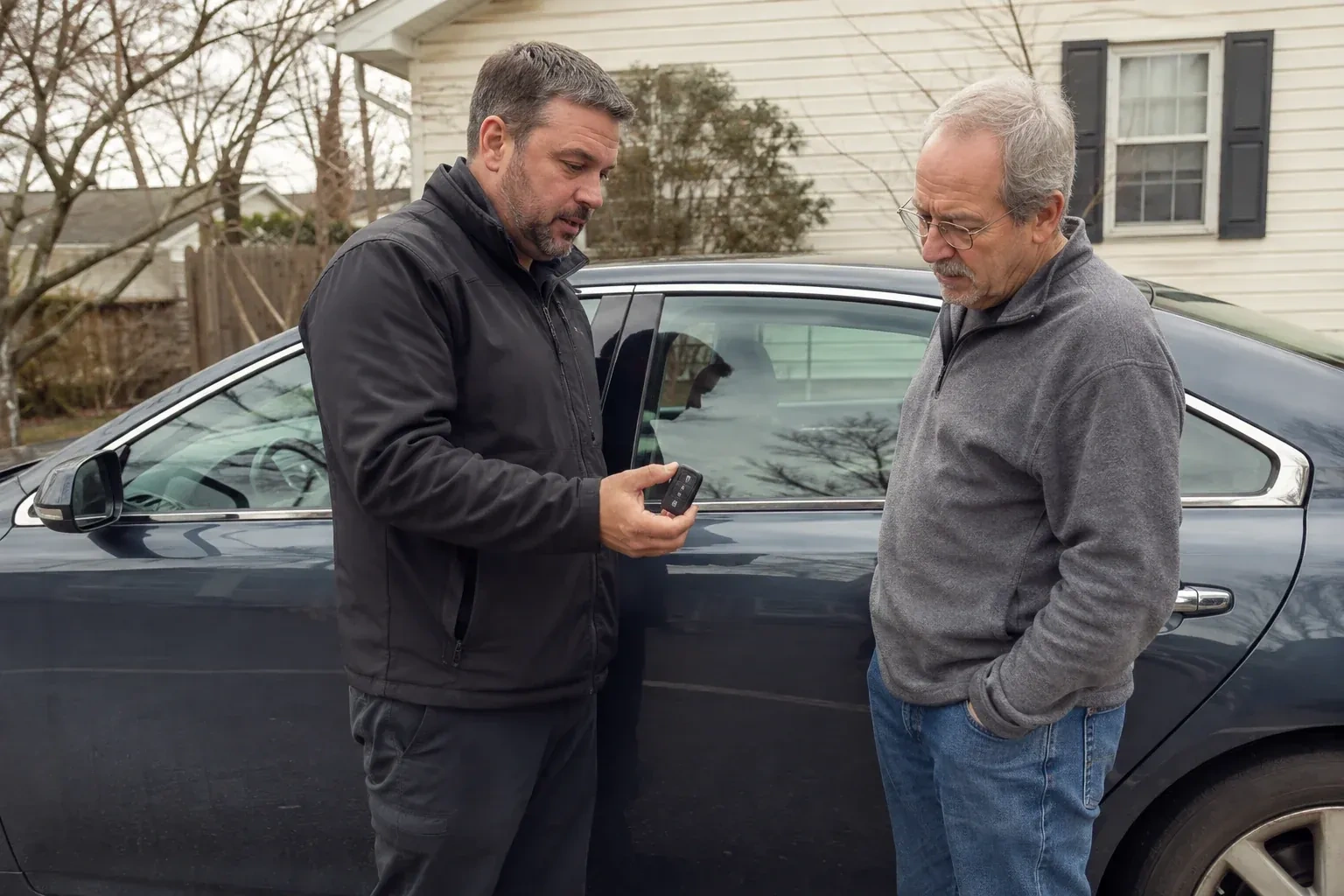
What should I have ready when I call?
The make, model and year of the vehicle, the colour and plate if you can see it, exactly where the car is parked and how to reach it, and where the keys are: on the seat, in the trunk, lost, snapped, or in a fob that has gone quiet. Say whether anyone or any animal is inside, whether the car is a rental or a company vehicle, and whether your identification is on you or in the glovebox.
Can a key be made for an older car with no chip?
Yes, for a vehicle that genuinely has no immobilizer, checked by VIN and equipment rather than assumed from age, since several early-2000s vehicles already shipped with a factory immobilizer and coded key. Where that is the case, it is the simplest key work there is: a blade cut to the factory code from the VIN or to a reading of the door lock, rather than copied from a worn original. If the ignition has become sloppy, the locksmith can rebuild it in the same visit.
What is a relay attack, and does it matter for my spare?
A relay attack is when nearby equipment picks up a proximity fob's signal from inside a house and relays it to a vehicle parked outside, tricking the car into thinking the key is close enough to unlock or start. It matters for every fob in the household, spare included, which is why storing any proximity key in a signal-blocking pouch when it is not being carried is worth doing for all of them.
Can a used or aftermarket fob be programmed to my vehicle?
Often, yes, provided its hardware and chip match what your specific vehicle accepts, checked against the vehicle's identifying information before anything is ordered. A used OEM smart key is also checked for prior registration, since some become permanently unusable once reset or removed from another vehicle, so confirming eligibility first avoids buying a fob that never registers successfully.
Do I need to bring the car in, or is this done where it's parked?
Programming is done at the vehicle itself, since the equipment connects directly to it. Whether that is a driveway, a parking lot, or wherever the car happens to be, the visit travels to the vehicle rather than the other way around. The one requirement is that the vehicle is present and accessible for the whole visit, since the process reads and writes to its own onboard systems.
How many keys will I leave with?
That depends on what you ask for and what the vehicle already has. A single working key is enough to drive away, but most people ask for at least one spare cut and tested at the same time, especially if the visit started because the only working key had worn down badly or snapped off inside the ignition altogether.
Why has my key fob suddenly stopped working?
A dead coin-cell battery is the most common reason, and it is a straightforward fix once the fob is opened. Less often, the fob has lost its pairing with the vehicle or its case has cracked and let in moisture, both of which a locksmith can check and address.
Can the seat, fuel cap and ignition all be set to the same key?
On many serviceable, compatible systems, yes. Each lock is opened and its internal wafers are replaced with a set cut to match the ignition's combination, the same principle used to rekey a house lock applied to smaller hardware. Every lock is tested individually afterward so the finished key is confirmed against each one rather than assumed to work. Locks that were never on the same key from the factory can usually be brought together this way during one visit.