Change or rekey · Toronto
Vintage Mortise Lock Service
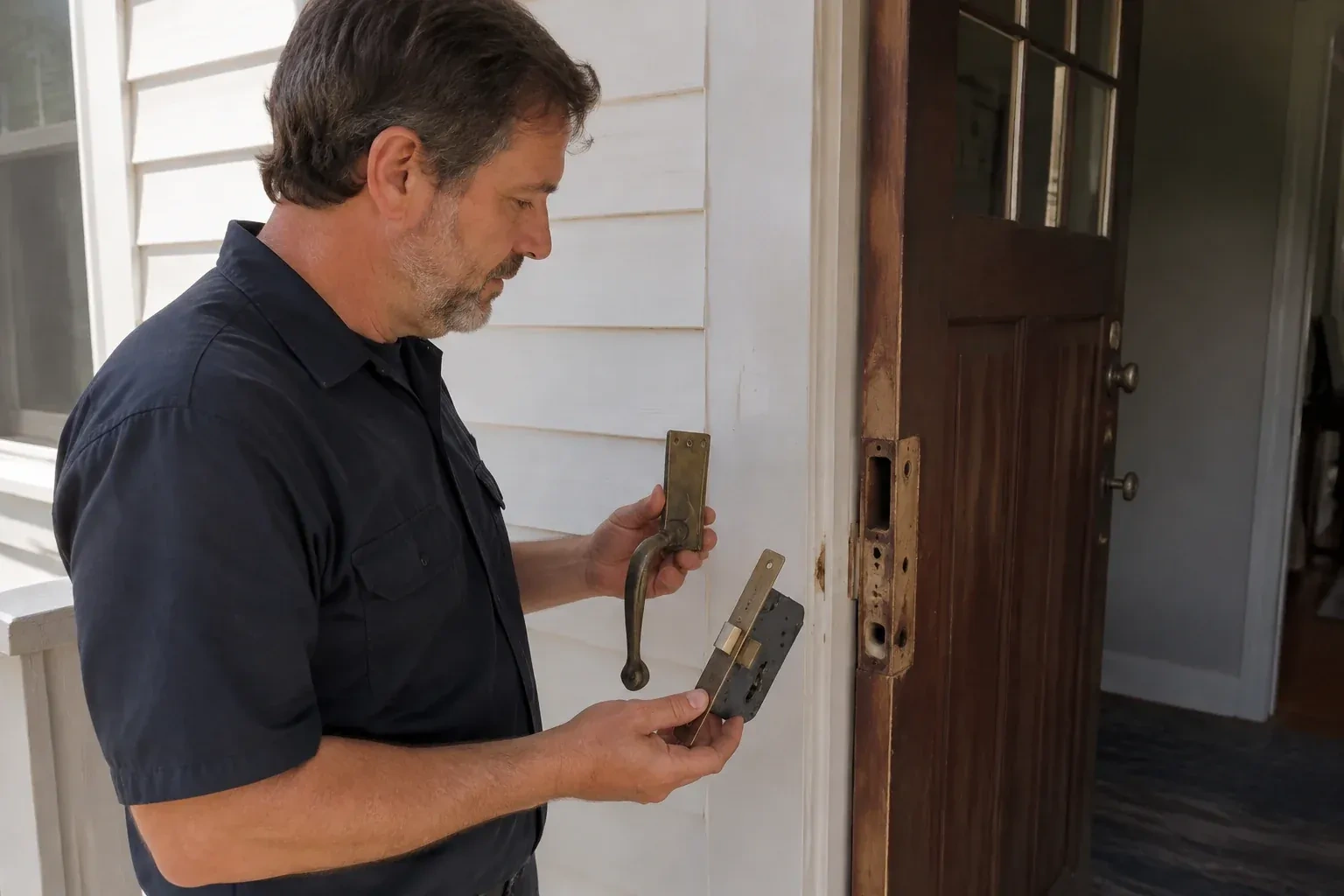
The brass knob on the front door of your century home turns, but nothing happens on the other side.
In plain words
Most old mortise locks fail for boring reasons. A coil spring that has been compressed a hundred thousand times since the house was built finally breaks, or the grease inside the case dries into something like wax and the levers stick in it. Neither justifies cutting a new hole in a solid oak door. The service opens the case, cleans out the old lubricant, replaces the springs with the right size, matches any worn follower or lever and lubricates the mechanism lightly. The same case goes back into the same pocket, and the knob returns to level with the crisp snap it had decades ago.
How the visit goesSomeone painted the door years ago without removing the hardware. The faceplate, the strike and the little thumb-turn are all under several coats, the deadbolt scrapes when it moves, and the knob is stiff enough to leave marks on your hand.
Vintage Mortise Lock Service
How the visit goes
The door before the lock
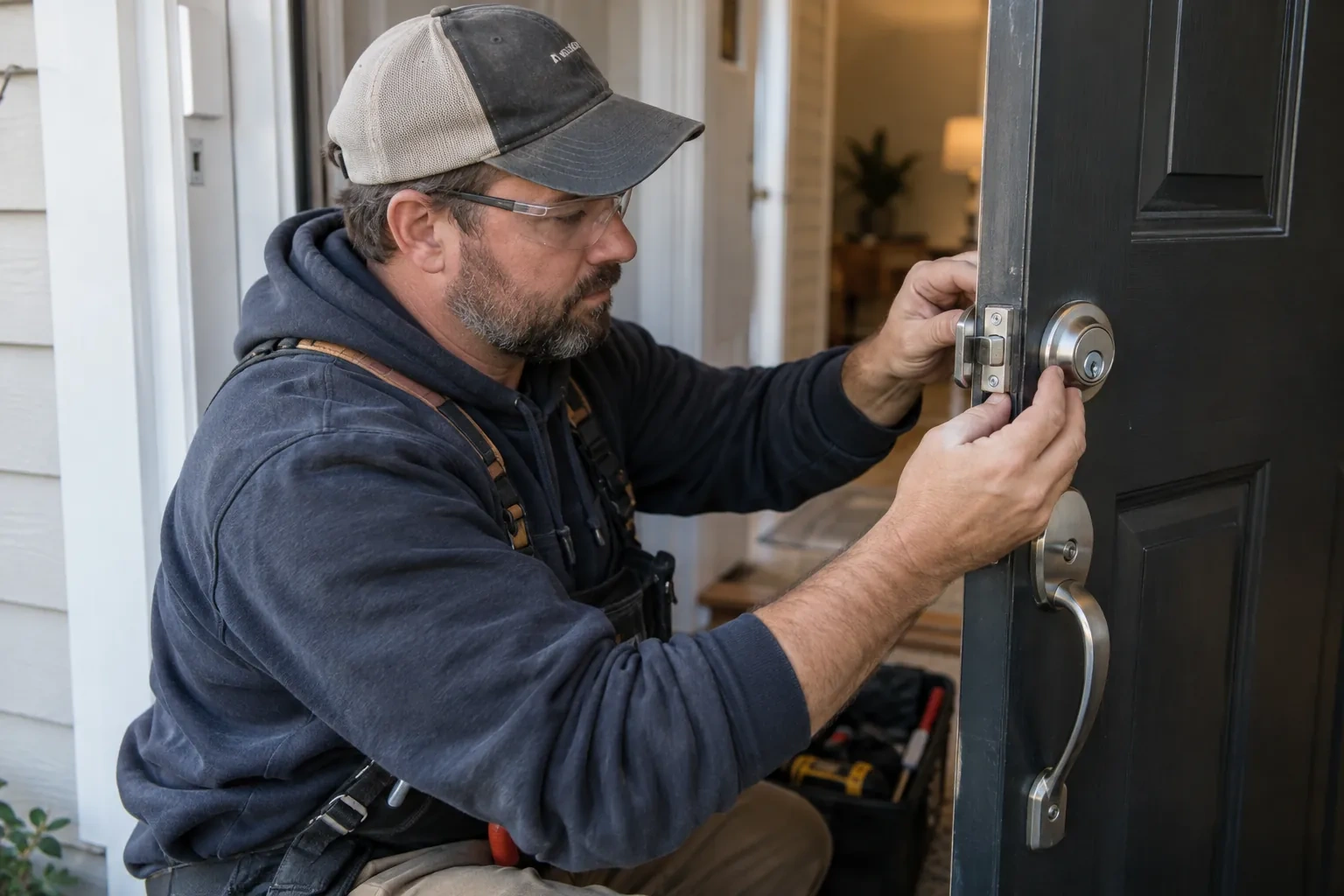
Before blaming a lock that may be perfectly sound, the locksmith looks at the door. With it open, the lock is cycled; with it closed, the latch and deadbolt are tried again. A lock that works open and fights when shut is telling you the door has moved. The gap around the door is checked top to bottom, the hinges are watched for a sag when the door is lifted, and the strike plate is inspected for bright wear marks where the bolt has been scraping past. In an older home with a solid wood door this is a routine finding, and correcting it is often most of the repair.
When a case is fitted new
If the old case could not be saved, the replacement is fitted to the door rather than the door to the replacement. A reproduction or modern mortise case matching the measured height, depth, backset, faceplate and hub is chosen with the goal of it dropping into the existing pocket; where a small difference remains, the pocket is trimmed with a chisel by the least amount that works, never bored out. The original knobs, escutcheons and strike are refitted wherever their spacing allows, and a new cylinder is keyed to match the rest of the house if wanted. The result reads as the original lock from either side of the door, with the reliability of a fresh mechanism.
How to lubricate it, and how not to
A serviced mortise case wants very little. Once a year, a single drop of light lock oil into the latch and the bolt from the door edge, with the faceplate screws briefly backed off if needed, keeps the levers gliding. If the lock has a pin-tumbler cylinder, that cylinder gets dry graphite or a PTFE lubricant in the keyway instead, because oil in a cylinder gathers grit and stiffens the pins. General-purpose spray lubricants belong nowhere on this hardware; they flush out the little oil that should stay and leave a film that dust settles into. The locksmith will show you where the drop goes so you are not guessing.
Vintage Mortise Lock Service
In the van
Warding files
Mortise cylinder and cam
Cylinder set screw
Bit key blanks
Spindle and knob set screws
Vintage Mortise Lock Service
What affects the quote
Missing or mismatched trim
Sourcing a knob, escutcheon or thumb-turn to match the survivors, from salvage or reproduction stock, is quoted as parts plus the search. Reusing your own trim from another door avoids that line.
How many keys you want
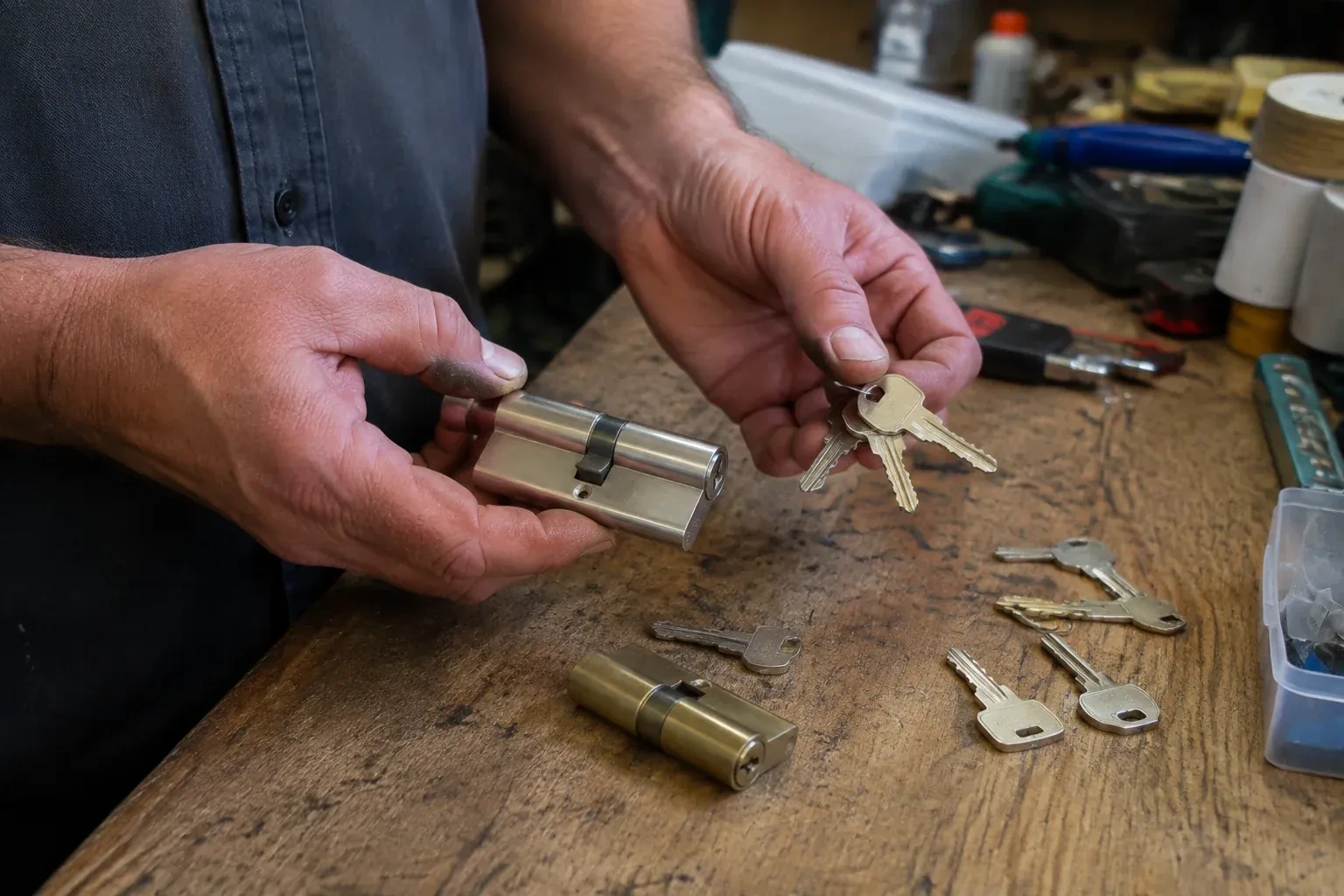
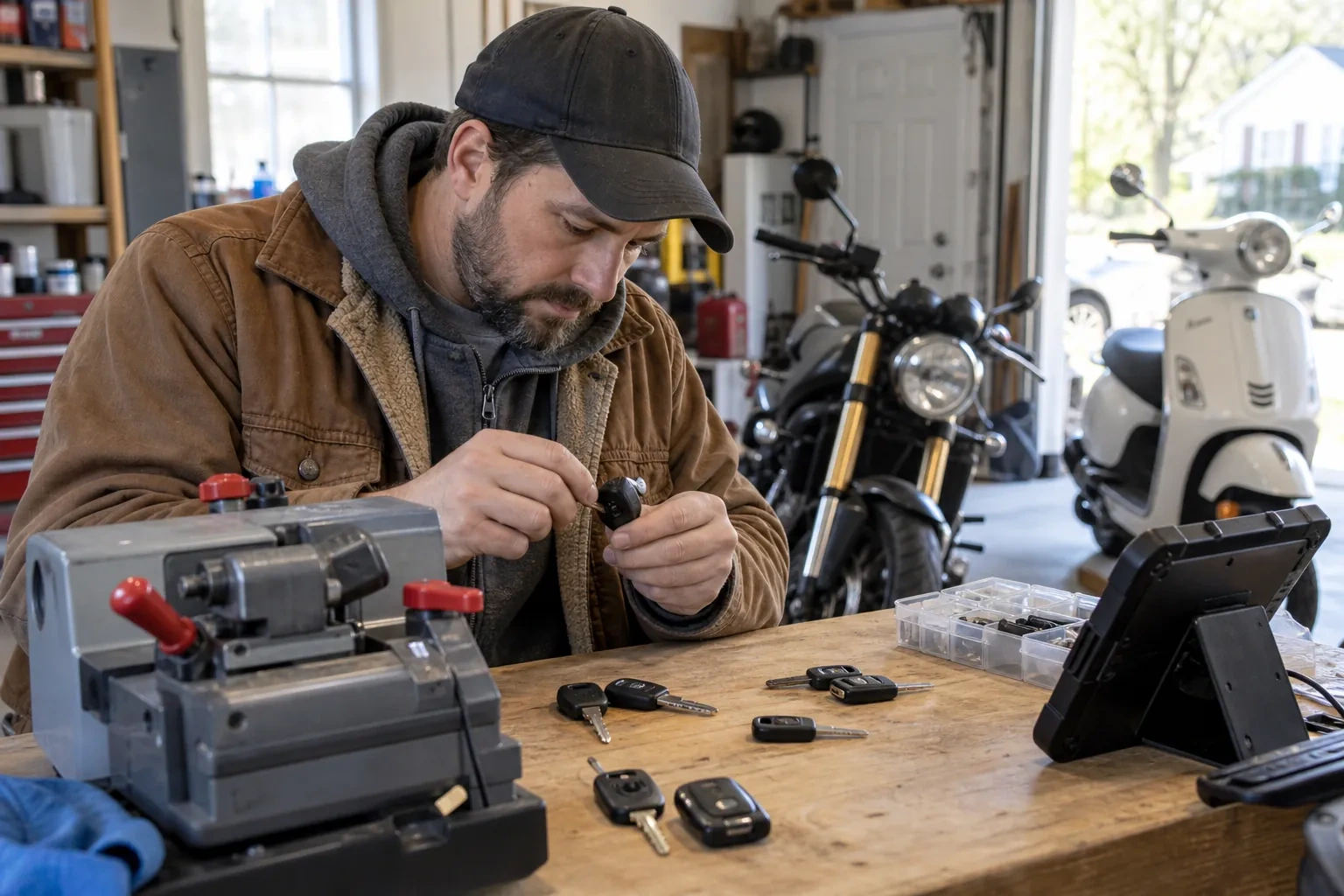
Bit keys are made individually by hand and cylinder keys are cut per copy, so the count you ask for is a line of its own. Decide who in the household needs one before the visit.
Replacement case
A case that is cracked or worn through is replaced with a reproduction or modern mortise case sized to the pocket. The case itself, any trimming of the pocket and the refitting are itemised separately from a repair.
What to have ready
- What does the knob do when you turn it: return, sag, or not come back?
- Is the trouble worse with the door closed than with it open?
- How many keys would you like to have afterwards?
Vintage Mortise Lock Service: questions
QuestionsWhich parts usually need replacing?
Springs, first and foremost: the latch spring, the hub spring that returns the knob, and the small springs on the deadbolt levers. After that, the spindle and knob set screws, a hub whose square has worn round, a worn deadbolt lever or follower, and on later locks the cylinder set screw or the cylinder itself. Bolts, cases and trim are almost always kept, cleaned and refitted rather than replaced.
Will the door look any different afterwards?
Usually not, when the original case is repaired: the same knobs, escutcheons, faceplate and strike go back on in the same positions, and the only visible change is paint or grime cleared from the edges that were catching. A replacement case is chosen to match the pocket so original trim is reused wherever spacing allows, though an occasional case needs a small pocket or fixing change, explained beforehand.
What do I get at the end of the visit?
A lock you have tested yourself from both sides, keys counted into your hand with a spare, any parts that were removed if you want them, and a short written note of what was done: case type, parts replaced, keys made, strike adjusted. For a bit-key lock the locksmith keeps the details needed to cut further keys later. You also get shown where the yearly drop of oil goes.
Related services
- Deadbolt InstallationYou bought a keypad deadbolt online and pulled the old one off, only to find the hole in the door is a different size and the bolt latch sits at a backset the new kit does not list.
- Lock Replacement & UpgradeThe brass handleset has gone blotchy and green where the winter salt reaches it, and the coating on the deadbolt is lifting in flakes.
- Smart Lock InstallationThere are four copies of the front-door key floating around: one with the cleaner, one with a neighbour, one on a hook at your parents' place, and one you honestly cannot account for.