Lockouts · Guildwood Village
Seized & Jammed Lock Opening in Guildwood Village
You are inside, the deadbolt is thrown, and the thumb-turn will not budge.
In plain words
When the cylinder is the part that has seized, the work is about cleaning rather than force. Keyways collect dust, salt spray, metal filings and residue from sprays never meant for locks, and over time the pins stop lifting cleanly. The locksmith flushes the plug with a contact cleaner, applies a penetrating lubricant, and works the key in small movements until the plug turns. With the door open the cylinder comes out, is stripped and cleaned, gets fresh springs or pins where worn, and is dressed with the lubricant specified for that cylinder. A plug or shell that is worn, damaged or eaten through by corrosion is what gets replaced.
How the visit goesIt is the coldest morning of the winter and the key goes halfway into the side door and stops. There is frost on the face of the cylinder, and the door on the shaded side of the house has done this before.
Seized & Jammed Lock Opening
How the visit goes
Whose door, and which door
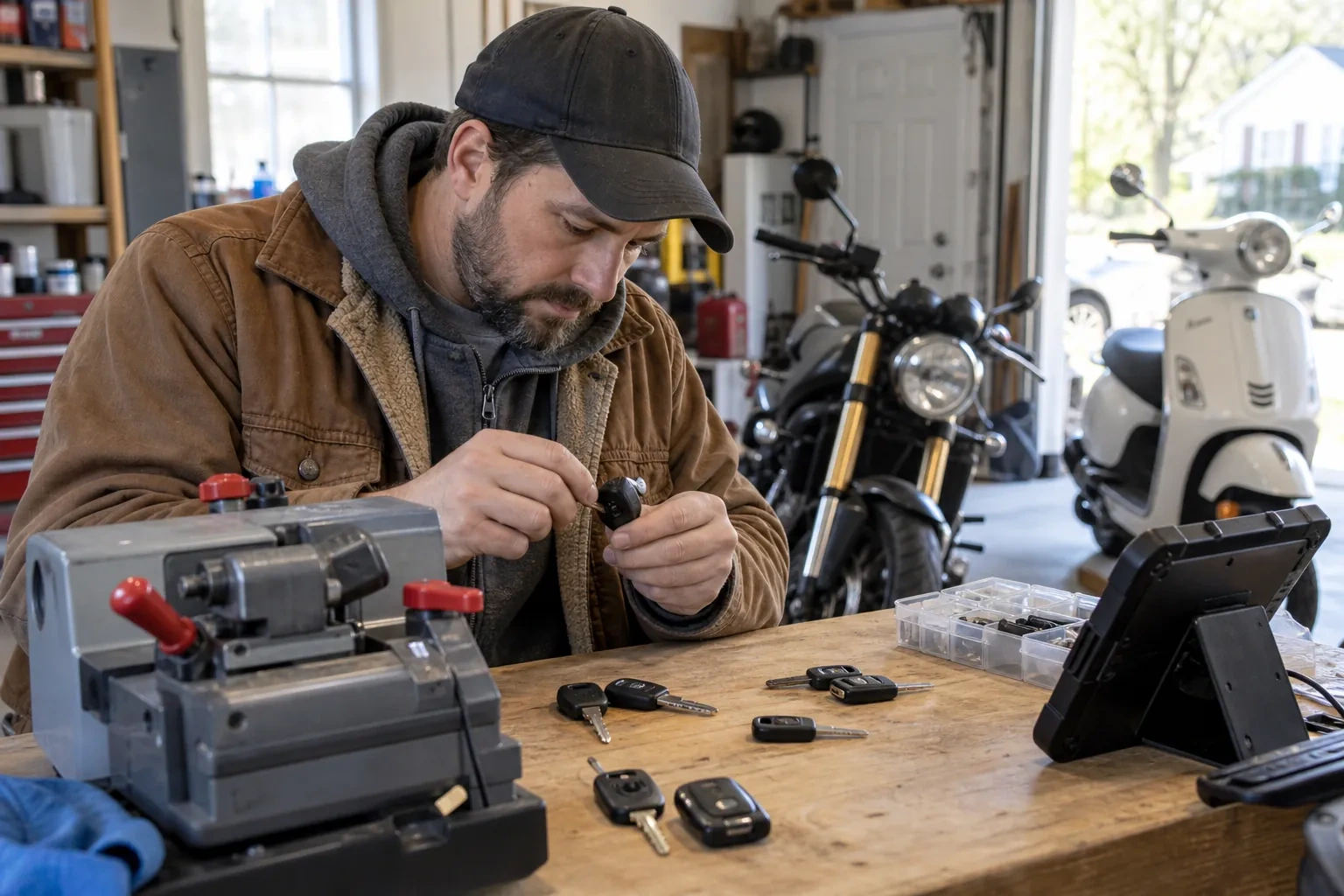
The first check is the person, not the lock. The locksmith confirms that whoever is asking for the opening is entitled to it, usually with photo identification that matches the address, or a lease, deed, property-management record or a manager who can vouch for you. For a business, a key holder or the person named on the lease is enough. If everything that proves it is behind the jammed door, the check is finished once you are inside and before the locksmith leaves. Then a short walk to the other entrances: a second door on the same key gives a comparison lock and sometimes a gentler way in.
Inside a mortise case or lever set
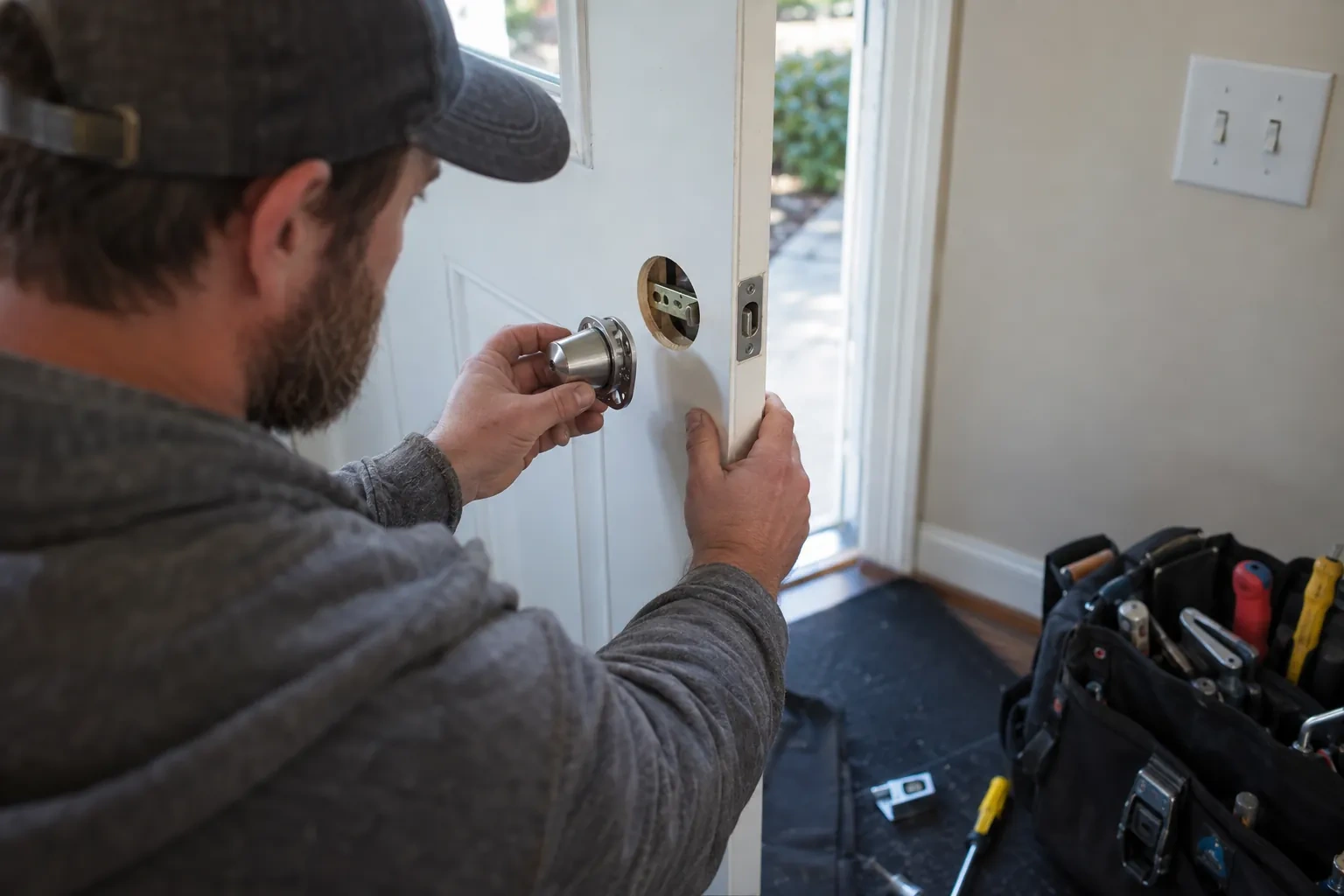
For mortise locks and lever hardware the work moves from the cylinder to the case. The locksmith gets the door open, then removes the trim and draws the case out of the door edge. Inside, a broken lever return spring, a worn hub, a bent spindle or a latch that has lost its spring is replaced with the matching part, and years of dust and hardened grease are cleaned from the contact surfaces before a fresh application of a grease suited to lock mechanisms. The case is reassembled, the spindle and cylinder are refitted, and lever, key and thumb-turn are each tested so the latch and bolt travel fully.
Set up for the freeze-thaw months
After a winter jam the cylinder has been dried and dressed with a lubricant that sheds moisture, and you know the routine for the next cold snap. A keyhole cover or a storm door keeps meltwater out of an exposed lock. A tube of de-icer in the car or coat pocket is the answer to a frosted cylinder, and boiling water is never the answer. Rinse salt spray off hardware near a treated driveway or walkway when the weather allows. Doors on the shaded side deserve a check after the first hard frost, because they hold ice long after the sunny side has cleared.
Seized & Jammed Lock Opening
In the van
Long hinge screws
Cylinder springs, pins and cap
Dry PTFE or graphite lock lubricant
Lock de-icer
Strike plate and hinge shims
Seized & Jammed Lock Opening
What affects the quote
How many locks are affected
One seized side door is the simplest case; a front and back door that both drag, or a storefront with two leaves, adds hardware and time to the visit.
Door and hinge adjustment
When the door caused the jam, hinge screws, shims, a strike move or a deepened bolt pocket are quoted as their own line beside the opening.
Which part is jammed
A bolt pinned by the door, a cylinder clogged with grit and a broken tailpiece are three different jobs with three different amounts of work, and the quote follows the diagnosis rather than the symptom.
What to have ready
- Is the key worn, bent, or a copy made from another copy?
- Has there been a thaw and freeze, or a stretch of humid weather, this week?
- Does the key go fully in and refuse to turn, or turn without moving the bolt?
Seized & Jammed Lock Opening: questions
QuestionsCan a seized lock be opened without damaging it?
In most cases, yes. A bolt held by the door is freed by relieving the pressure on the door. A cylinder clogged with grit or ice is cleaned and thawed until it turns. A failed tailpiece is bypassed and replaced. The lock stays on the door with its finish and your existing keys. A plug or shell that is worn, damaged, or eaten through by corrosion or earlier forcing is what has to be replaced, and that is explained before any work starts.
My key is worn. Would a new copy have prevented this?
Possibly, if the key was part of the cause. A worn or bent key lifts the pins short of the shear line, so the plug binds even in a healthy cylinder, and a copy made from that key repeats the wear. A key cut from the code or from a crisp original is the fix. If the lock was also gritty or the door had moved, the new key would have eased things without settling them, which is why the locksmith checks all three.
Could a jammed lock mean someone tampered with it?
Occasionally, but wear and weather are far more common. Signs that point to tampering are fresh scratches around the keyway, a plug that sits crooked, or debris such as glue or a broken tool tip inside, none of which appear from ordinary use. The locksmith looks for these during the inspection and says plainly what was found. If the cylinder has been damaged that way, it is replaced and, if you wish, the other doors are rekeyed.