Car keys · Toronto
Vehicle Lock Repair
The button on your key fob does nothing now: no beep, no flash of the lights, no click from the doors.
In plain words
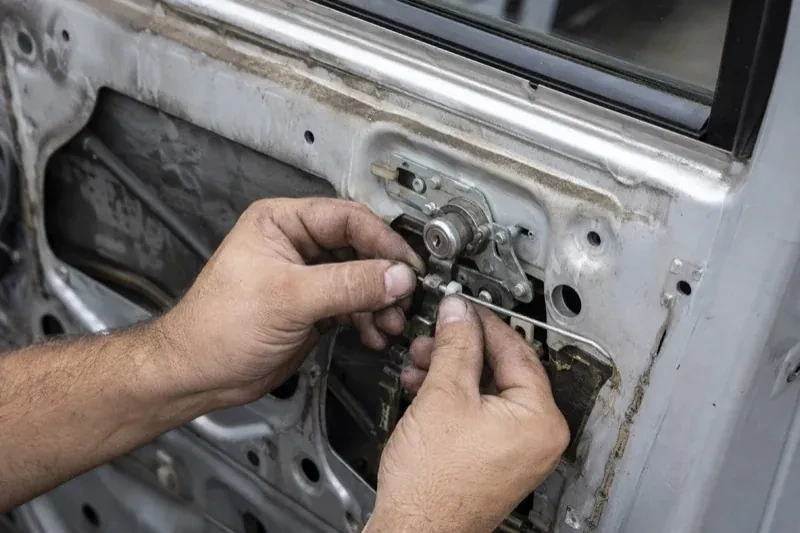
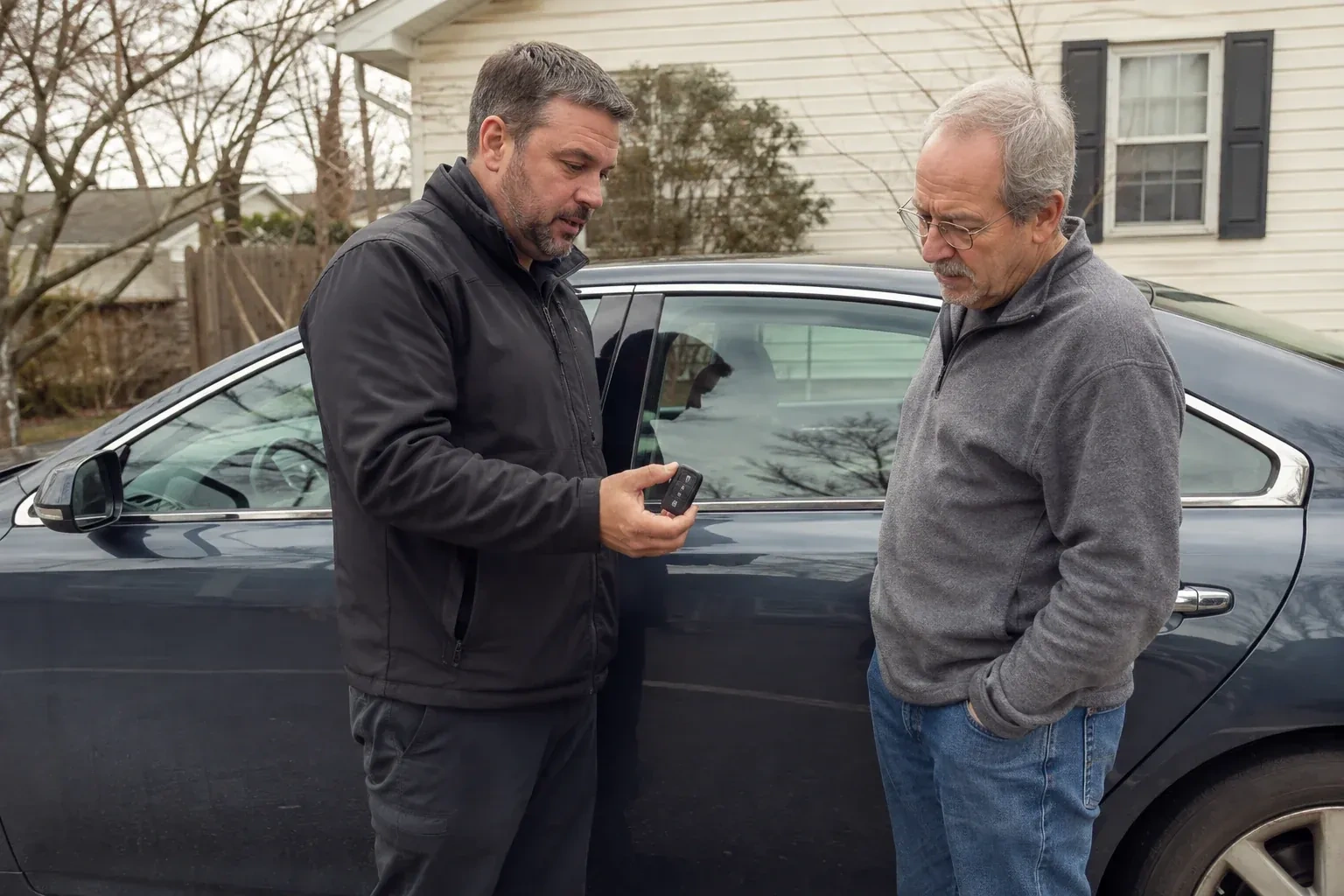
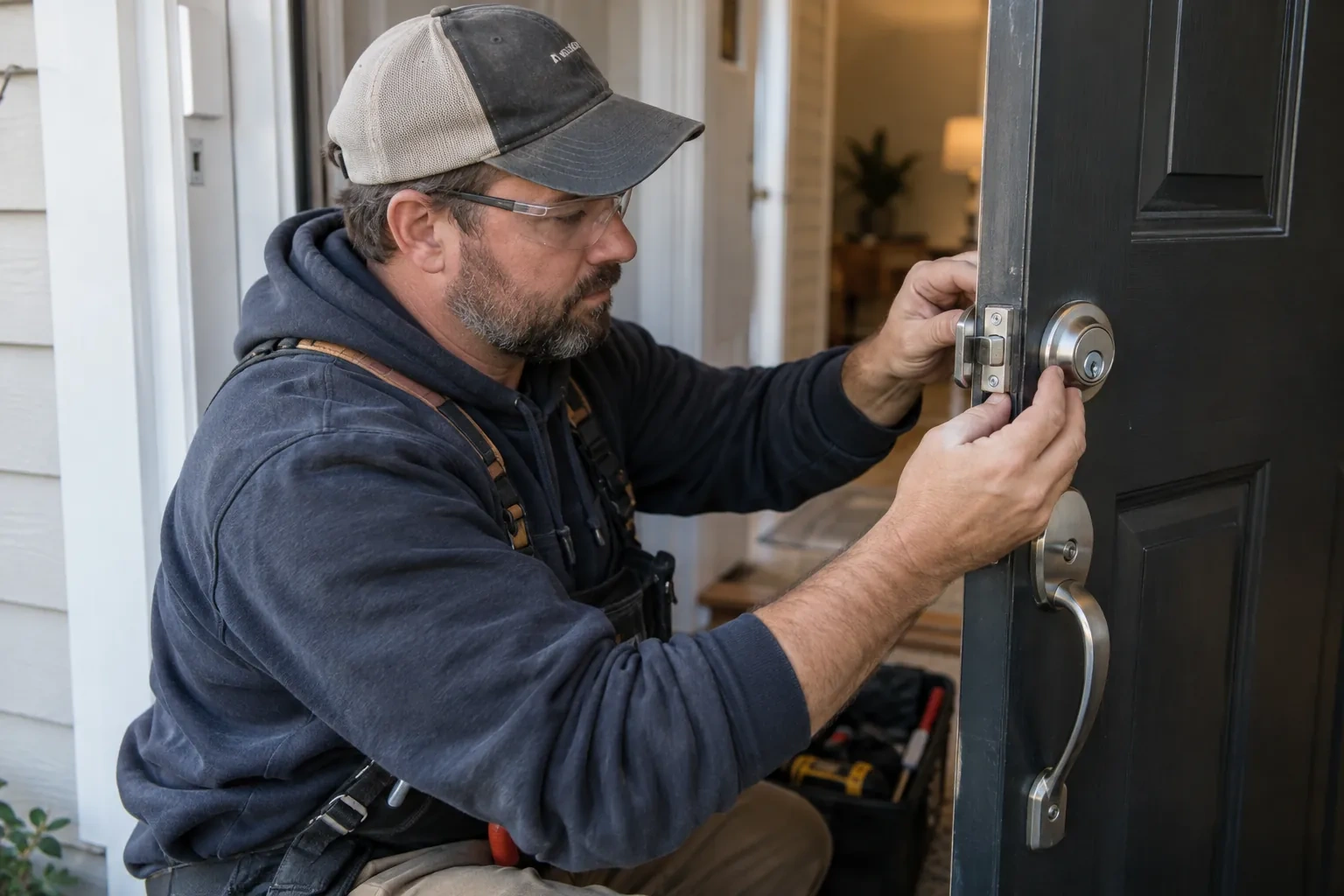
The visit follows a steady order regardless of which lock is affected. On the phone, the vehicle's details and the symptom are noted; on arrival, the customer's connection to the vehicle is confirmed against the registration; then the affected panel is opened, the cylinder, linkage and actuator are tested in turn, and the specific failed part is identified. Repair or replacement follows, new keys or a fob are cut or matched as needed, and every point is cycled by whichever controls it actually has, key, switch or remote, before the visit closes.
How the visit goesEvery door drops into place together when the fob is pressed, except the driver's door, which stays unlocked while the rest click shut around it. A twist of the key still locks that door by hand, so the mechanism inside is clearly still working.
Vehicle Lock Repair
How the visit goes
Comparing the affected point to the rest of the vehicle
A working door, right next to the one giving trouble, is one of the most useful things on the whole vehicle during this check. The locksmith tests the good lock first to see how the cylinder, the latch and the remote are supposed to feel and sound, then repeats the same actions on the affected one. Differences that show up in that comparison, a looser turn, a missing click, a delay before the actuator responds, narrow where to look, and checks of lock position, fit, cables, connectors, wiring and actuator operation follow before the failing part is named.
Cutting or matching a key to the vehicle
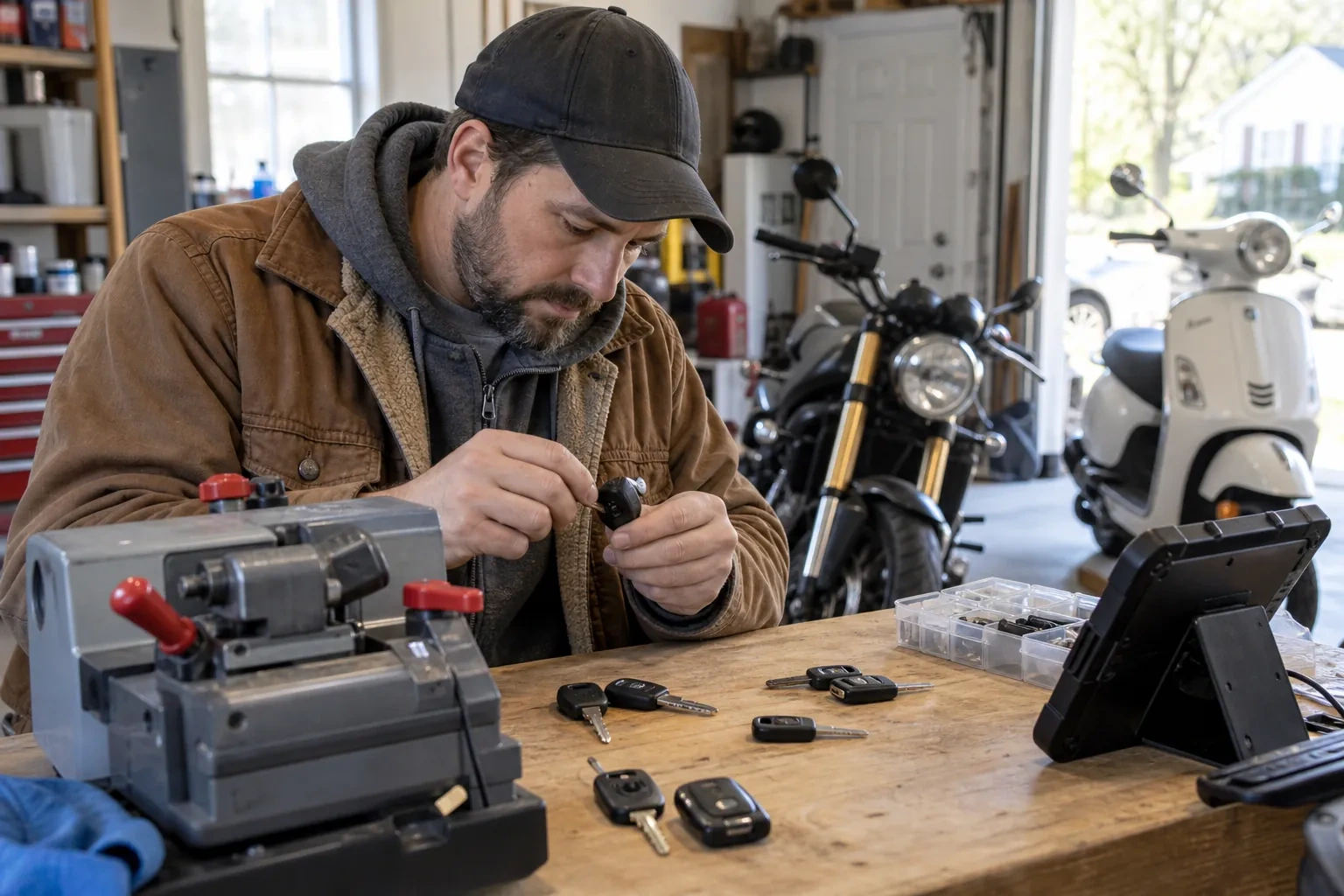
Where the key itself is thin, mismatched or simply missing for the affected lock, the locksmith cuts a new blade to the vehicle's code or by reading the cylinder directly, and fits a transponder chip inside it where the vehicle requires one for the ignition to accept it. The new key is tested in every lock on the vehicle, not only the one that was repaired, to confirm the whole set still shares one key.
Every point cycled and confirmed
Before the visit ends, the locksmith runs the repaired lock through every control it actually has at that location, a key from outside, the interior switch or handle, or the remote, checking that each path locks and releases cleanly. Central locking is cycled a few times with every door watched at once, so a fault that only lagged occasionally is caught rather than assumed fixed after a single try. You see the working lock for yourself before the locksmith packs up.
Vehicle Lock Repair
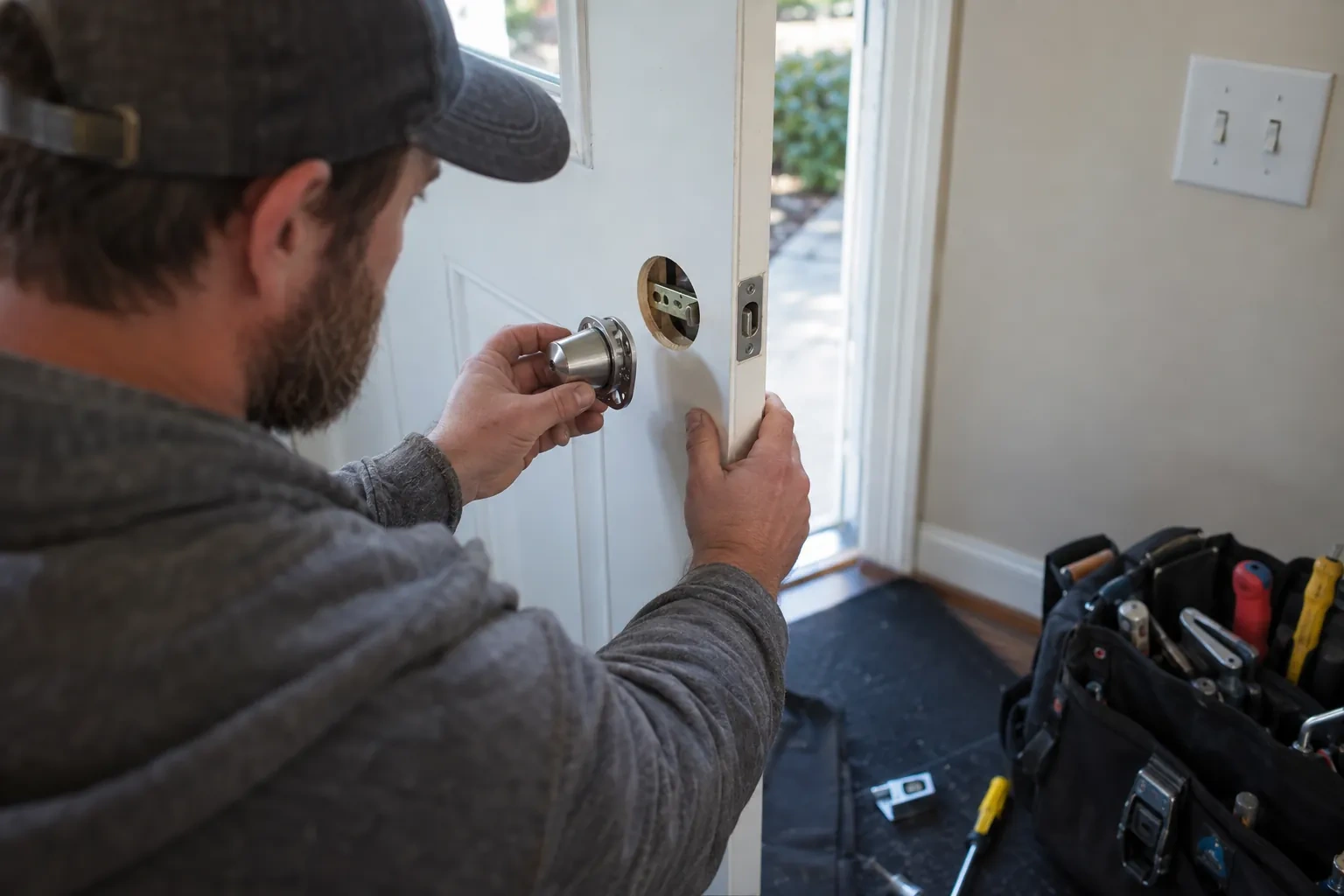
In the van
Linkage rods and clips
Power door lock actuator
Dry lock lubricant
Wiring harness door boot
Replacement lock cylinder
Vehicle Lock Repair
What affects the quote
Mechanical or electronic fault
A worn cylinder or a slipped linkage rod is generally simpler work than a failed power actuator or a wiring fault reaching back to the hinge, and the quote reflects which side of the lock has failed.
Matching the vehicle's existing key system
Bringing an odd-one-out lock or key back onto the vehicle's existing key system takes extra diagnostic time compared with a straightforward single-part swap, and the quote accounts for that additional work.
Age and make of the vehicle
Some vehicles use widely available hardware, while others need parts sourced specifically for that make and model. Availability of the matching cylinder, actuator or key blank affects the timeline and the quote.
What to have ready
- Do you have the vehicle's registration or ownership document on hand?
- Does the remote behave differently on that lock than the mechanical key does?
- Has anyone already tried to force the key or pry at the door?
Vehicle Lock Repair: questions
QuestionsWhy has my key fob suddenly stopped working?
A dead coin-cell battery is the most common reason, and it is a straightforward fix once the fob is opened. Less often, the fob has lost its pairing with the vehicle or its case has cracked and let in moisture, both of which a locksmith can check and address.
Is it normal for only the trunk or hatch lock to fail while the doors are fine?
Yes, this happens fairly often because a trunk or hatch lock gets used far less than the door locks and can seize from disuse, dust or corrosion, or spin freely if its own linkage has come loose over time.
Can you match a new lock cylinder to my existing key rather than giving me a new key?
Yes, this is usually the preferred approach. A replacement cylinder is set or selected to match the key you already carry, so you continue using the same key and fob across the whole vehicle instead of adjusting to a new one for a single door.
Related services
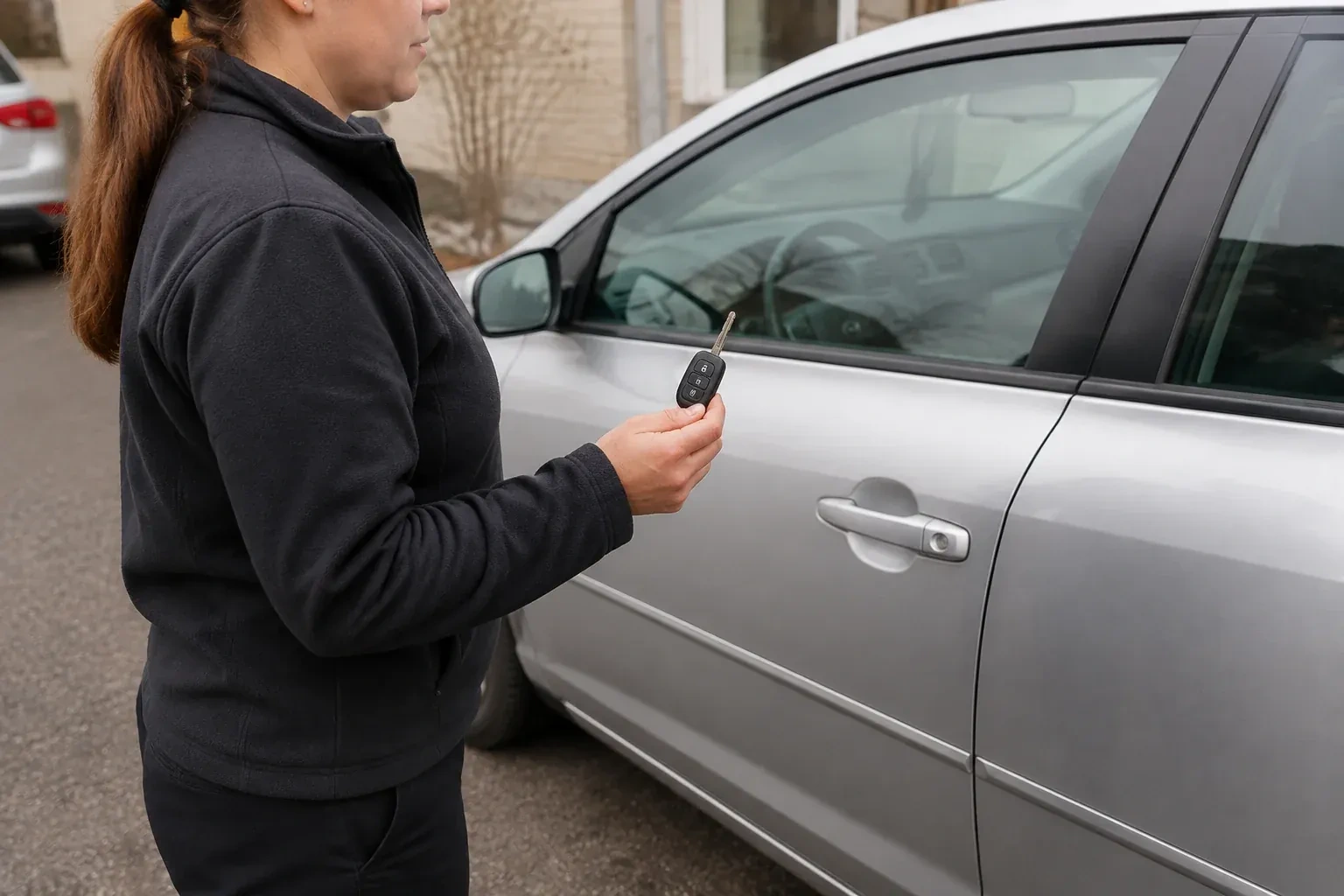
- Car Key ReplacementMinus twenty outside, the fob button does nothing, and the door keyhole has a crust of road salt over it because you have not used a metal key in that car since the day you bought it.
- Spare Car Key DuplicationThe blade on the everyday key has gone shiny and thin along one edge, and lately it needs a wiggle before the ignition catches.
- Key Fob ProgrammingButtons on the fob still light up and the remote still clicks, but the vehicle refuses to start even with the fob sitting in the cupholder.