Lockouts · Toronto
Lost Keys — Same-Visit Rekey
Your purse was taken from the back of a chair at a restaurant.
In plain words
The first useful move after losing a key is to think about where it worked rather than where it went. A house key commonly opens more than the front door: the back door, a side entrance, the door from the garage into the house, a shed, a gate padlock, sometimes a storage room or a mailbox. A same-visit rekey starts by listing those openings, then treats the ones that are yours to change and points you to the right person for the ones that belong to a landlord, a condominium or the postal service. Every cylinder on the list leaves the visit taking a new key.
How the visit goesYou let a part-time employee go on Friday. The shop key is on a ring in their apartment, or their car, or a friend's kitchen, and on Monday morning the register and the stock room open with it.
Lost Keys — Same-Visit Rekey
How the visit goes
Confirming who is asking for the change
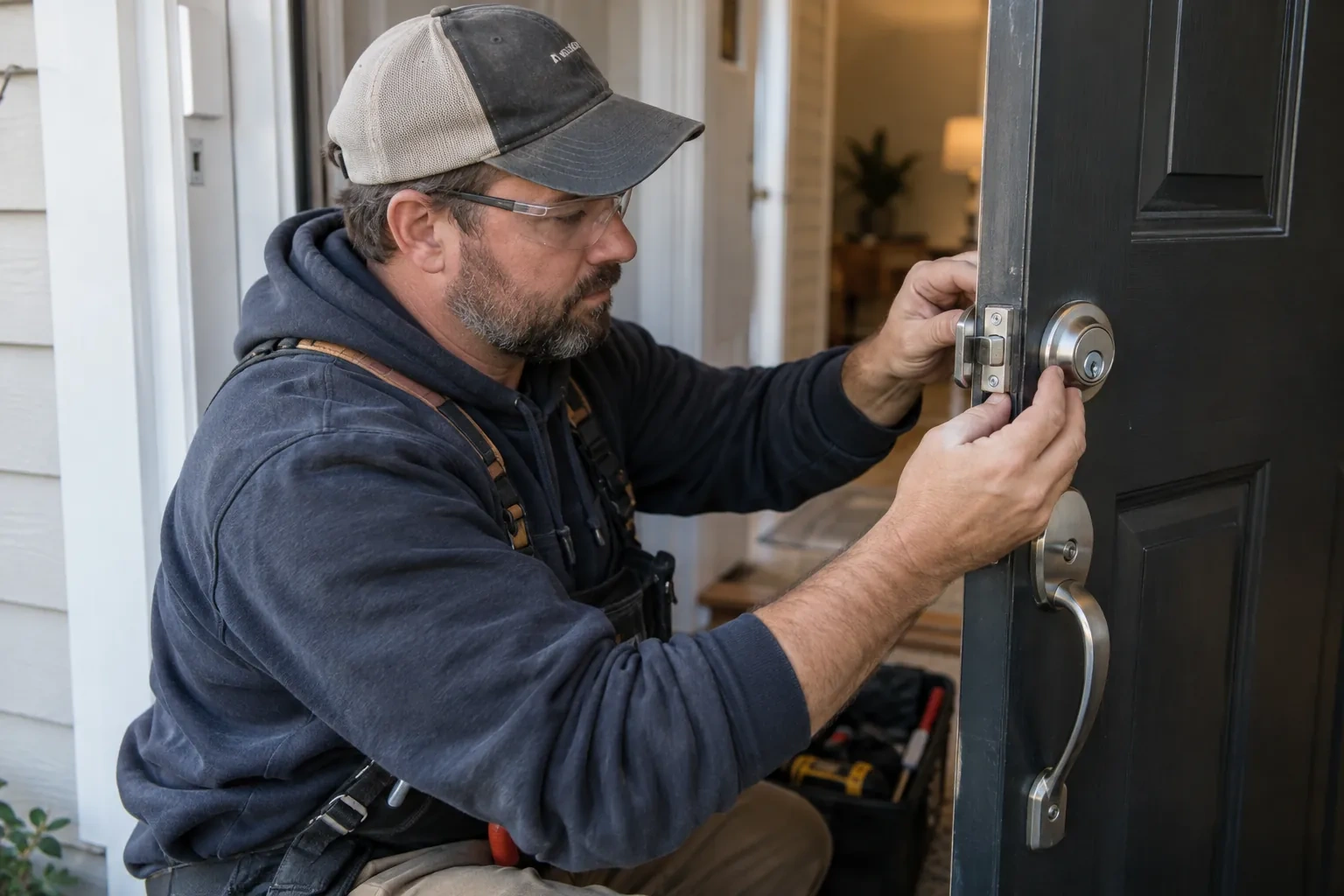
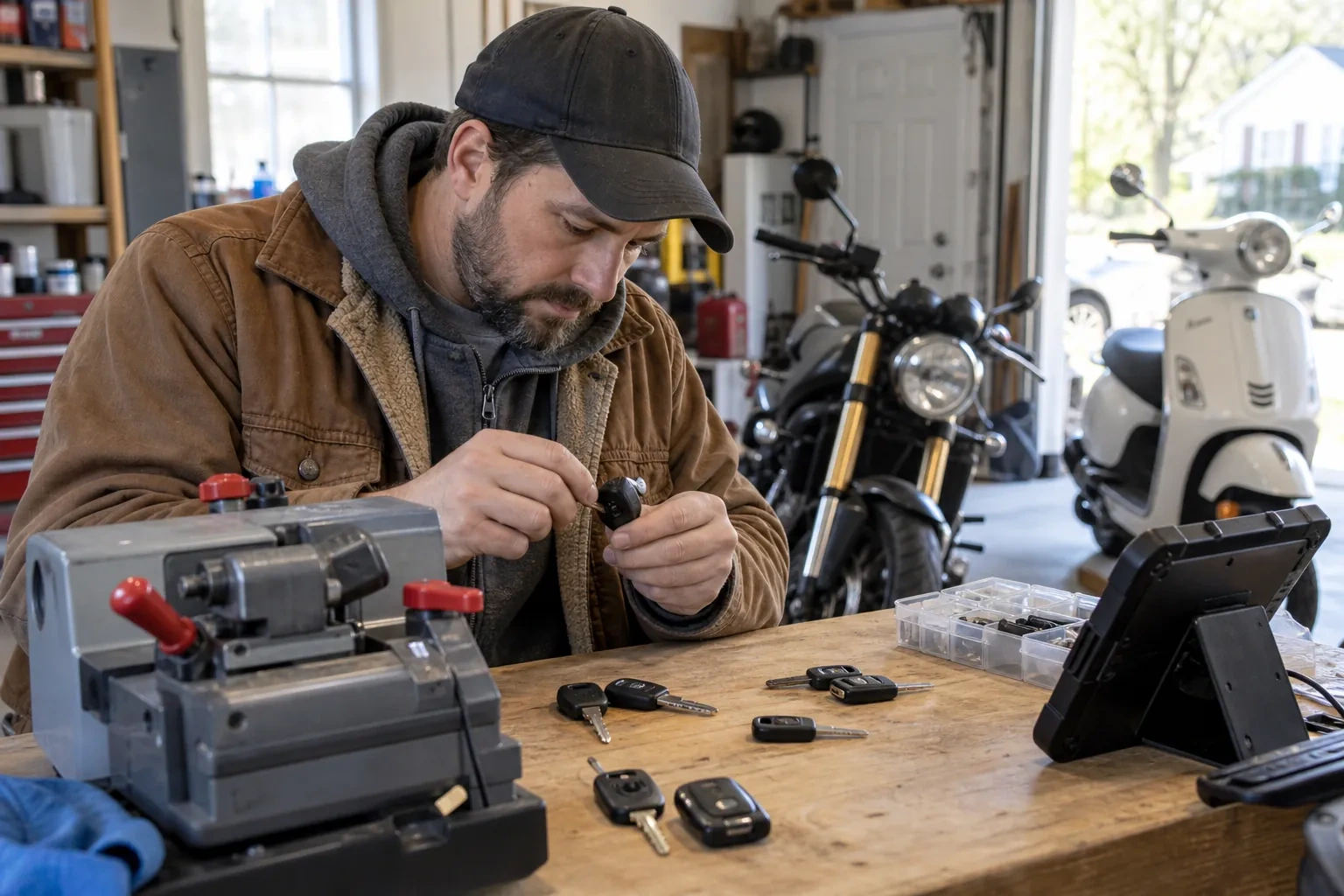
A rekey decides who can open a door from now on, so the locksmith starts by confirming that the person asking has the standing to decide. Photo identification matched to the address does it for an owner. A tenant shows a lease or a recent bill along with identification, and mentions whether the landlord knows. A property manager or superintendent shows the management connection and says which units or doors are theirs to authorise. None of this is suspicion; it is the same care that stops a stranger with a convincing story from having your own locks reset against you. When something is missing, the locksmith says what would settle it and waits.
Removing the cylinder without disturbing the door
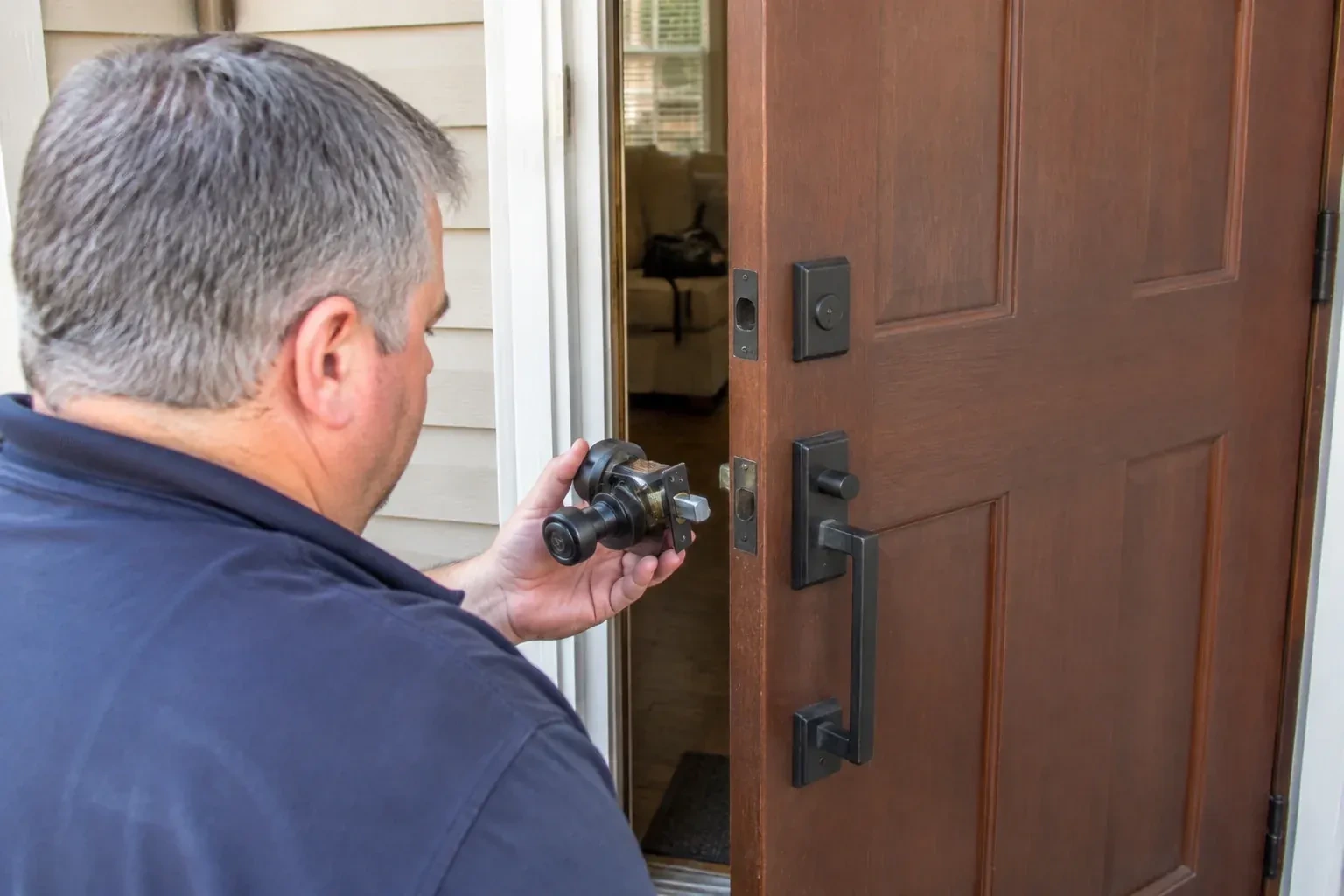
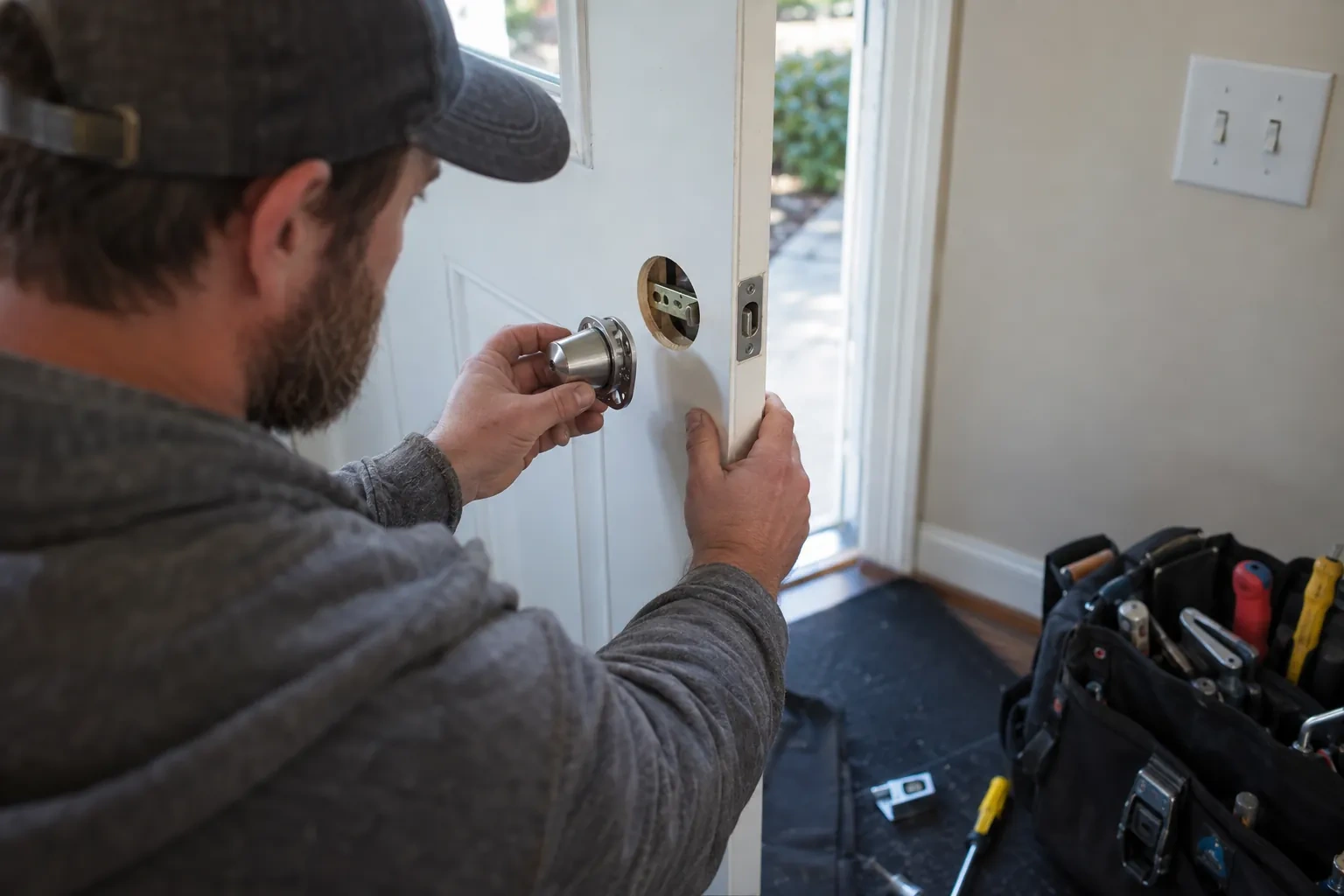
Each cylinder comes off in the way its lock allows, and the door itself is never cut or drilled. A knob or lever lock releases its cylinder once the knob is slipped off its spindle and a retaining clip or cap is eased back. A deadbolt cylinder comes out when the interior thumb-turn assembly is unscrewed and the housing lifts away. A mortise cylinder in an older door backs out after its small set screw is loosened, and a rim cylinder on a night latch unscrews from its back plate. Each piece is set aside with its own screws so the door goes back together exactly as it was.
The code written down for next time
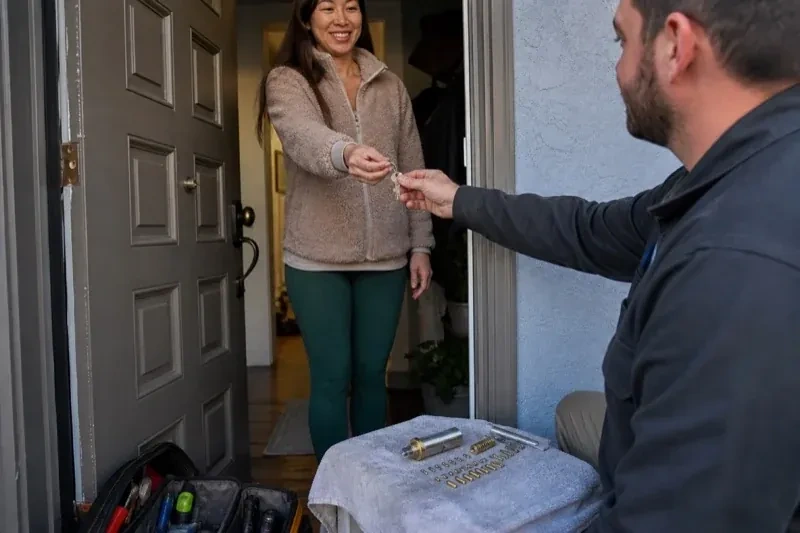
The new combination is recorded as a short code, either on a card the locksmith gives you or on the key tag, and a copy stays in the locksmith's job notes if you wish. That code is what makes future copies accurate: a key cut to code has fresh, original depths, while a copy of a worn key inherits every rounded edge. It also means a lost key years from now is met with a different code, never a repeat. Keep the card with the house papers, and when a new key is needed, ask for it to be cut from the code rather than traced from a tired one.
Lost Keys — Same-Visit Rekey
In the van
Replacement cylinders
Dry graphite or PTFE lubricant
Key tags and a key register
Cylinder retaining-clip and cap tools
Top pins and cylinder springs
Lost Keys — Same-Visit Rekey
What affects the quote
Condition of the cylinders
A clean, healthy cylinder is repinned as is. One clogged with salt and grit is cleaned first, and a worn or damaged one is replaced rather than repinned, each priced as its own item.
Number of keys cut
New keys are cut on site and counted individually. Two for a couple or six for a household with teenagers and a sitter: name the number and the quote reflects it.
Time and day of the call
A weekday afternoon and a late evening or holiday call cost the same amount for a lost-key rekey. When a stolen wallet makes the visit urgent, the locksmith still confirms the exact figure on site, once the cylinders and keys needed have been looked at.
What to have ready
- Was a garage remote, building fob or car key on the same ring?
- Would you like every exterior door to work on one key?
- Was anything with your address, such as a licence or a mail tag, lost with the keys?
Lost Keys — Same-Visit Rekey: questions
QuestionsDoes stamping keys 'do not duplicate' stop copies?
It asks; it does not compel. The stamp is a request that a key-cutting counter may or may not honour, and manufacturers say as much. Real control comes from a restricted keyway, whose blanks are issued only through authorised channels against a key card, or simply from knowing how many keys exist and who holds them. A rekey resets that count to a number you chose.
Should I rekey when I move into a new home?
Lock manufacturers list moving as one of the main reasons to rekey, and it is easy to see why: previous owners, their relatives, a cleaner, a dog walker and a contractor may all hold copies you know nothing about. Rekeying every exterior cylinder in one visit resets the count to the keys in your hand, and it is a convenient moment to put every door on a single key as well.
When is replacing a lock better than rekeying it?
When the hardware itself is the weak point: a plug worn oval, a cylinder eaten by salt from a driveway-facing door, a light knob lock on an exterior door, a keyway with no blanks left in supply, or when you want a different style, a heavier deadbolt or a keypad. In those cases a new lock keyed to match the rest of the house is fitted in the same visit. Everything else is rekeyed.