Commercial · Toronto
Commercial-Grade Lock Replacement
Overnight someone forced the back door, and the cylinder face is scarred, the metal around the strike has pulled loose from the frame, and the latch no longer sits flush.
In plain words
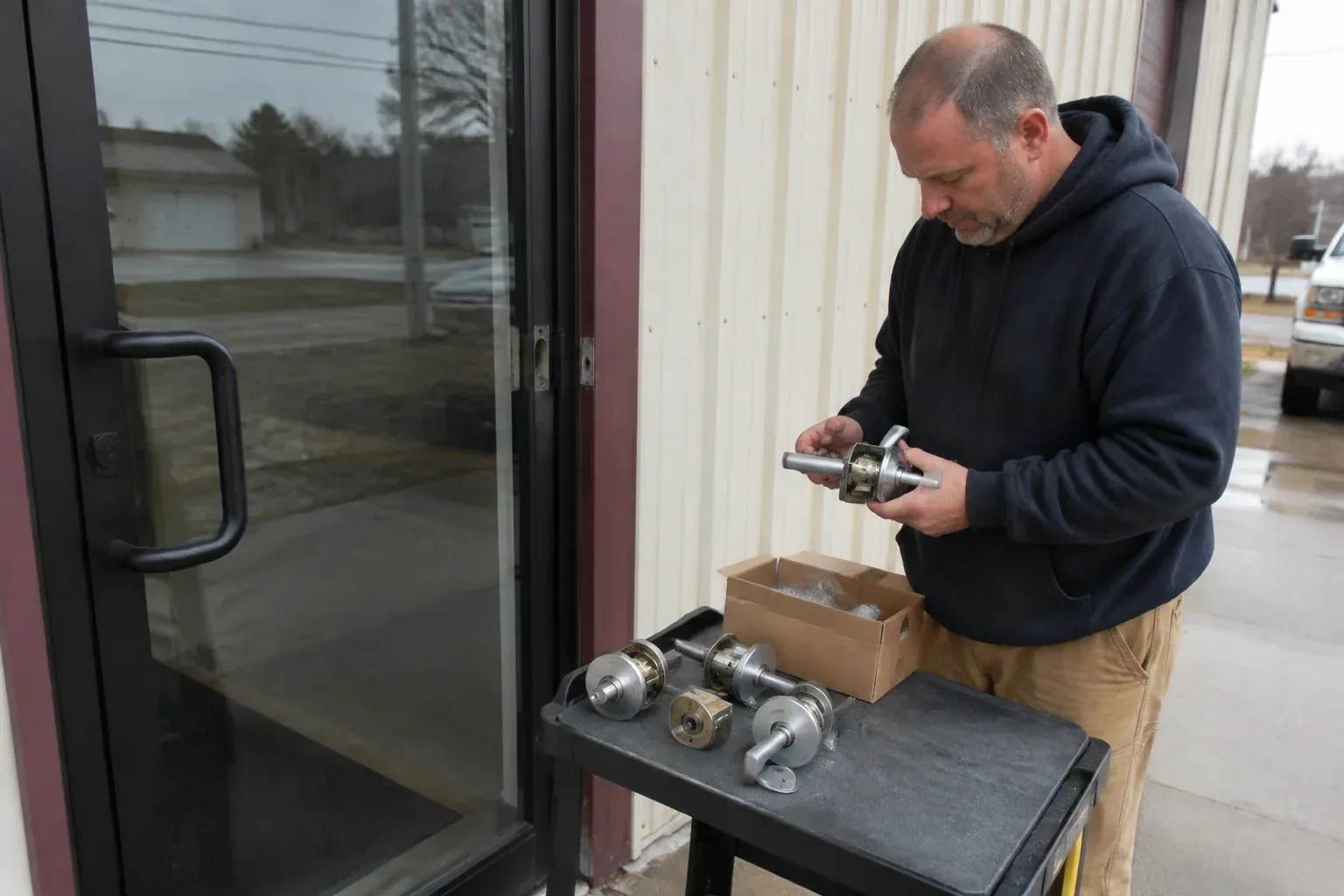
Fire separations and exit routes add a layer that a house entry door never has, and this service is where that layer gets handled properly. A door that forms part of a fire separation needs hardware listed for that door's rating, and a door on a required exit may need to open with a single motion and no key once the building's occupant load crosses a threshold. The locksmith checks whether either condition applies to this specific opening, selects hardware that satisfies it, and installs the new lock so the door still closes and latches the way a fire-rated or exit door is required to.
How the visit goesThe kitchen delivery door gets shouldered open more than a hundred times a shift, and lately the latch slips past the strike plate instead of catching it on the first push.
Commercial-Grade Lock Replacement
How the visit goes
Assessing damage from a break-in or forced entry
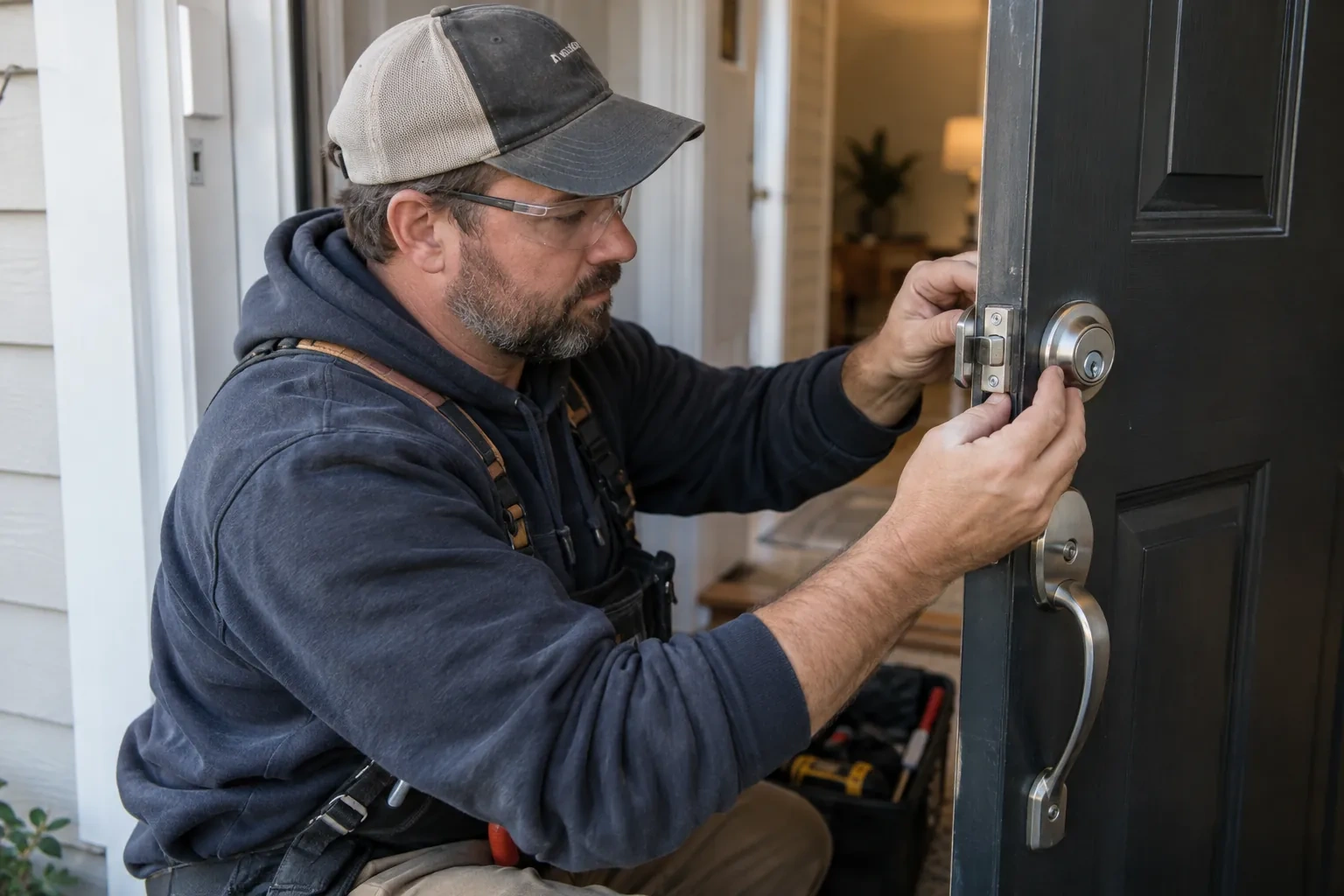
When the reason for the call is a forced door, the locksmith treats the assessment a little differently: documenting a scarred cylinder, a bent strike or a cracked frame for the business's own records or insurance purposes before removing anything. The door and frame are checked for structural damage beyond the lock itself, since a replacement lock fitted into a damaged strike pocket or a split frame will not hold the way new hardware should. Anything beyond the lock itself is noted as its own repair.
Selecting hardware built for this opening
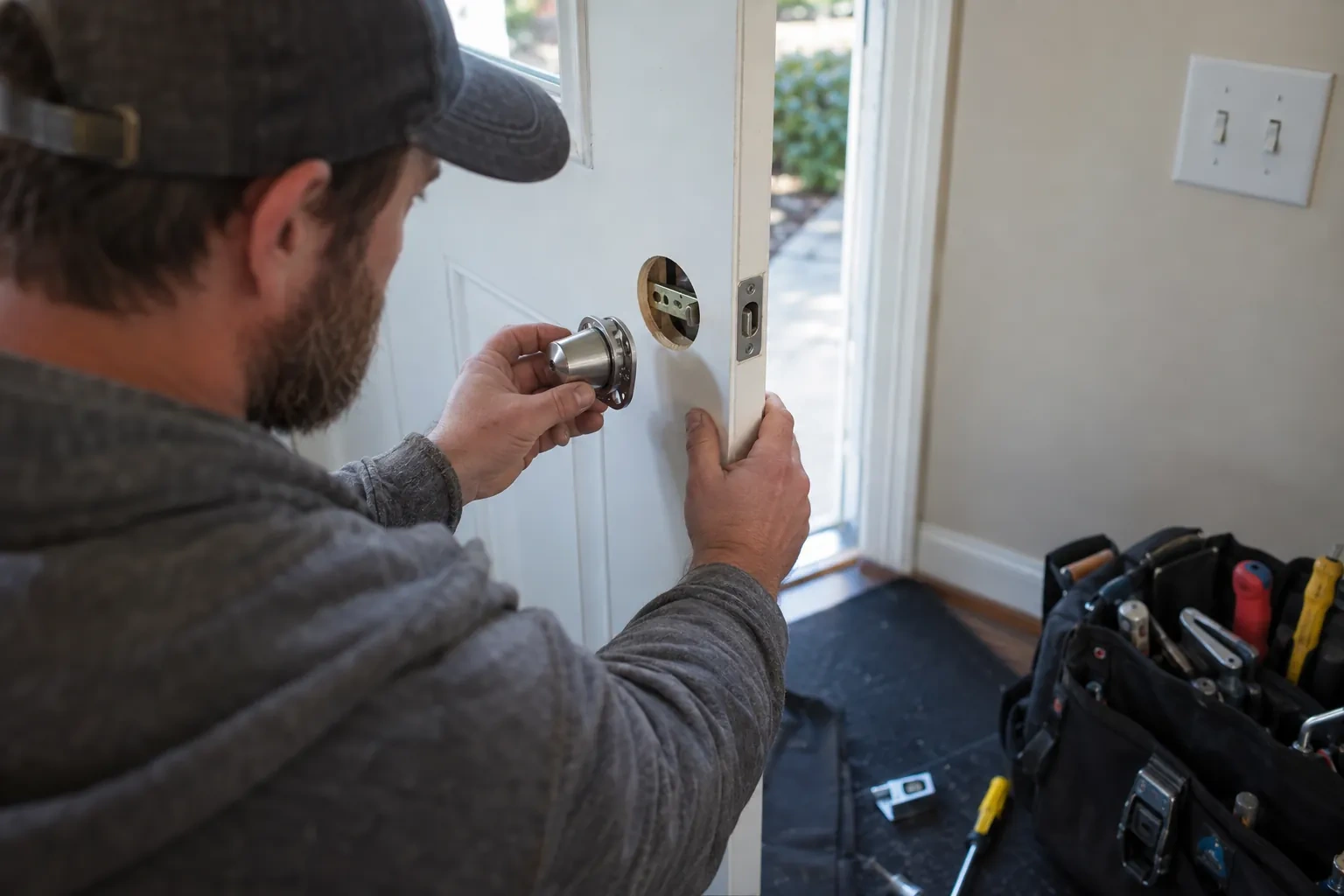
With the assessment complete, the locksmith orders hardware to match: a mortise lock body for a mortise-prepped door, a heavy cylindrical lockset for a standard bored door, or a narrow-stile lock or hookbolt for an aluminum storefront. Where the door is part of a fire separation or a required exit, the hardware chosen is listed for that rating and function rather than a general-purpose substitute. Grade and finish are matched to the traffic the door takes, so a heavily used delivery door gets hardware built for that duty rather than the lightest option available.
A door rated for the job it does
The business is left with hardware sized to how the door is actually used: a mortise lock body or heavy cylindrical lockset that can take the traffic of a busy entrance, or a narrow-stile lock built for the aluminum frame it is mounted in rather than adapted to it. Staff can be shown how the new hardware feels different from the old one, whether that is a firmer latch, a smoother deadbolt throw, or a different key profile, so nobody is caught off guard by hardware that behaves differently from what they are used to.
Commercial-Grade Lock Replacement
In the van
Key-control log and tags
Mortise lock body
Restricted keyway cylinder
Electric strike
Interchangeable-core cylinder
Commercial-Grade Lock Replacement
What affects the quote
Number of keys cut and issued
Keys are counted individually into the quote. A small office needing a handful of keys is a smaller line item than a multi-shift operation issuing keys to a large staff roster.
Coordination with other trades or systems
Where a door closer, an alarm panel or a building-wide access-control platform is involved, coordinating the lock replacement with whoever manages those systems can add planning time that the quote reflects.
Keying complexity
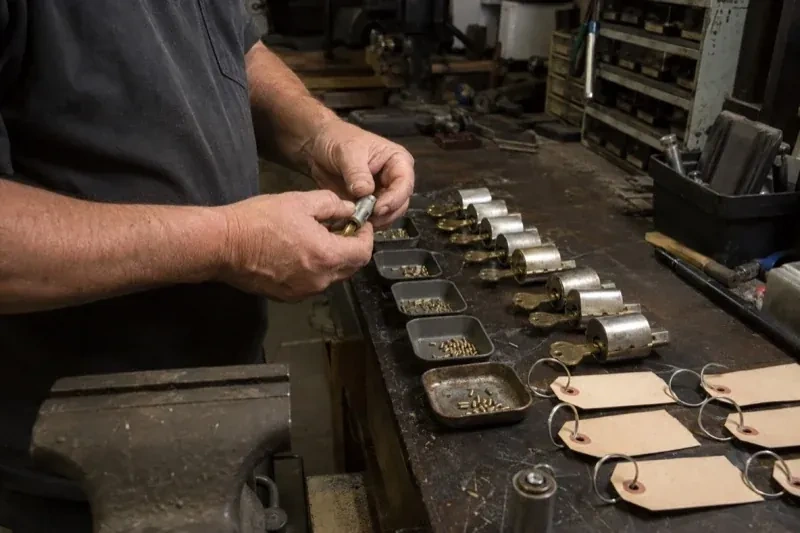
A single stand-alone cylinder is the simplest keying job. A master or grand-master structure spanning multiple doors, departments or locations takes more planning and more cylinders to combinate correctly, and that planning is part of the quote.
What to have ready
- Do other doors on the property share a key with this one?
- Is the door part of a fire separation or a marked exit route?
- Do you want a master key system, an interchangeable core, or a stand-alone lock?
Commercial-Grade Lock Replacement: questions
QuestionsWhat is the difference between a mortise lock and a cylindrical lockset?
A mortise lock has its whole mechanism, latch, deadbolt and sometimes a separate handle function, built into one case that sits inside a pocket cut into the door's edge. A cylindrical lockset is a bored-in unit, simpler to service, common on standard commercial and residential doors alike. Which one your door takes depends on how it was originally prepped, not on preference alone.
How does this service differ from a home lockout or residential rekey?
A home lockout or residential rekey is usually about one door and one household's keys. Commercial-grade lock replacement more often involves a system, several doors, a master key structure, and sometimes a fire or exit rule the door has to satisfy, so the assessment, the hardware selected and the record kept at the end are all built around managing that wider structure rather than a single lock.
Does an electric strike need to match a specific lock function?
Yes. An electric strike has to suit the latch or deadlatch type it will receive, the door's handing and swing, and whether the application needs fail-safe or fail-secure operation, meaning whether the door should unlock or stay locked if power is lost. Choosing a strike without checking these against the mechanical lock is a common reason a door releases electronically but still binds mechanically.
Related services
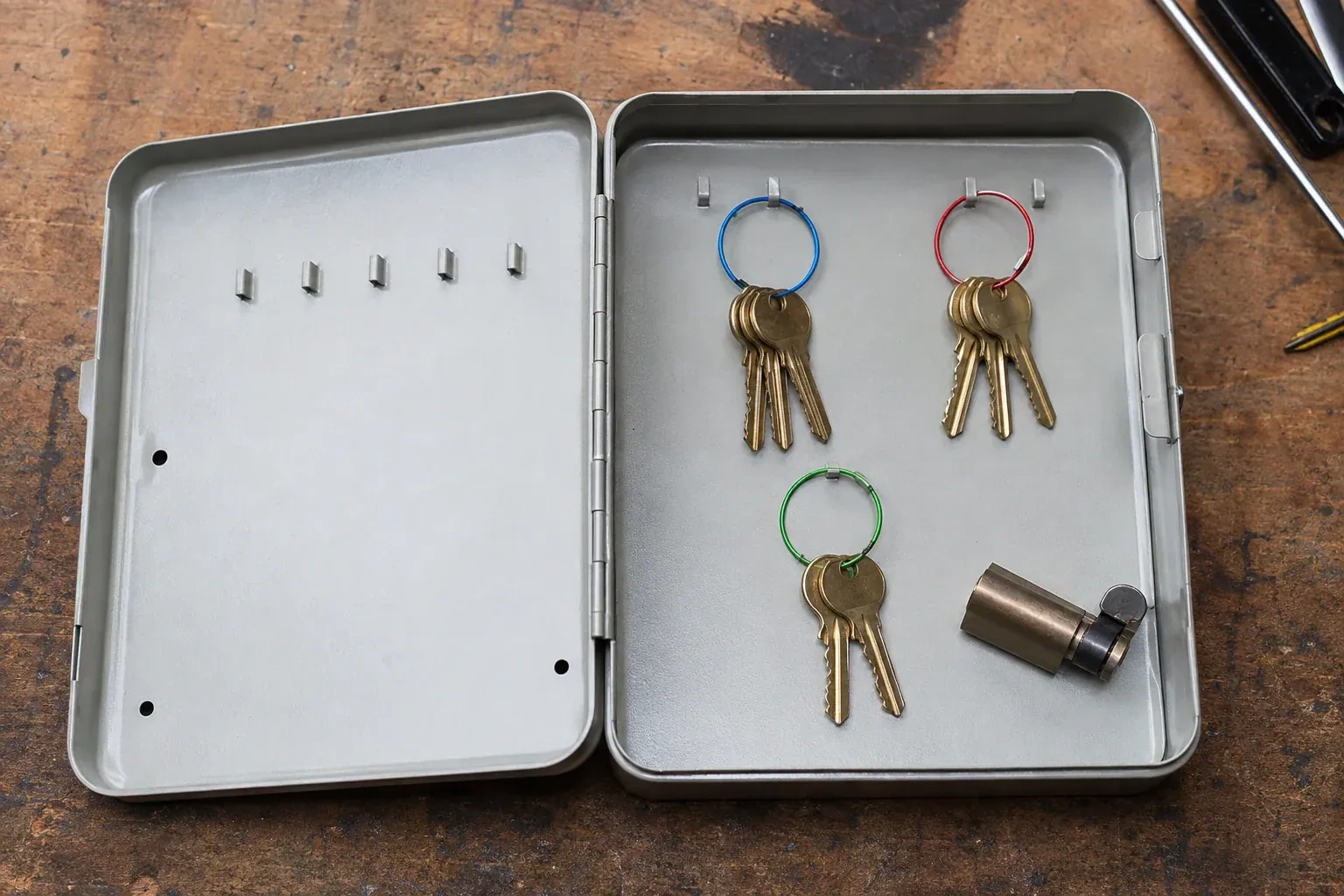
- Master Key System DesignOn the warehouse floor, a shift supervisor's key opens the loading dock, the tool crib and the manager's office, though only the dock is really part of the job.
- Access Control InstallationYou just leased the empty unit next door and want the new tenant to open their own suite without a key to yours, to the loading dock, or to the electrical room down the hall.
- Panic & Exit HardwareThe daycare wants the yard gate and the classroom door alarmed so a staff member hears the moment it opens, without turning either into something a child could be shut behind.