Lockouts · Toronto
Business Lockout Service in Toronto
A cook stepped into the alley with the recycling and the rear door swung shut behind him.
In plain words
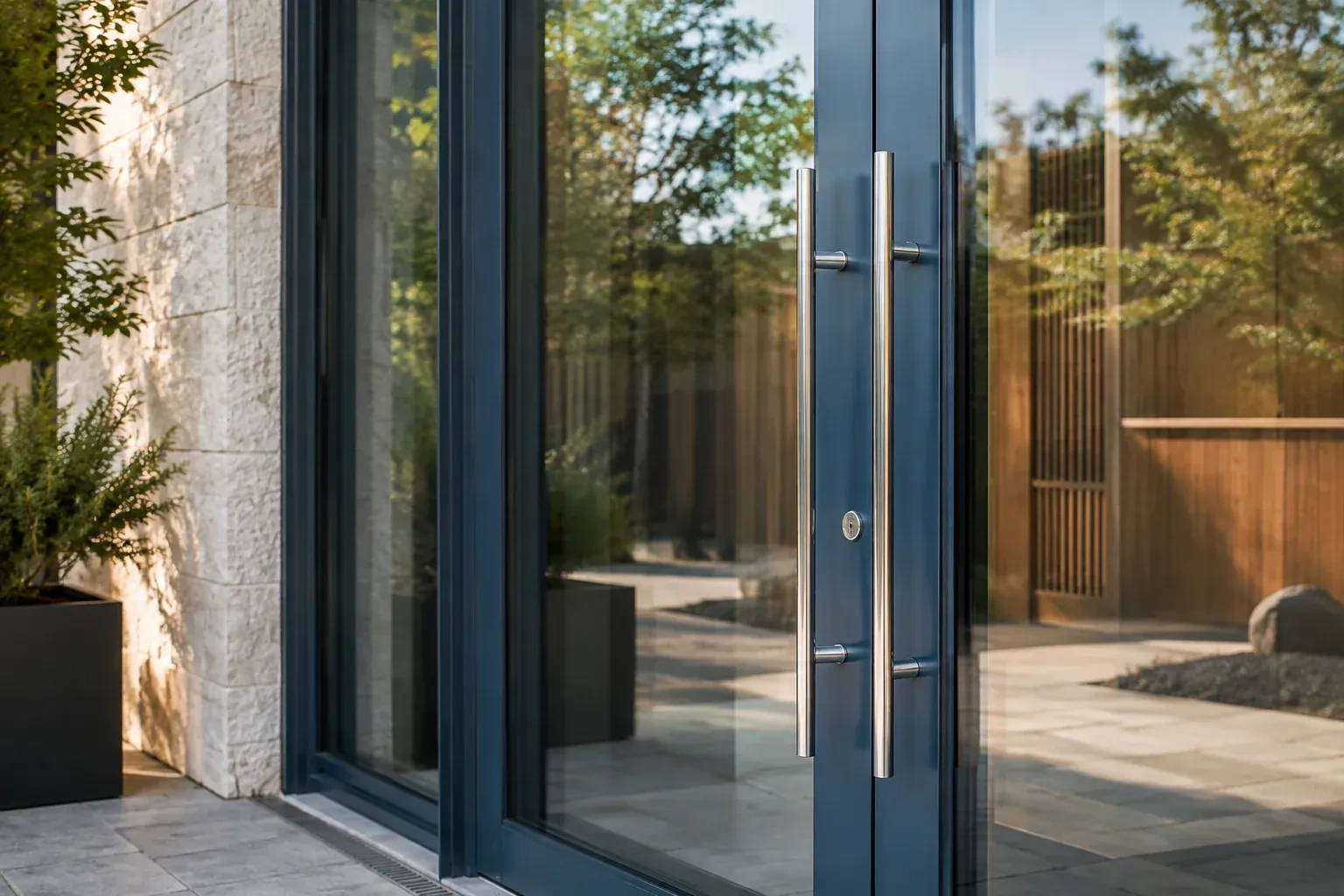
Heavy commercial doors move, and a good share of business lockouts are really door problems. A glass storefront door hangs on pivots or a continuous hinge that wear with thousands of openings a week, and once the door drops a few millimetres the hookbolt or latch binds against its strike. A hydraulic closer that has stiffened in the cold or lost its adjustment leaves a door that never latched properly the night before. Part of a lockout visit is reading the door: lifting it back into line, adjusting the strike and closer, and making sure the lock is asked to do only what a lock should do.
How the visit goesThe heavy glass door has been scraping the threshold for weeks. This morning the key turns, you can hear the bolt trying to move, but it is jammed hard in the strike and the door stays shut no matter how the handle is pulled.
Business Lockout Service
How the visit goes
Alarm, reader and anything wired to the door
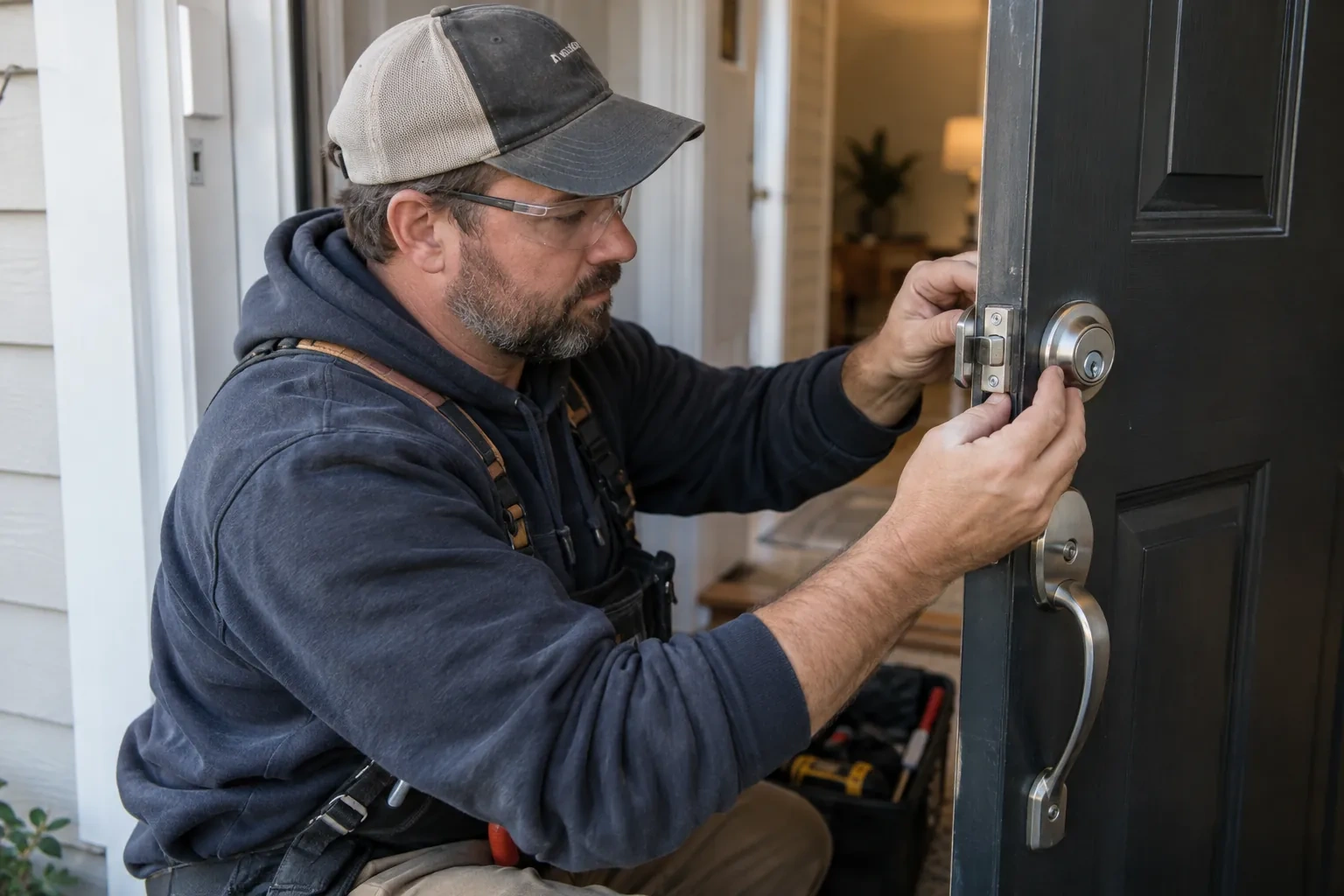
Before the door moves, the locksmith asks what will notice when it does. Is there an alarm with a contact on this door, who holds the code, and should the monitoring company be told to expect an entry? Is the door controlled by a card reader, keypad or intercom, and does it use an electric strike, fail-secure or fail-safe, or a magnetic lock, which releases? Is there a mechanical override cylinder and does anyone hold its key? Has the access-control provider got remote access to unlock it? These answers decide whether the opening is a phone call, a battery, an override key or conventional lock work, and they keep the security system intact afterwards.
Lever locksets and removable cores
Office and back-of-house doors usually carry a cylindrical lever lockset in a storeroom function, locked from the outside at all times with the lever free inside. The latch has a deadlocking plunger, so the locksmith picks the cylinder in the lever face rather than reaching for a shim. In buildings with interchangeable cores, a control key held by the property manager or head office lets the small figure-eight core slide out and a temporary core go in, which is the gentlest opening there is. Where picking is not straightforward and no control key is available, the locksmith works through the lockset's own key-operated release path, then confirms the spring cage that keeps the lever level is seated correctly.
Ready for the rest of the winter
A storefront cylinder that froze is handed back dried, cleaned of salt and dressed with a dry lubricant that sheds moisture instead of trapping it. A tube of lock de-icer for the opening manager's coat pocket and a keyhole cover on the most exposed door are small habits that carry a business through a season of freeze and thaw. The closer is adjusted for cold weather so the door still latches when the fluid thickens, and the threshold is checked for the ice ridge that forms where slush is tracked in. If the same door freezes every year, a weather-shielded cylinder or a small vestibule heater is worth a conversation.
Business Lockout Service
In the van
Broken key extractors
Storefront deadlatch and hookbolt bypass tools
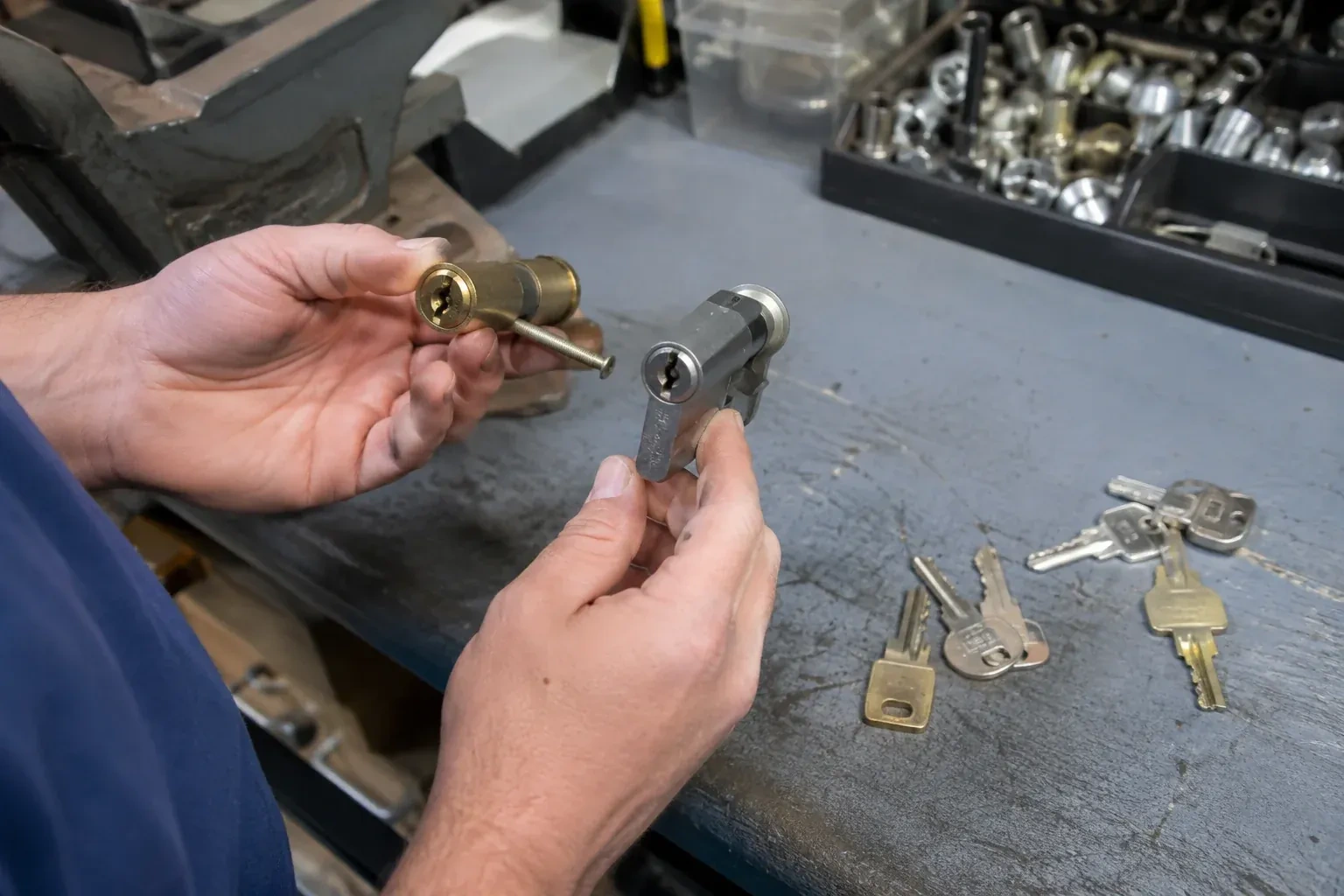
Cylinder decoder and plug spinner
Control keys and core-removal tools
Strikes, pivot shims and closer adjustment tools
Business Lockout Service
What affects the quote
Storefront, lever, mortise or exit device
An aluminium storefront cylinder, a cylindrical lever lockset, a full mortise lock and the trim of an exit device each take different tools and time to open, and the hardware on your door sets the starting point.
Keys cut and recorded
Each new key is cut and counted individually. Two for the owners and four for the opening staff is a different line from one spare, and restricted blanks are priced above ordinary ones.
Cold weather on the day
A cylinder frozen solid, a door iced to its threshold or a closer stiff with cold fluid means patient thawing before the opening can start, and a winter call is quoted with that time in mind.
What to have ready
- Is anyone able to reach the owner, head office or property manager to confirm the request?
- Has anyone already tried to force or pry the door?
- Are there other doors, a roll-up shutter, a gate or a padlock you also need opened?
Business Lockout Service: questions
QuestionsHow long does a business lockout take?
It depends on the hardware and what else is wired to it. A standard storefront cylinder or office lever on a well-hung door is often a short job once authority is confirmed. A high-security cylinder, a frozen lock, a dropped door or a dead access controller adds time, and so does rekeying several doors afterwards. The locksmith gives you a realistic idea on the phone once you describe the door and the situation.
We have lost a master key. Is that different from losing an ordinary key?
Yes, because a master key opens every lock in its group, so one missing key touches many doors. The response is planned rather than rushed: the locksmith maps which cylinders the key operated, works with the property manager if the system is building-wide, and re-pins or swaps cores across the group so a new master takes over. Manufacturers' guidance on key control treats retrieving and tracking master keys as the foundation of the whole system.
This is the third time this door has locked someone out. Is something wrong with the hardware?
It can be. A cylinder that is worn, a strike plate that has shifted, or a latch that no longer seats squarely will all produce repeat lockouts even though the key looks fine. The locksmith checks the alignment of the door and frame, tests how smoothly the latch throws, and looks at wear inside the cylinder before simply letting you back in. If the hardware is the cause, fixing that during the same visit is usually quicker than calling again next month.