Car keys · Toronto
Transponder Key Programming in Toronto
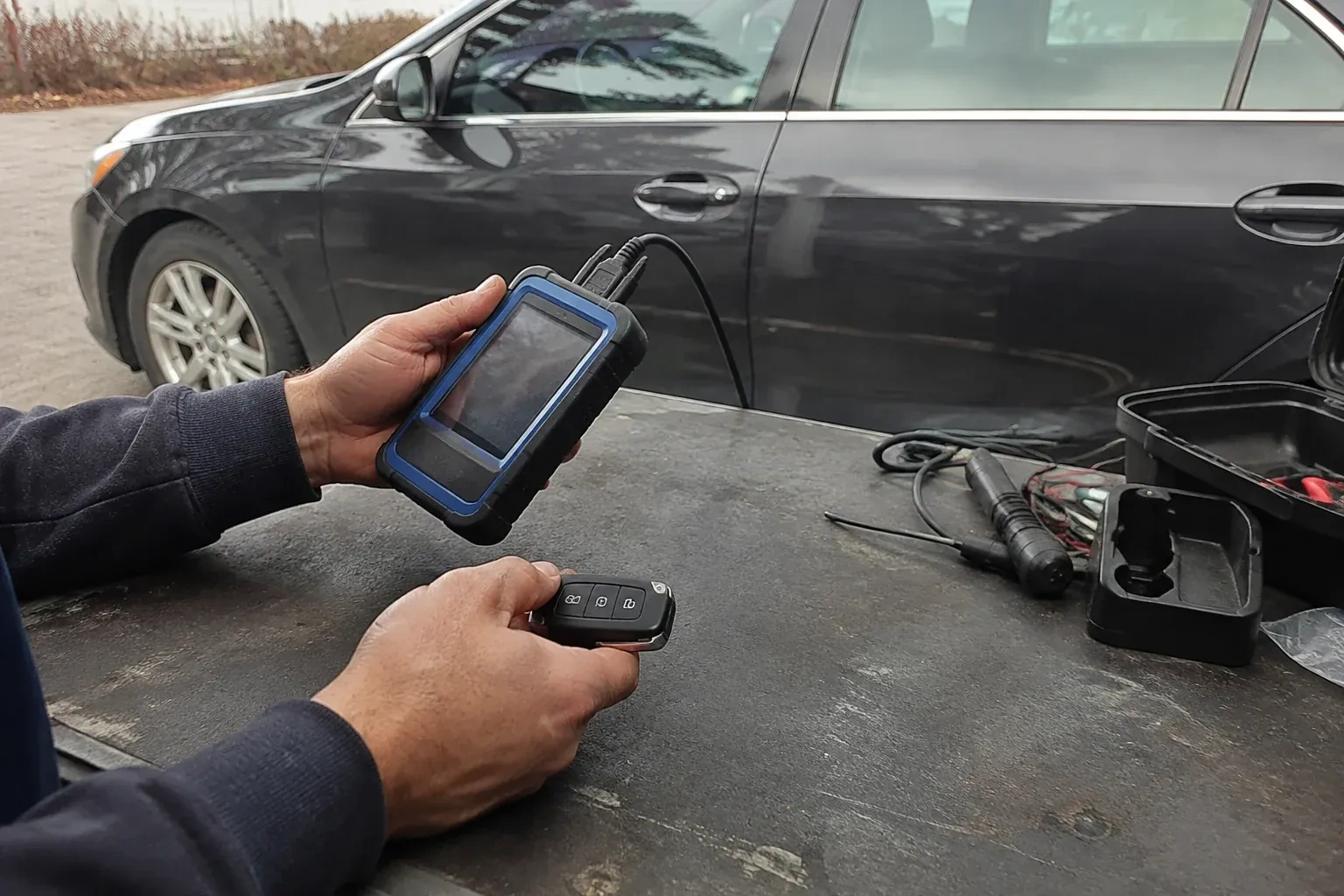
The new key slides into the ignition and turns exactly the way the old one did, but the engine only cranks.
In plain words
Transponder-based immobilizers became mandatory equipment on new vehicles sold across the country from September 2007 onward, though many manufacturers had already been fitting them for years before that date. Practically, this means most vehicles on the road today, whatever their age, already expect a key that carries a chip rather than a plain metal blade. A locksmith working on an older, pre-transponder vehicle follows a noticeably different process than one working on a car built after that standard became routine.
How the visit goesThe new key slides into the ignition and turns exactly the way the old one did, but the engine only cranks. A dashboard light blinks near the fuel gauge, and no amount of turning the key gets the car past that cranking sound.
Transponder Key Programming
How the visit goes
Confirming who is asking
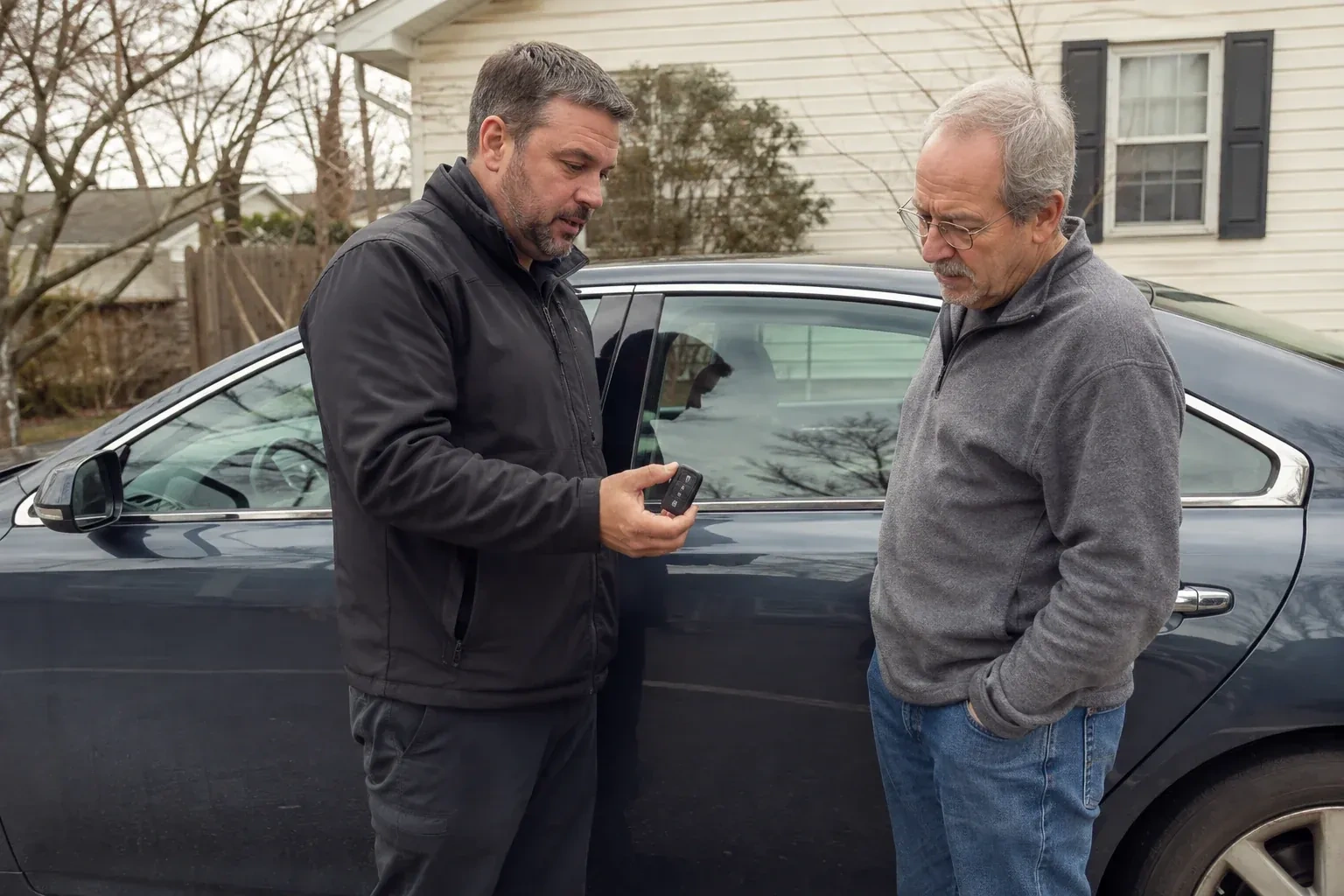
Before any chip is written, the locksmith confirms that the person requesting a key is connected to that vehicle. A vehicle permit or registration document with a matching name, or paperwork for a leased, financed, or company vehicle, settles this in moments. Photo identification is asked for alongside it. This step is treated as routine rather than an inconvenience, because the same check protects every vehicle owner who might one day be standing in the requester's place, and it decides nothing else about the visit until it is settled.
Adding one key without disturbing the others
Bringing another driver onto the same vehicle means adding one identity to the key list while every key that already works keeps working exactly as before. The locksmith confirms the existing keys' status before touching anything, adds the new entry, and then tests every key in the household's hands, not only the newest one. This order matters because a mistake that silently disabled an existing key would be far more disruptive than any delay in getting the new one finished.
A spare that already exists, not one for later
A spare key made before it is needed sits in a drawer doing nothing until the day the only other key is lost, and on that day it is worth more than any amount of good intention would have been. Households that arrange this while it is convenient rarely regret it, and the visit that adds a driver's key or a genuine spare is no more involved than the one that replaces something already missing. The difference is only in when it happens.
Transponder Key Programming
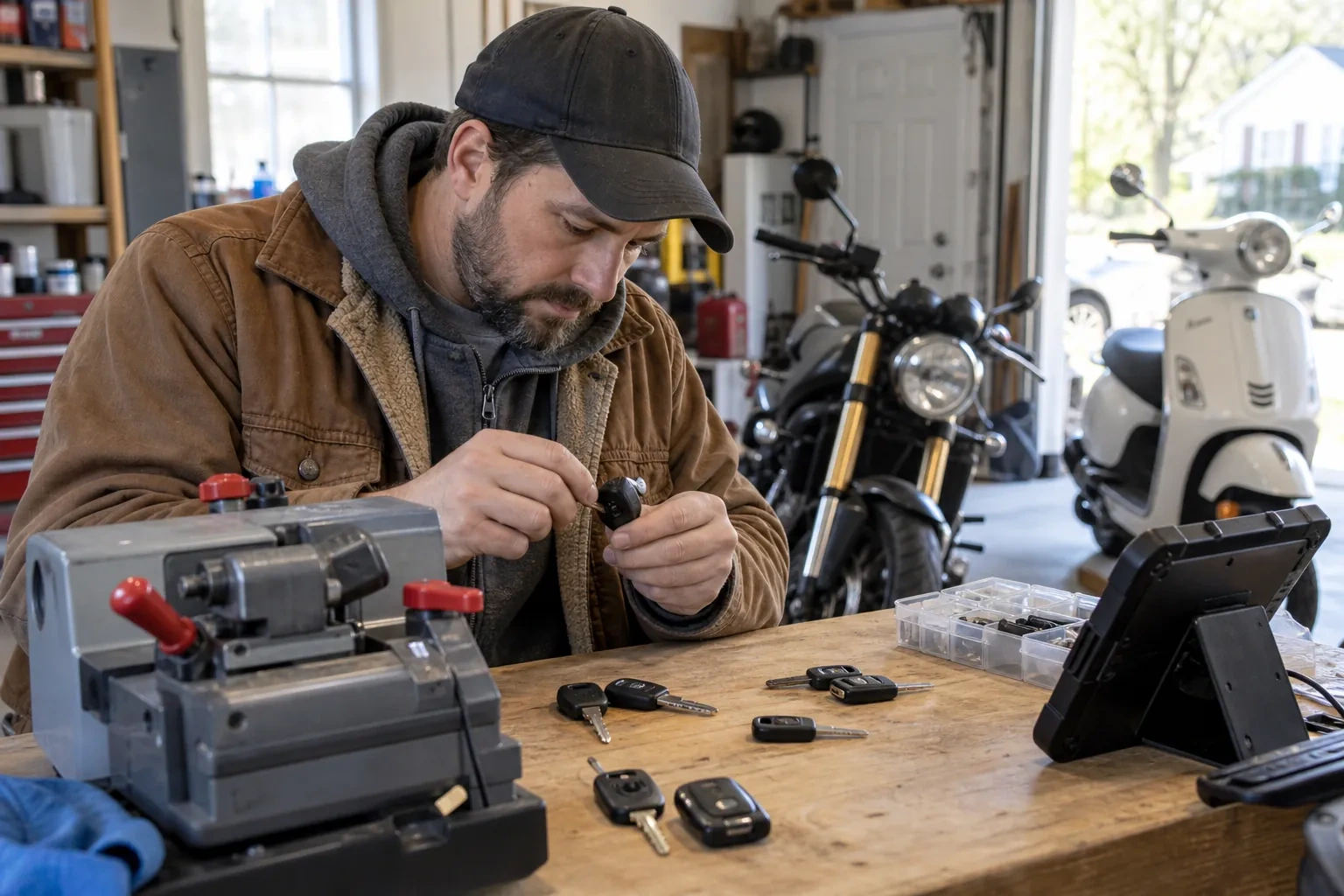
In the van
OBD-II key programmer
Key cutting machine
Fob battery
Frequency test reader
Replacement remote-head fob
Transponder Key Programming
What affects the quote
Whether ownership documents are ready at the visit
Having a vehicle permit or registration and photo identification ready when the locksmith arrives keeps the visit moving directly into the vehicle work, rather than pausing partway through to confirm authorization.
Aftermarket alarms or remote starters already installed
A vehicle with an aftermarket alarm or remote starter wired into its ignition circuits may need extra time to confirm how that system interacts with the factory immobilizer before a new key is programmed.
Distance to where the vehicle is parked
Since the visit travels to the vehicle rather than the other way around, how far that is factors into the visit the same way it would for any other call that has to reach a specific location.
What to have ready
- How many working keys would you like when this is finished?
- Do you have photo identification available?
- Is the key a basic blade, a remote-head, or push-button proximity?
Transponder Key Programming: questions
QuestionsDo I need to bring the car in, or is this done where it's parked?
Programming is done at the vehicle itself, since the equipment connects directly to it. Whether that is a driveway, a parking lot, or wherever the car happens to be, the visit travels to the vehicle rather than the other way around. The one requirement is that the vehicle is present and accessible for the whole visit, since the process reads and writes to its own onboard systems.
Can a vehicle from before transponder keys were common have one added now?
It depends on the vehicle and what its factory ignition system supports; some older models can accept an aftermarket immobilizer and matching transponder key, while others were never built with a compatible module at all. This is worth discussing model by model rather than assuming either answer, since the mechanical side of an older ignition is often the easier half of that conversation.
Could an aftermarket remote starter interfere with programming a key?
It can, mainly because a remote starter is often wired into the same ignition and immobilizer circuits a new key needs to talk to. The locksmith asks about any aftermarket installation before starting, and if it is involved, checks how it was wired in rather than assuming the factory system is untouched underneath it.
Related services
- Car Key ReplacementMinus twenty outside, the fob button does nothing, and the door keyhole has a crust of road salt over it because you have not used a metal key in that car since the day you bought it.
- Spare Car Key DuplicationThe blade on the everyday key has gone shiny and thin along one edge, and lately it needs a wiggle before the ignition catches.
- Key Fob ProgrammingButtons on the fob still light up and the remote still clicks, but the vehicle refuses to start even with the fob sitting in the cupholder.