Lockouts · West Hill
Business Lockout Service in West Hill
A cook stepped into the alley with the recycling and the rear door swung shut behind him.
In plain words
Businesses are locked out by people as often as by hardware. A keyholder is away, a former employee still has a key, a master key has gone missing, or the only spare lives in a drawer behind the locked door. A business lockout deals with the door in front of it and then with the pattern behind it. Cylinders can be rekeyed or removable cores swapped so an unreturned key becomes useless, new keys are cut and recorded against named holders, and a second keyholder or a lockbox is set up so that one absence never again closes the business for a morning.
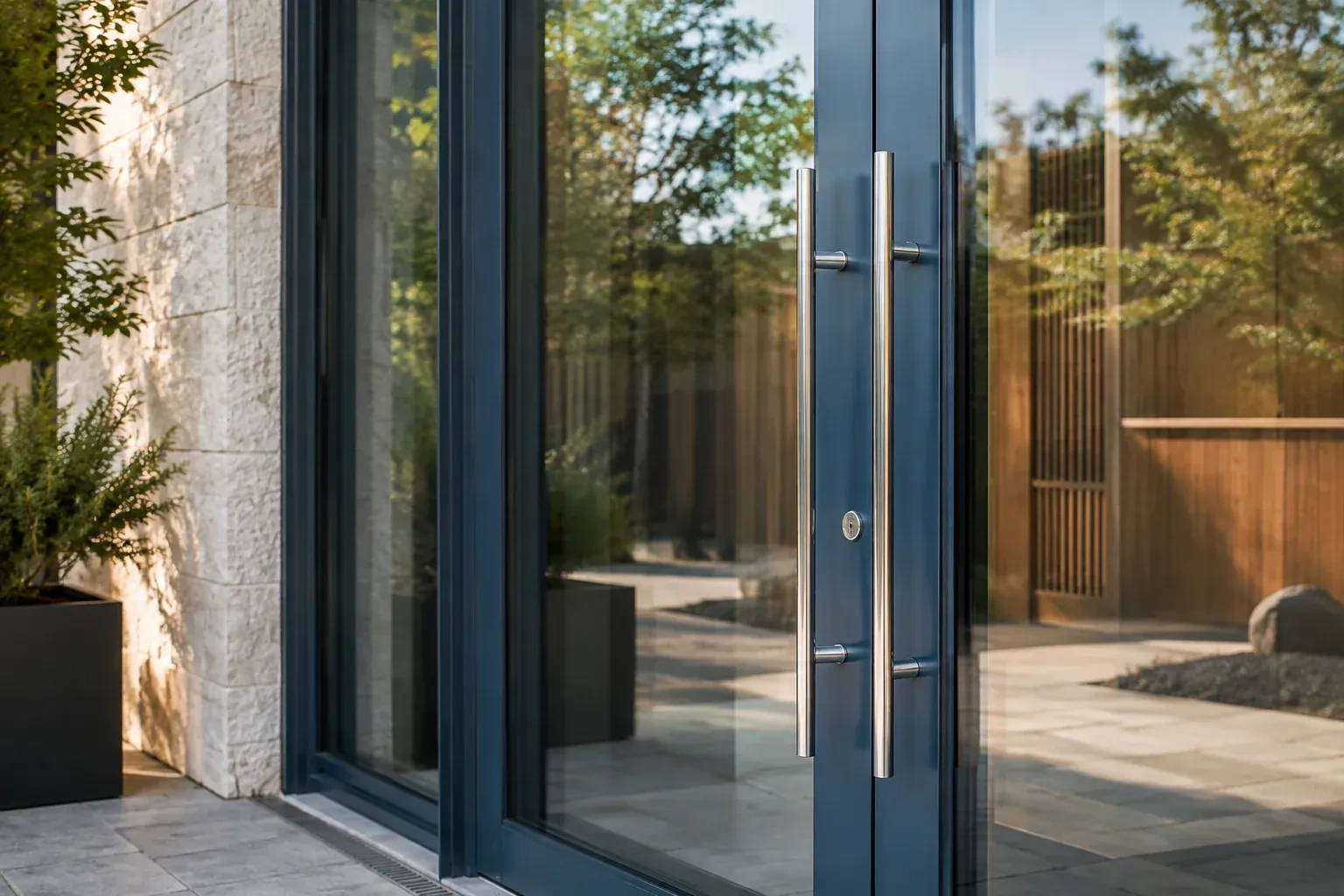
How the visit goesA cook stepped into the alley with the recycling and the rear door swung shut behind him. The push bar works from inside, but the outside handle has a keyed cylinder and the key is hanging in the kitchen office. The front door is locked too.
Business Lockout Service
How the visit goes
Alarm, reader and anything wired to the door
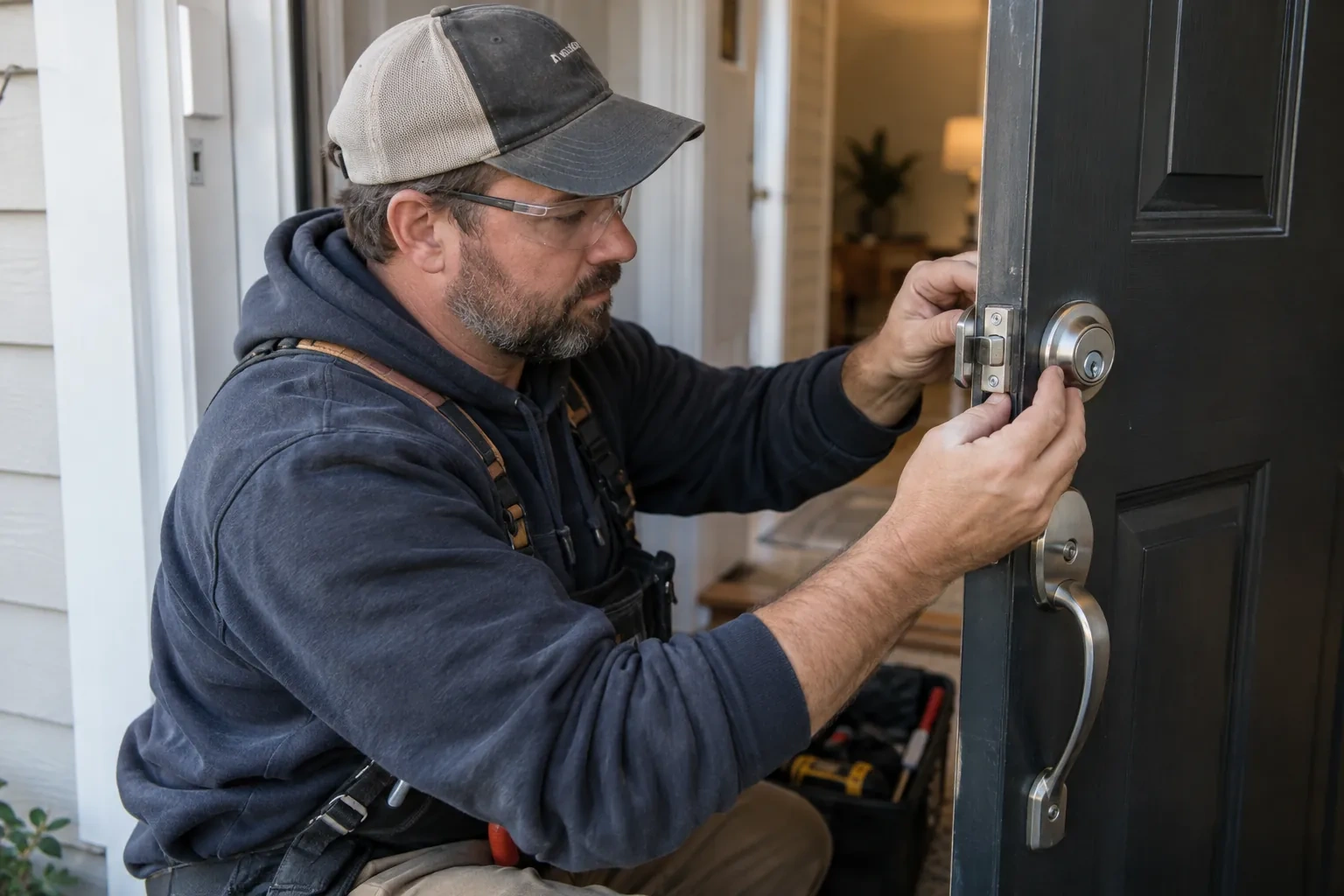
Before the door moves, the locksmith asks what will notice when it does. Is there an alarm with a contact on this door, who holds the code, and should the monitoring company be told to expect an entry? Is the door controlled by a card reader, keypad or intercom, and does it use an electric strike, fail-secure or fail-safe, or a magnetic lock, which releases? Is there a mechanical override cylinder and does anyone hold its key? Has the access-control provider got remote access to unlock it? These answers decide whether the opening is a phone call, a battery, an override key or conventional lock work, and they keep the security system intact afterwards.
Making an unreturned key useless
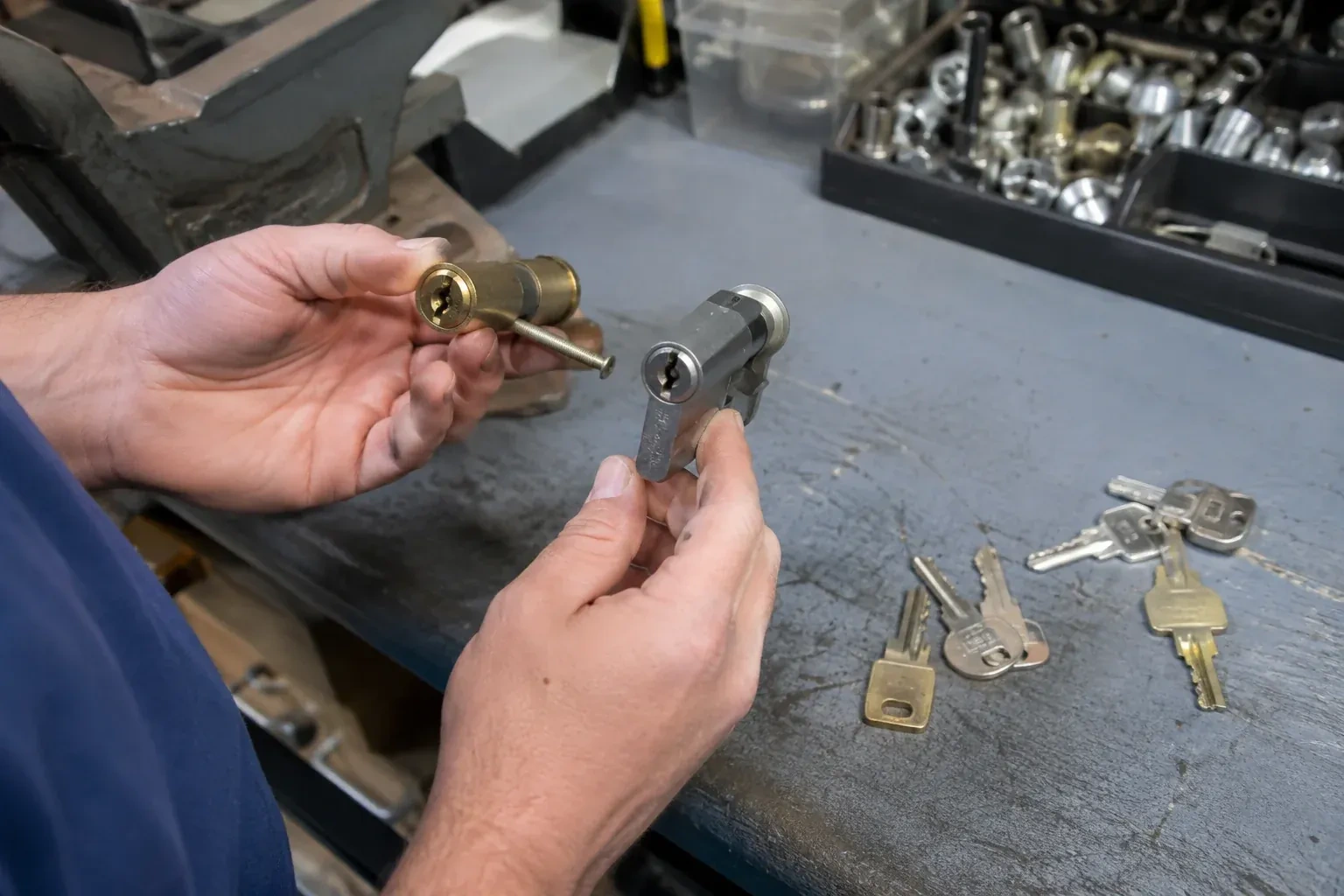
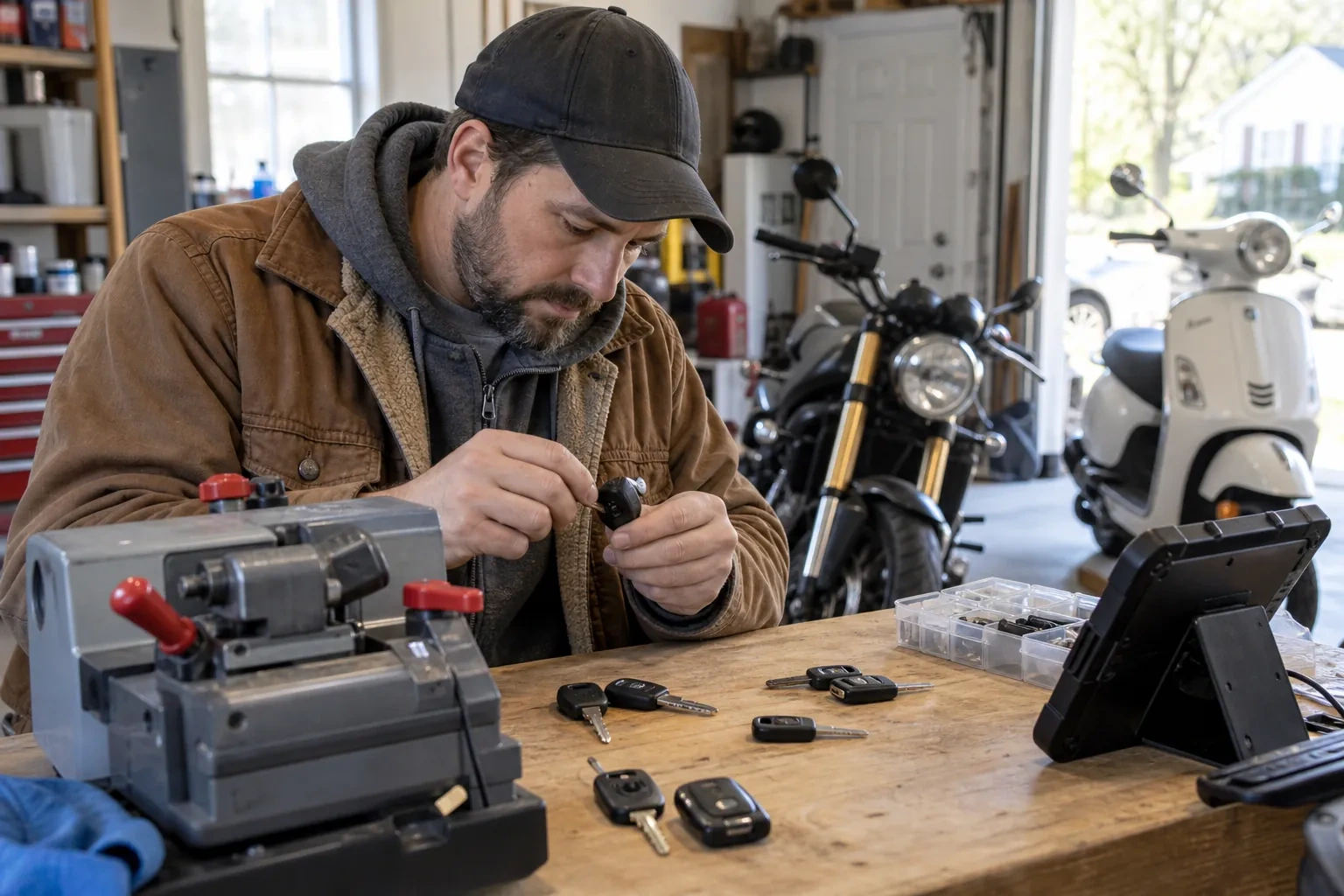
When a key is lost or unreturned, the second half of the visit is rekeying. Mortise and rim cylinders are removed, the plug slid out with a follower, and the bottom pins changed to a new combination so a fresh key operates them and the old one turns nothing. Where the building uses interchangeable cores, the core is swapped for one on a new combination. Cylinders that shared the old key are brought onto the new one, and if the door sits within a master key system the change is planned with the property manager so building keys keep working. New keys are cut, tested in every door and recorded against named holders.
Doors that open for the day and lock at night
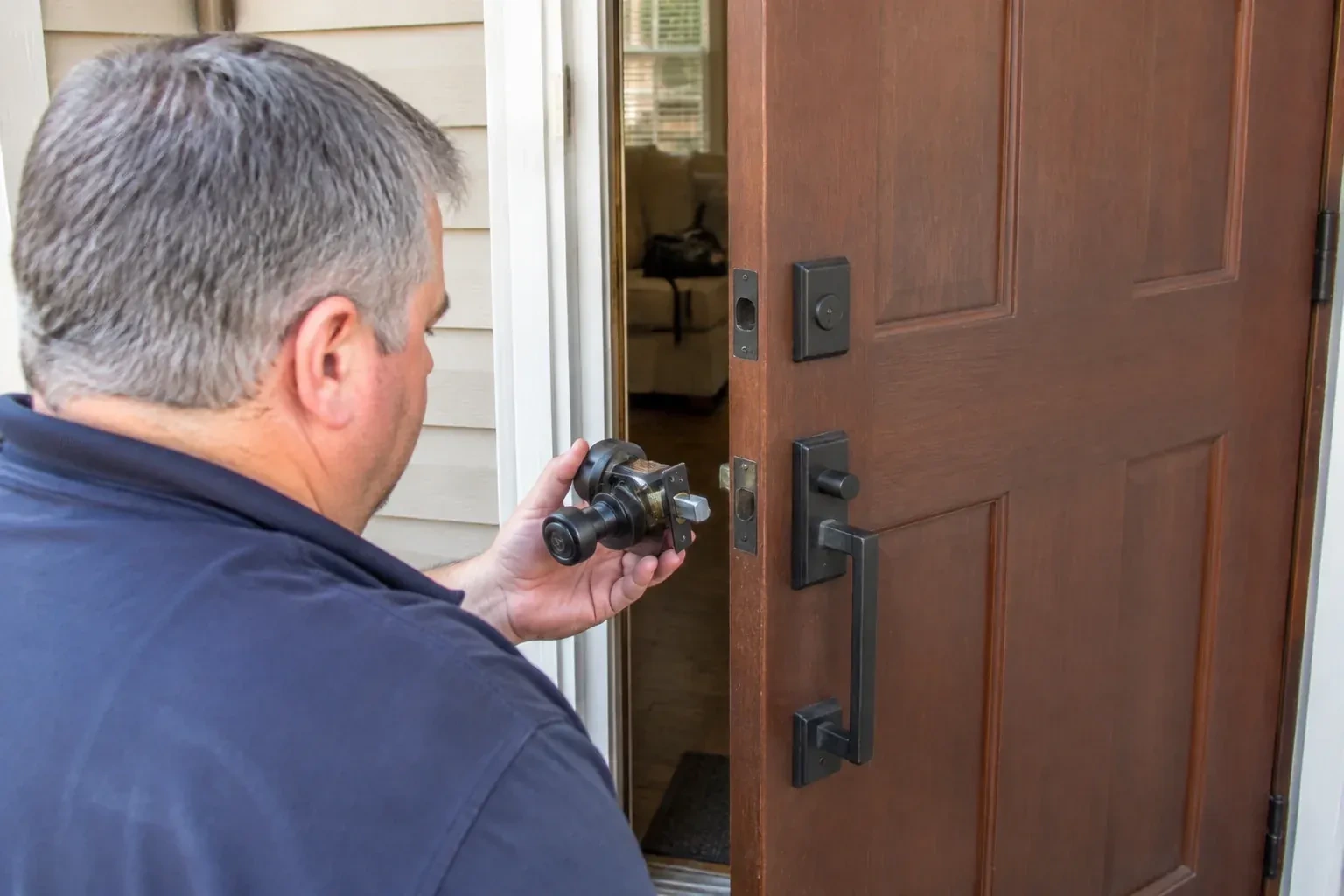
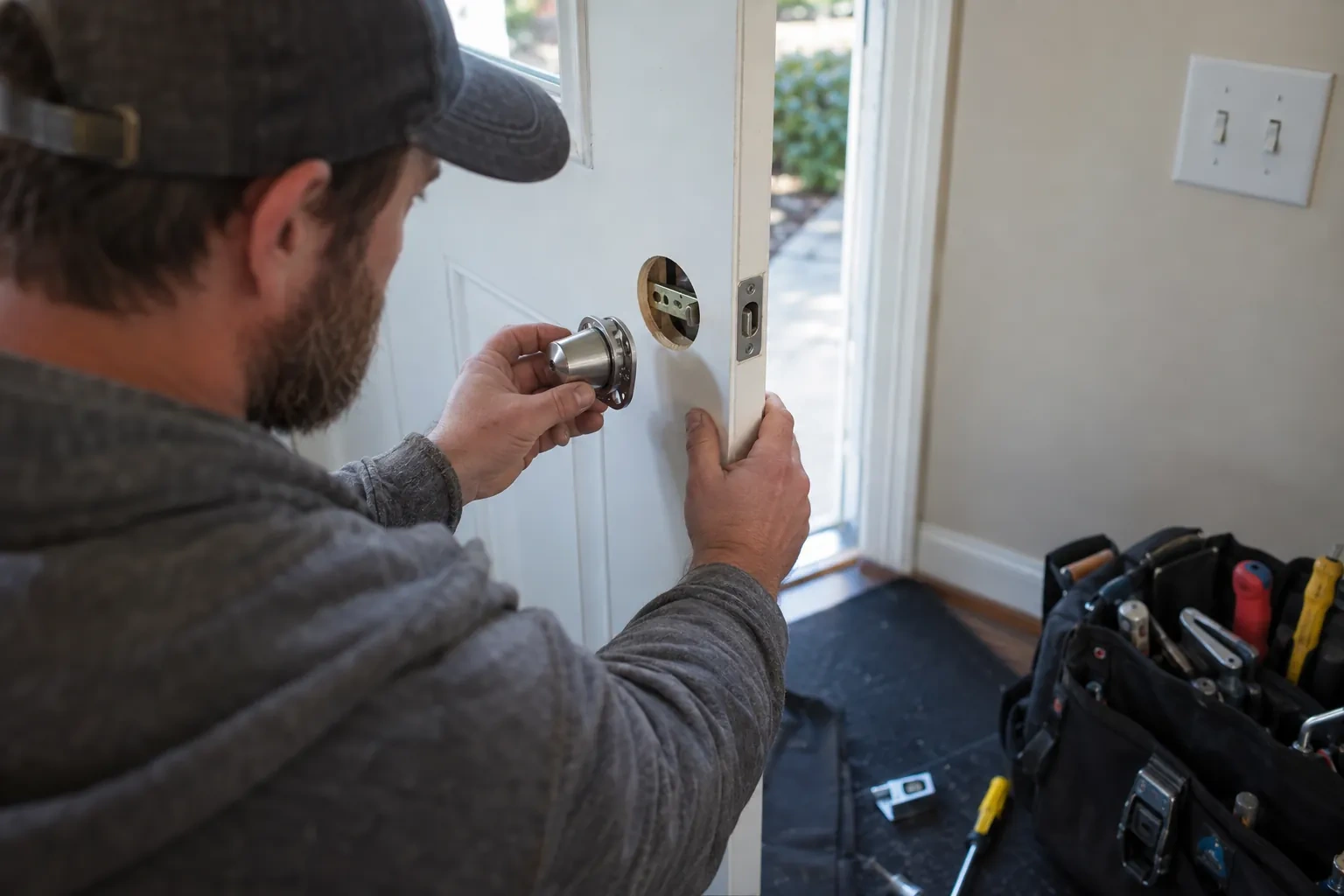
The visit ends with every door that was worked on cycled from both sides, open and closed, with the customer's own key. A hookbolt is watched to seat fully in its strike, a deadlatch is checked to catch on its own when the door swings shut under the closer, and a lever is tested to stay locked from the corridor while turning freely inside. Whoever locks up that evening is shown what was done, so the closing routine holds no surprises. Any hardware replaced is demonstrated and the packaging and old parts left with you, and the door is locked once more with your key before the van leaves.
Business Lockout Service
In the van
Broken key extractors
Storefront deadlatch and hookbolt bypass tools
Cylinder decoder and plug spinner
Control keys and core-removal tools
Strikes, pivot shims and closer adjustment tools
Business Lockout Service
What affects the quote
Distance and access to the door
Travel is part of every call-out, and so is reaching the door: a plaza unit at street level, a suite behind a locked lobby, or a loading dock at the back of an industrial park each take a different amount of the locksmith's time.
Keys cut and recorded
Each new key is cut and counted individually. Two for the owners and four for the opening staff is a different line from one spare, and restricted blanks are priced above ordinary ones.
Rekeying or swapping cores afterwards
Making a lost or unreturned key useless is separate work, priced per cylinder or per core, and the count of doors sharing that key decides how much of it there is.
What to have ready
- Are there other doors, a roll-up shutter, a gate or a padlock you also need opened?
- Does the door use a card reader, keypad or intercom, and is it showing any lights?
- Does the building have a property manager or a master key system for the unit?
Business Lockout Service: questions
QuestionsHow long does a business lockout take?
It depends on the hardware and what else is wired to it. A standard storefront cylinder or office lever on a well-hung door is often a short job once authority is confirmed. A high-security cylinder, a frozen lock, a dropped door or a dead access controller adds time, and so does rekeying several doors afterwards. The locksmith gives you a realistic idea on the phone once you describe the door and the situation.
We have lost a master key. Is that different from losing an ordinary key?
Yes, because a master key opens every lock in its group, so one missing key touches many doors. The response is planned rather than rushed: the locksmith maps which cylinders the key operated, works with the property manager if the system is building-wide, and re-pins or swaps cores across the group so a new master takes over. Manufacturers' guidance on key control treats retrieving and tracking master keys as the foundation of the whole system.
This is the third time this door has locked someone out. Is something wrong with the hardware?
It can be. A cylinder that is worn, a strike plate that has shifted, or a latch that no longer seats squarely will all produce repeat lockouts even though the key looks fine. The locksmith checks the alignment of the door and frame, tests how smoothly the latch throws, and looks at wear inside the cylinder before simply letting you back in. If the hardware is the cause, fixing that during the same visit is usually quicker than calling again next month.