Commercial · West Hill
Commercial Rekeying in West Hill
The manager's key ring went missing somewhere between the bank and the car, and the master on it opened every door in the building.
In plain words
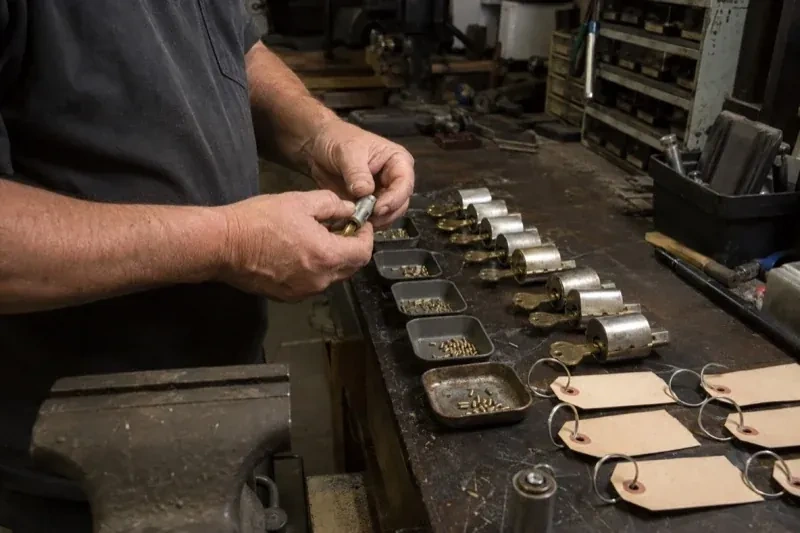
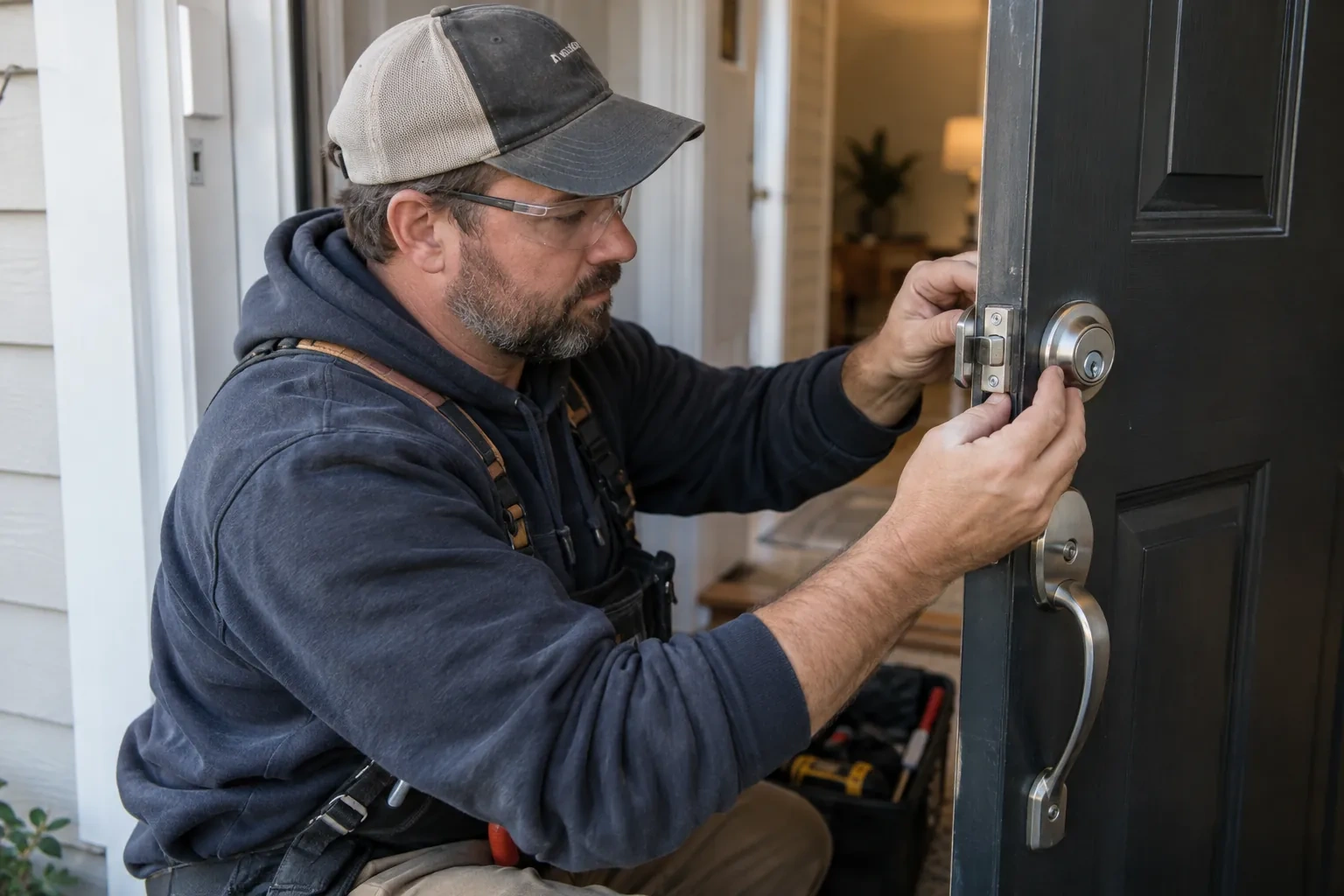
A commercial rekey is planned around the trading day. The locksmith agrees a window, often after close or before opening, and works door by door so the premises is never left without a locking entrance. Cylinders come out, are repinned at a bench in the van or on a counter, and go back in; interchangeable cores are simply swapped for freshly combinated ones. Each door is tried with both new and old keys before the next is started. New keys go to whoever opens up in the morning, and a written chart of doors and key groups stays with the manager.
How the visit goesThe office has been reshuffled twice since the locks were last touched. Reception can open the server room, the warehouse crew has a key to accounting, and the chart that once explained who could open what has not been seen since the move.
Commercial Rekeying
How the visit goes

Who needs to open what
The keying plan is a picture of how the business runs, so the assessment asks who goes through which door on a normal day. Front-line staff need the customer entrance and perhaps the stockroom; supervisors add the office; the owner and the bookkeeper hold the cash room; the IT contractor reaches the server closet and nothing else. Out of that conversation come the key groups: doors keyed alike so one key covers a role, doors keyed differently where separation matters, and whether a master for the owner earns its place. The plan also names anything left out on purpose, so the chart shows both what changes and what stays.
Cutting and marking the new keys
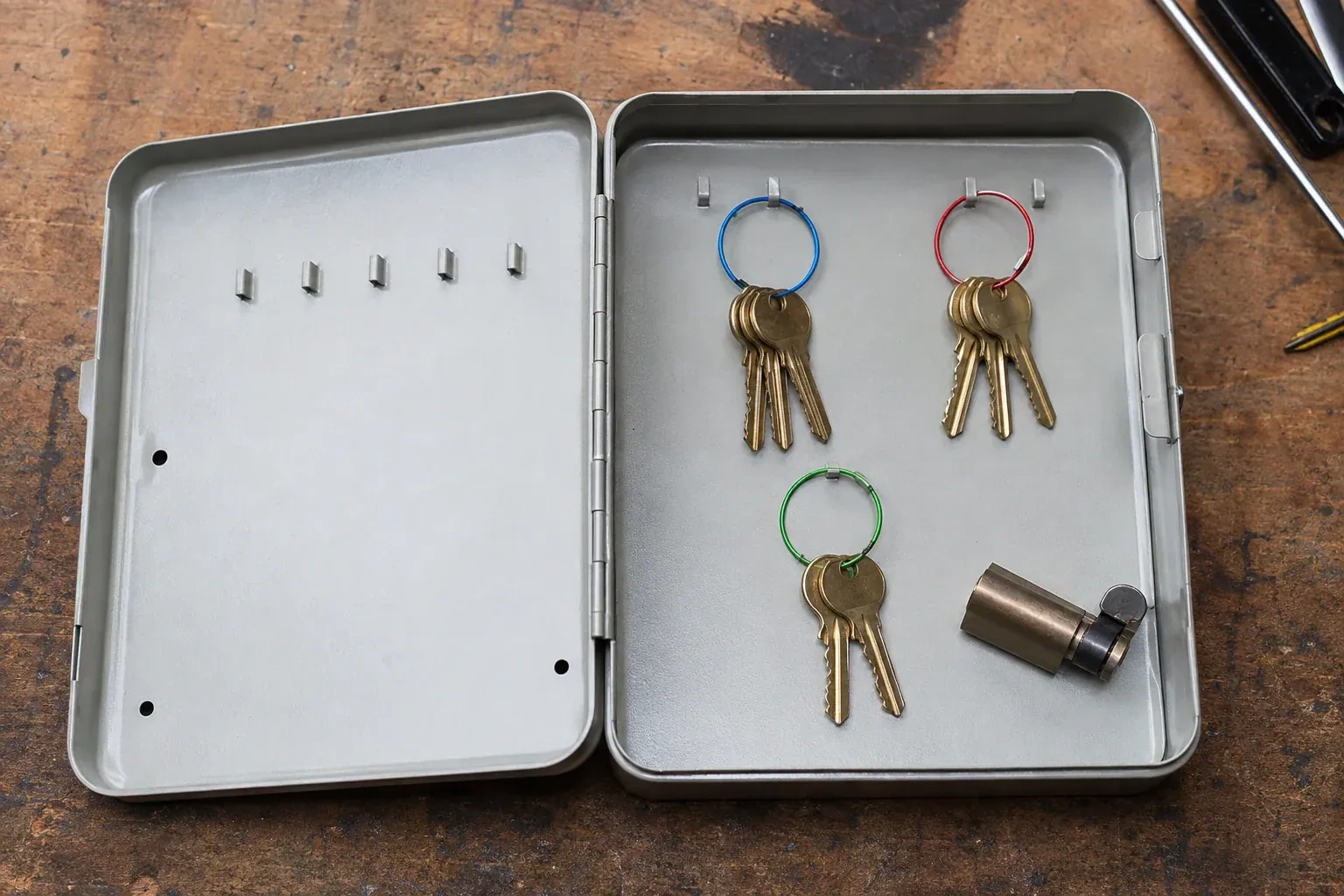
Keys are cut to the new combinations on a code machine rather than traced from another key, so every copy is exact and the tenth key fits as cleanly as the first. Each key is stamped with a short code that means something only on the keying chart; the business name, the address and the word for the door it opens stay off the metal, so a lost key gives nothing away. Keys are counted out by group, tagged, and listed against the names of the people who will carry them. Where the plan uses a restricted keyway, the blanks are drawn against the authorization letter, and that letter is filed with the chart for future orders.
Adding a door without starting over
The pinning records kept from the visit mean the system can grow. When the business takes the unit next door, adds a storage cage or replaces a worn lever set, the new cylinder is pinned into an unused combination on the existing chart and handed a key from the right group, and nobody already carrying a key notices anything changed. That is the value of leaving reserve combinations in a master system rather than using them all up on day one. Keep the locksmith's reference number for the system with the chart, mention it when you call, and a single new door becomes a short visit instead of a fresh plan.
Commercial Rekeying
In the van
Plug follower
Cylinder removal and spanner tools
Mortise cylinder set screws and cams
Code key machine
Rekeyable padlocks
Commercial Rekeying
What affects the quote
Documentation and register
A keying chart, a key register and stamped codes on every key are part of a proper commercial rekey, and the quote names the paperwork so it is never skipped.
Several locations
Rekeying two or three sites onto one keying plan means travel between them and a chart that spans buildings, quoted per site plus the shared design work.
Interchangeable cores versus repinning
Cores swapped with a control key are the shortest work on site, while cylinders that must come apart on a bench take longer. Supplying spare cores for the manager to hold is priced as its own line.
What to have ready
- Are any of the locks interchangeable cores, and where is the control key?
- How many keys do you need cut, and for whom?
- When is the premises quiet or empty enough for the work?
Commercial Rekeying: questions
QuestionsWhat is the difference between rekeying a business and replacing its locks?
Rekeying keeps every lock on the door and changes only the pins inside the cylinder, so a new key works and the old ones stop. Replacing swaps the hardware itself. Commercial cylinders are made to be repinned many times, so rekeying suits any lock in sound condition and leaves the levers, trim and door untouched. Replacement is chosen door by door for cylinders that are worn, corroded or too light for what they protect.
What is a keying chart and why does it matter afterwards?
A keying chart is a plain list of every opening, the key group that operates it, the code stamped on those keys and the number issued. Months later it lets you answer exactly which doors a missing key opened, and it lets a locksmith add a new door to the system without changing anything else. Keep it with the key register, somewhere locked, with a copy off site.
Can all our doors be put on a single key?
Yes, if the cylinders share a keyway or can be fitted with ones that do. Keying everything alike is popular with small shops because staff carry one key and spares are simple. The trade-off is that one key then opens the cash room as readily as the front door. Many businesses choose a middle path: the doors everyone uses on one key, the sensitive rooms on another, and an owner's master that opens both.
Related services
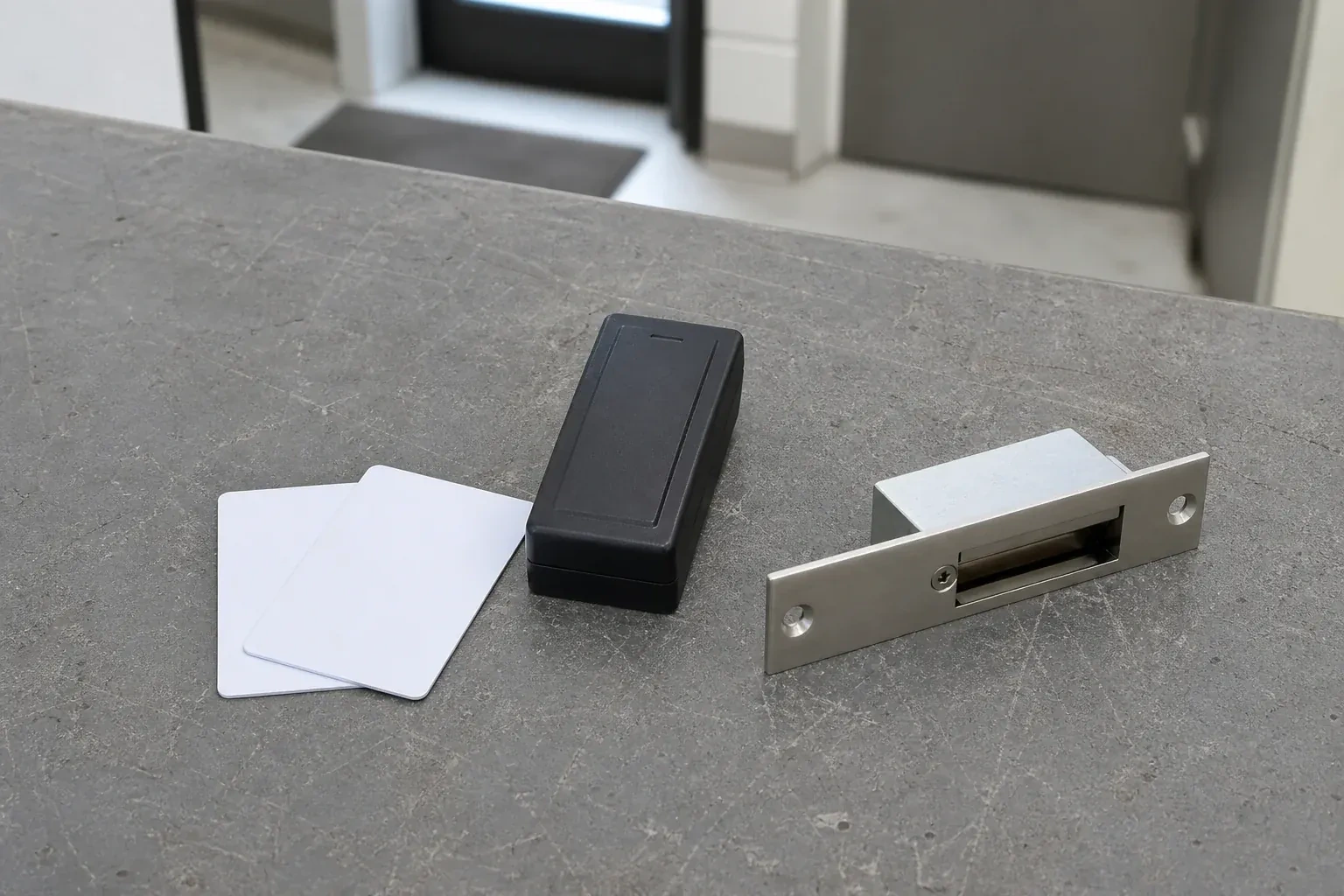
- Access Control InstallationYou just leased the empty unit next door and want the new tenant to open their own suite without a key to yours, to the loading dock, or to the electrical room down the hall.
- Panic & Exit HardwareThe daycare wants the yard gate and the classroom door alarmed so a staff member hears the moment it opens, without turning either into something a child could be shut behind.
- Commercial-Grade Lock ReplacementOvernight someone forced the back door, and the cylinder face is scarred, the metal around the strike has pulled loose from the frame, and the latch no longer sits flush.